
Cooking5 min read
Sour kimchi is not spoiled kimchi. Four things to do with it
The jar at the back of the fridge is not a failure. It is the ingredient half of Korean home cooking is built on.
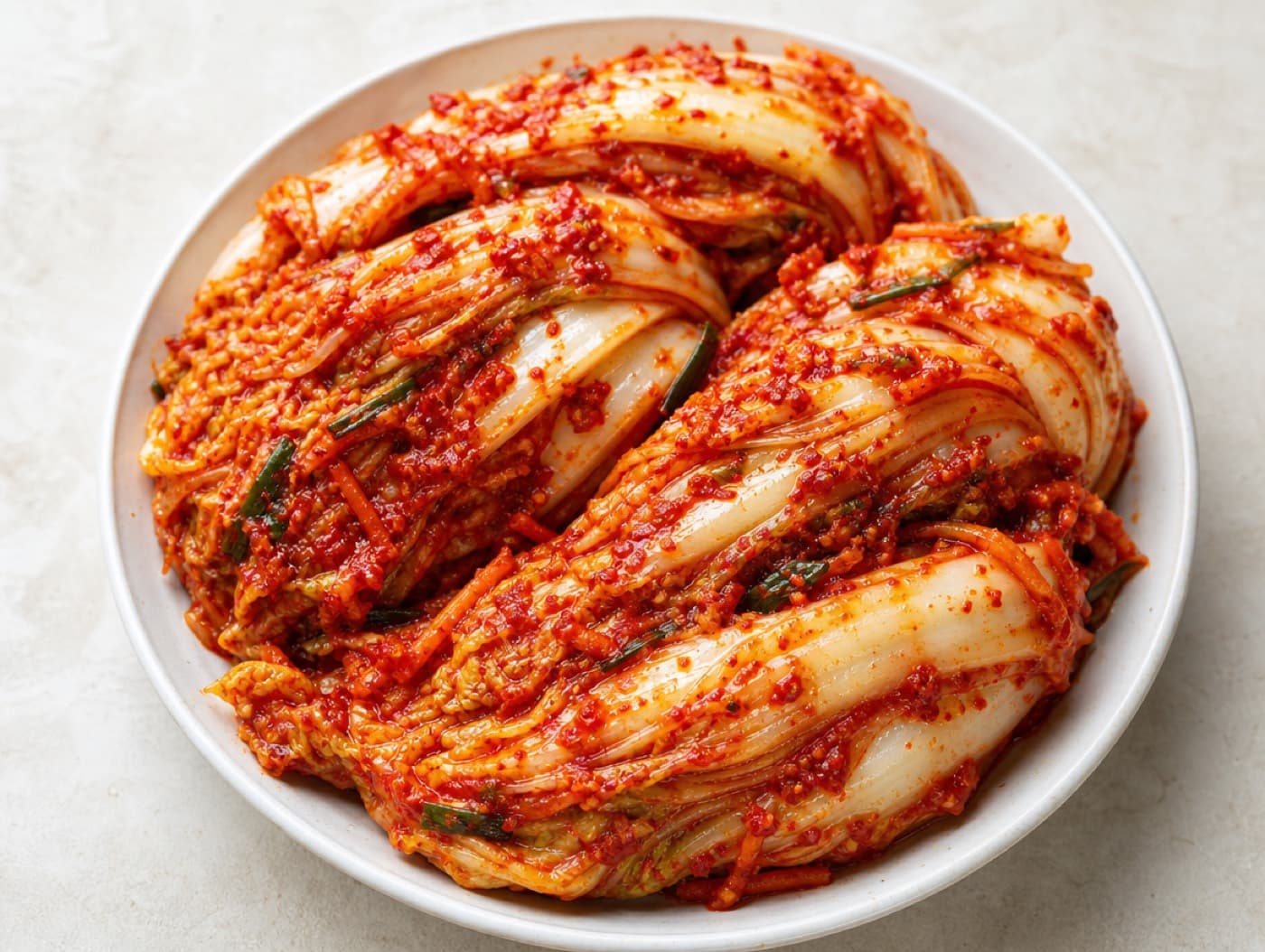
There is a jar at the back of your fridge that has gone further than you meant it to. The leaves have softened, the colour has moved toward brick, and eating it straight makes you wince. Most people treat this as a failure and throw it out.
In a Korean kitchen it is the opposite. Sour kimchi — 신김치 — is not what happens when kimchi goes wrong. It is a distinct ingredient with its own uses, and several of the best-known dishes in the cuisine cannot be made properly without it.
The reason is straightforward: heat rounds acid off. Sourness that is aggressive when cold becomes depth when cooked, and the softened leaves that disappoint you raw are exactly what you want in a pot.
1. Kimchi jjigae
The stew is the default destination, and it genuinely requires the aged jar. Made with fresh kimchi it comes out thin and sweet, tasting of raw chilli and not much else — the sourness is the backbone of the dish.
Fry the kimchi in a little fat before adding liquid. This is the step people skip and it is the one that matters: a few minutes in the pan concentrates the sourness and takes the raw edge off the chilli, and the difference between a stew built on fried kimchi and one built on kimchi dropped straight into water is not subtle.
Pork belly is the usual partner. Tinned tuna is the common shortcut and an honest one. Tofu goes in near the end.
2. Kimchi bokkeumbap
Fried rice, and the most forgiving thing on this list. Chop the kimchi small, fry it hard, add cold cooked rice, and finish with a fried egg.
Two notes. Use rice from yesterday — fresh rice is too wet and turns to paste. And add a spoonful of the brine, not just the solids; that liquid is the most concentrated version of everything the jar has been doing for six months.
3. Kimchi jeon
A thin savoury pancake. Chopped sour kimchi, flour, a little of the brine for colour and acidity, cold water, and nothing else required.
The batter should be thinner than you expect and the pan hotter than you expect. This is deliberately a lazy dish — in Korea it is what gets made when it is raining and nobody wants to leave the house — and it wants a jar that has gone properly sour, because the acidity is what stops a fried flour pancake from being heavy.
4. Braised slowly with pork
묵은지찜. Aged kimchi laid over pork belly, barely covered with liquid, and left at a low simmer for an hour or more.
Given enough time the leaves go silky and the sharpness turns into something round and almost sweet, while the pork fat takes on the acidity. This is the dish that most clearly justifies keeping a jar for a year rather than a month. If the kimchi is very old and very salty, rinse it first — that is standard practice, not a compromise.
How to know when it has actually gone
Sour is not spoiled. The tests are the same as always and they have nothing to do with acidity:
- Fuzzy growth on the surface — white, grey, green or black — is mould. Discard it.
- Brine that has turned slimy or stringy is a texture fault, usually from insufficient salt at the start.
- A smell that reads as rotten or solventy rather than sour and funky.
Absent those, dark colour and soft leaves and a sharp smell mean the jar is old. Old is a state, not a verdict.
Buy it on purpose
Once you accept this, the useful next step is to stop waiting for kimchi to get old by accident. Keep two jars: one young for eating cold, one deliberately left to age for cooking.
Korean shops sell aged kimchi as its own product for exactly this reason. Nobody making jjigae on a Tuesday is hoping they forgot about something.