
Cooking7 min read
Kimchi for breakfast: eggs, toast, porridge and oats
In Korea kimchi is on the table at breakfast because breakfast is rice, soup and side dishes like any other meal. A quarter of Korean adults in one national survey ate it three times a day. How to get it onto a Western morning table: with eggs, on toast that stays crisp, in the Gyeongsang kimchi porridge called gaengsigi, and in savoury oats.
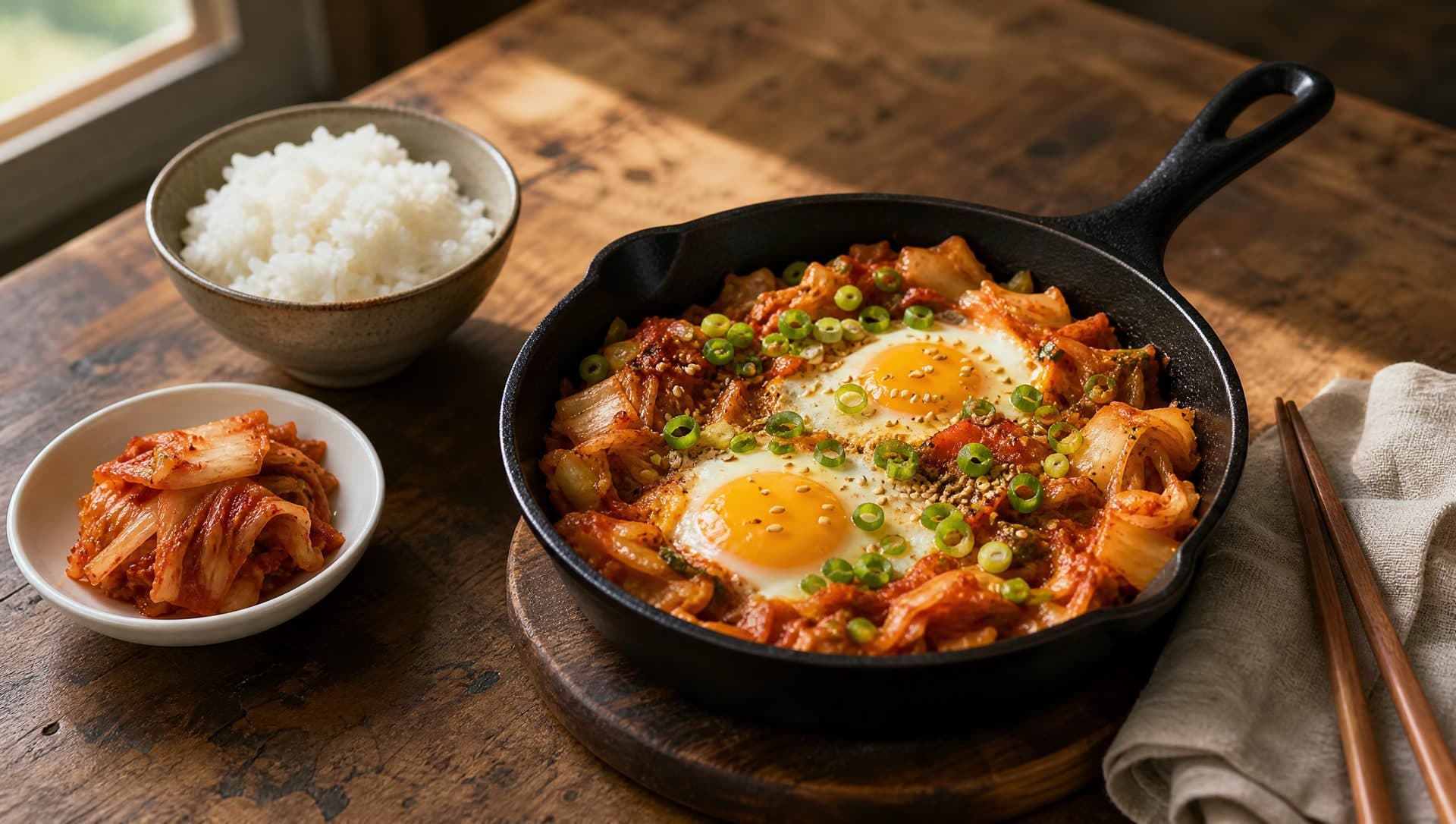
Kimchi works at breakfast, and in Korea it has always been there. A Korean morning meal is rice, soup and side dishes, and kimchi is one of them. In a Western kitchen the easy routes are eggs, toast, porridge and savoury oats. All four are plain, warm and a little rich, which is the kind of food that salt, acid and chilli improve.
Do Koreans really eat kimchi for breakfast?
Yes. Korean cooking has no separate category of breakfast food. The traditional morning table looks like the evening one: a bowl of rice, a soup, and a few side dishes (반찬, banchan), kimchi among them. Nobody decides to have kimchi for breakfast. It is simply on the table.
Survey data shows how routine that is. Ha and Ju at Dankook University analysed 7,122 adults aged 19 to 64 from the 2012 and 2013 Korea National Health and Nutrition Examination Survey, in a study funded by the World Institute of Kimchi (Journal of Nutrition and Health, 2016). A quarter of them, 24.8 per cent, ate napa cabbage kimchi three times a day, and another 33.9 per cent ate it twice. In the three-times-a-day group only 6.9 per cent had skipped breakfast. In each of the other groups about a third had.
Read that as a description of habits. People who sit down to three rice meals a day eat kimchi at all three, and the numbers do not show that kimchi gets anyone out of bed.
The habit is thinning, too. The Korea Disease Control and Prevention Agency's 2024 survey found that 35.3 per cent of Koreans skipped breakfast, rising to 62.1 per cent of those aged 19 to 29. Kimchi three times a day depends on a rice breakfast, and fewer people are eating one.
Which kimchi should you use in the morning?
It depends on whether the kimchi is going into a pan. Young kimchi is crisp and bright and needs nothing done to it, so eat it raw beside the eggs or on the rice. Sour kimchi (신김치) is soft and sharp, and heat rounds the acid off, so that is the jar to cook with. The longer case for it is in four things to do with sour kimchi.
| Breakfast | Kimchi to use | Time | The one thing to get right |
|---|---|---|---|
| Fried egg over rice | Young, raw | 5 minutes | Keep the yolk runny |
| Scrambled eggs | Sour, chopped | 5 minutes | Fry the kimchi first, add no salt |
| Rolled omelette | Either, chopped fine | 10 minutes | Squeeze the kimchi dry |
| Toast with cheese | Either, chopped | 10 minutes | Squeeze it, then add fat |
| Kimchi porridge | Sour | 15 to 20 minutes | Start from cold leftover rice |
| Savoury oats | Either | 10 minutes | Water or stock, no sugar |
If raw kimchi first thing is more than you want, baek kimchi (백김치) is made without chilli and is the mild place to start.
How do you cook kimchi with eggs?
Eggs are the simplest pairing because they are soft, fatty and bland, and kimchi is none of those. The yolk coats the acid and the kimchi seasons the egg. Three ways, in order of effort:
- Fried egg over rice. A bowl of hot rice, a fried egg with a runny yolk, a few pieces of kimchi and a little sesame oil. The egg is the only cooking.
- Scrambled. Chop about two tablespoons of kimchi for every two eggs. Fry it in butter or oil for two minutes, until the liquid has cooked off and the edges start to colour, then pour in the beaten eggs. Leave the salt out. The World Institute of Kimchi puts kimchi at around 2 per cent salt, and that is enough to season the eggs around it.
- Rolled omelette. 계란말이, gyeran-mari, is the Korean rolled omelette that turns up in lunchboxes and on breakfast tables. Finely chopped kimchi goes into the beaten egg before it is rolled. Squeeze it dry first, because wet kimchi makes the egg weep and the roll fall apart.
The skillet in the photograph at the top is the scramble left alone. Fry the kimchi, make two wells in it, crack in the eggs, and cover the pan until the whites set.
How do you make kimchi toast that isn't soggy?
Bread needs two things from kimchi: less water and some fat. Kimchi straight from the jar soaks a slice of toast within a minute.
Chop it and squeeze it over a cup. Keep the liquid, which is worth cooking with. Then either fry the kimchi in butter for a couple of minutes, or lay it under cheese and put the toast under the grill. Melted cheese does the job the egg yolk does.

The same goes for a toasted cheese sandwich, avocado toast, or cream cheese on a bagel. The kimchi plays the part of the pickle and something rich and plain carries it.
What is kimchi porridge?
It is the closest thing Korean cooking has to a dedicated kimchi breakfast. 김치죽, kimchi-juk, is rice simmered soft with chopped kimchi. Daegu and North Gyeongsang province have their own version called 갱시기, gaengsigi: sour kimchi, cold leftover rice and bean sprouts boiled in water until the pot sits somewhere between soup and porridge. People from the region know it as a winter dish, and as what you eat the morning after drinking.
It is built from leftovers, which is why it suits a weekday. For one bowl, take a good handful of chopped sour kimchi and a spoonful of its brine, a bowl of cold cooked rice, a handful of bean sprouts, and enough water or anchovy stock to cover everything by a couple of centimetres. Bring it to the boil, then simmer for ten to fifteen minutes, stirring now and then, until the rice has broken down and thickened the liquid. Some households stir in an egg yolk and a few drops of sesame oil at the end.
Does kimchi go with oatmeal?
With savoury oatmeal, yes. Oats are not a Korean ingredient, but the porridge logic transfers. Cook rolled oats in water or stock instead of milk, leave out the sugar, and stir in chopped kimchi and a spoonful of brine for the last minute. Top the bowl with a soft egg, sesame oil and crumbled toasted seaweed.
Does cooking kimchi for breakfast kill the probiotics?
Yes. Lactic acid bacteria do not survive frying or simmering, which we covered in what the evidence says about kimchi and health. The cooked dish keeps the vegetables, the fibre and the flavour.
If the live bacteria are why you eat kimchi, keep some of it raw. The fried egg over rice does that by default. For the porridge and the oats, a spoonful of uncooked kimchi on top of the finished bowl is the usual Korean answer.
Tomorrow morning, try the scramble. Chop two tablespoons of kimchi, fry it in butter for two minutes, pour two beaten eggs over it, and leave the salt in the cupboard.
Frequently asked questions
What do Koreans traditionally eat for breakfast?
Rice, a soup and several side dishes, kimchi included. It is the same structure as lunch and dinner. Fewer people eat it every year: the share of Koreans skipping breakfast has climbed since 2015 and reached 35.3 per cent in the 2024 national survey.
Is kimchi too strong to eat first thing in the morning?
Koreans eat it with rice, not on its own, and the rice takes the edge off. If sour or spicy food bothers your stomach early in the day, have the kimchi cooked, eat it with eggs or bread, or choose baek kimchi, which has no chilli.
Can you put kimchi in an omelette?
Yes. Chop it small and squeeze out the liquid first. For a folded omelette, fry it for a minute or two before the eggs go in. For a Korean rolled omelette, mix it raw into the beaten egg.