
Culture6 min read
How kimchi became a thing in America: a timeline
Kimchi landed in Hawaii with plantation workers in 1903 and was on sale there by 1939. Who sold it first, why Lyndon Johnson wrote a letter about it in 1967, how Kogi and the supermarkets took it out of the Korean aisle, and what Korea's export figures to the US show from 2011 to 2026.
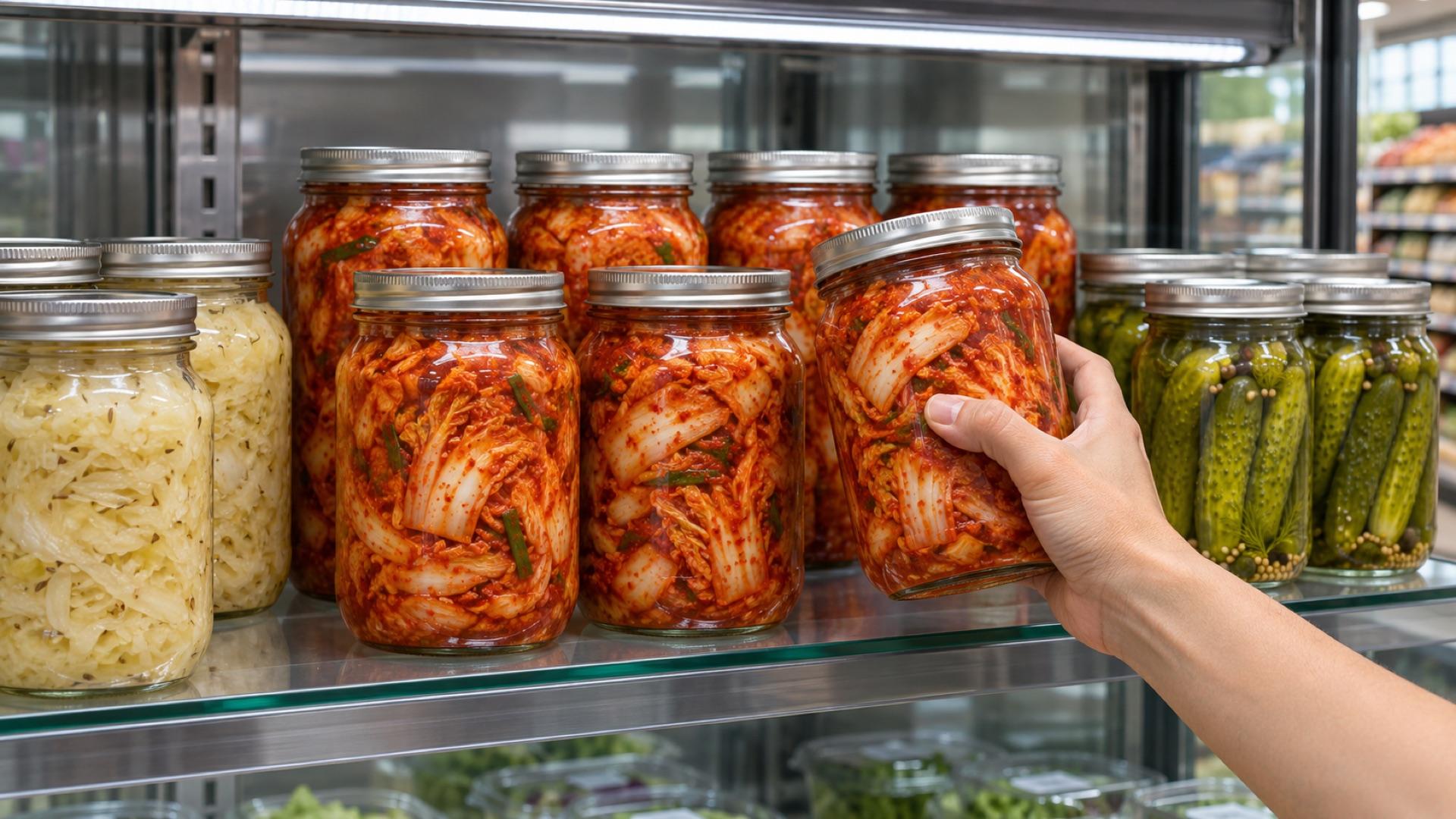
Kimchi (김치) came to the United States with Korean plantation workers in Hawaii in 1903, and Hawaiian makers were selling it by 1939. On the mainland it followed the Korean immigration that the 1965 law opened, then left the Korean aisle after 2008. Korean kimchi exports to the US rose from $2.8 million in 2011 to $48 million in 2024.
On Friday 20 November the Los Angeles City Council issued a Kimchi Day proclamation, and on Saturday there was a kimchi festival at the county arboretum in Arcadia. Kimchi Day itself fell on Sunday, four days before Thanksgiving. Getting there took about 120 years, and several of the steps were stranger than the proclamation.
When did kimchi first come to America?
The word arrived before the food. The earliest English example on the etymology site Wordorigins is from an article dated 4 May 1888 and printed that August in The Gospel in All Lands, a missionary magazine. It describes kimchi as a pickle "resembling sauer kraut". Harper's Weekly made the same comparison in January 1889, and people still do. We have a whole piece on it.
The people who ate it came on 13 January 1903, when the SS Gaelic brought 102 Koreans to Honolulu to work on the sugar plantations. By 1905 about 7,200 had made the crossing. We found little on what they ate in the camps. A bill in the Hawaii House in 2024 says kimchi has been shared at meals in the islands for as long as Korean immigrants have been there, which is likely and hard to footnote.
Who first sold kimchi in America?
Someone in Hawaii, almost certainly, though the name depends on whom you ask.
Joe Kim told the Honolulu Advertiser in 1952 that he was the first in the islands to make it commercially. A Star-Advertiser history column puts his start at about 1929. The Advertiser's own centennial timeline puts Diamond Kim Chee, his label, at 1939. It has Hannah Kim Liu opening Kohala Kim Chee on the Big Island "at about the same time", and says they popularised a relish "previously unknown beyond Korean family tables".
The Big Island disagrees about the order. The 2024 bill calls Hawaii island the birthplace of the country's first commercialised bottled kimchi and dates Kohala to the 1940s. We have not seen a document that settles it.
Helen Halm came next, with a factory behind her husband's accounting office on Waialae Avenue in Honolulu in the 1950s. Lawrence and Mary Kang bought it in 1959 according to the historic-register filing for their house, or 1965 according to Honolulu Magazine. The filing says they made Halm's the best-selling kim chee in the state and shipped it to California, Samoa, Guam and American bases in Japan.
Why did Lyndon Johnson write a letter about kimchi?
Because Korean troops were fighting in Vietnam in 1967, and they missed it.
On 14 March that year the Korean prime minister, Chung Il-kwon, raised kimchi with Johnson in Washington. The memorandum of the conversation has him calling it "vitally important to the morale of Korean troops" and putting the cost at $3 million to $4 million a year. President Park Chung-hee had sent some the previous Christmas at his own expense.
Johnson wrote to Park on 23 March that he had asked Secretary McNamara to find a way to supply the "kimchi". The editors' note in the State Department's published record gives the outcome: kimchi and peppers once a day, at an estimated $2 million a year.
How did kimchi leave the Korean aisle?
It needed enough Koreans to fill an aisle first. The census counted 38,711 people born in Korea in 1970 and 289,885 in 1980, after the 1965 Immigration Act lifted the limits on Asian immigration. In September 1982 Il Yeon Kwon opened a grocery in Woodside, Queens, called Han Ah Reum. It is now H Mart, with nearly a hundred American stores.
The turn outside that world took a few years. Kogi, the Korean-Mexican truck, started selling in Los Angeles in November 2008, the week before Thanksgiving. Newsweek called it "America's First Viral Eatery" and listed kimchi quesadillas on the menu. Public television ran Kimchi Chronicles in the summer of 2011. In February 2013 Michelle Obama posted a recipe made with napa cabbage from the White House garden.
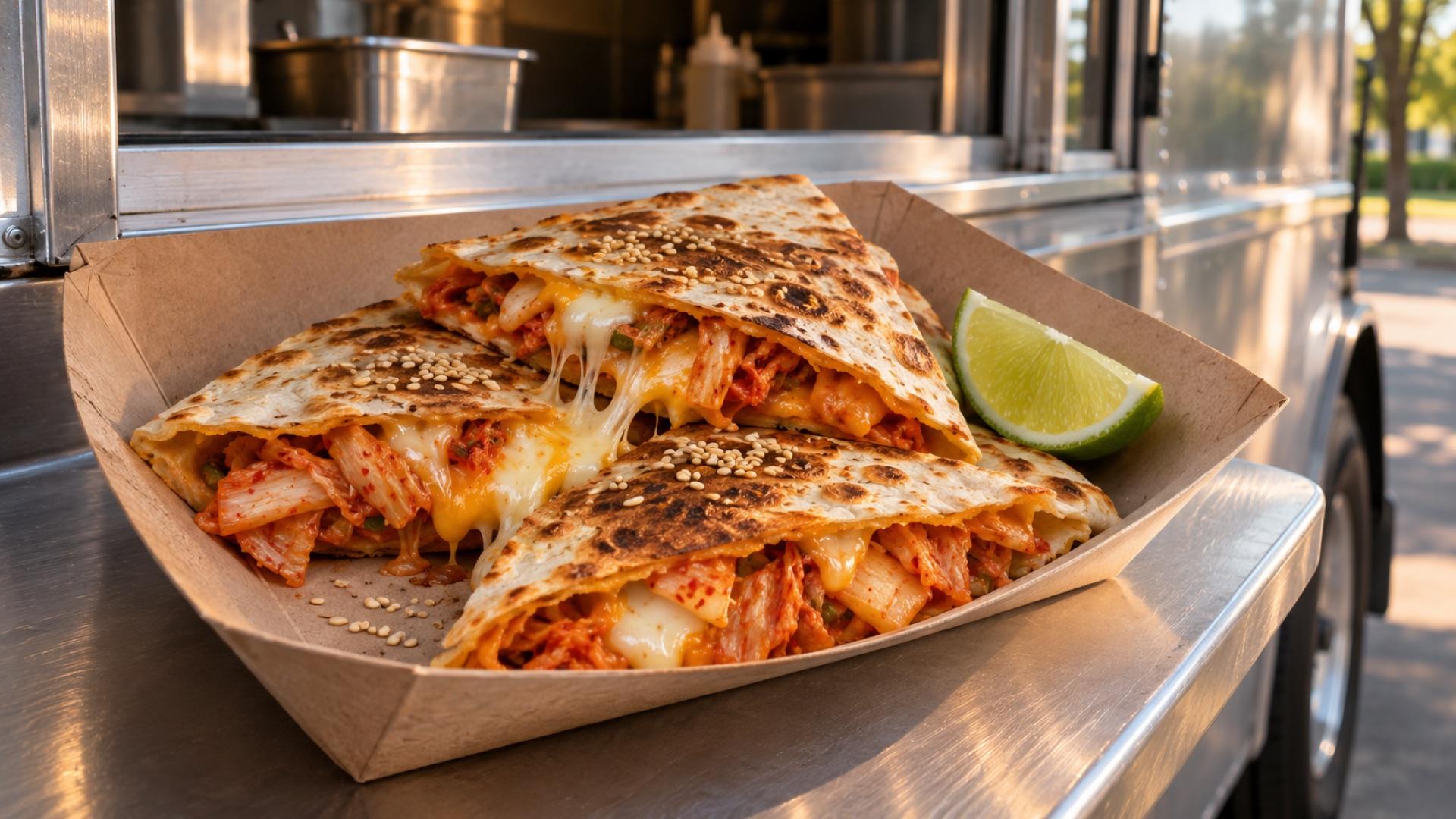
Restaurants followed. Datassential's menu tracking, quoted by the Institute of Food Technologists, had kimchi mentions on US menus up 92 per cent in the four years to autumn 2018.
| Year | What happened |
|---|---|
| 1888 | Earliest English use of the word on Wordorigins |
| 1903 | 102 Koreans land in Honolulu on the SS Gaelic |
| c. 1929 to 1939 | Joe Kim's Diamond Kim Chee goes on sale on O'ahu |
| 1967 | Johnson writes to Park about kimchi for Korean troops |
| 1982 | The first Han Ah Reum, later H Mart, opens in Queens |
| 2006 | Health magazine puts kimchi on its list of five healthiest foods |
| 2008 | Kogi starts selling in Los Angeles |
| 2012 | The US-Korea trade agreement, which removes kimchi's 11.2 per cent duty, takes effect |
| 2013 | The White House garden recipe; UNESCO lists kimjang |
| 2021 | The California Assembly passes a Kimchi Day resolution |
| 2022 | Daesang opens a kimchi plant in City of Industry, California |
| January 2026 | The federal dietary guidelines name kimchi |
| November 2026 | Los Angeles proclaims Kimchi Day |
How much kimchi does America buy?
The best public series is what Korea ships here.
| Year | Korean kimchi exports to the US |
|---|---|
| 2011 | $2.8 million |
| 2019 | $14.8 million |
| 2020 | $23 million |
| 2021 | $28.3 million |
| 2022 | $29 million |
| 2023 | $40 million |
| 2024 | $48 million |
| 2025 | $43.7 million |
| First half of 2026 | $24.6 million |
The figures to 2023 are from the Los Angeles office of aT, Korea's agricultural trade agency. The 2024 figure is the agriculture ministry's, 2025 is from the World Institute of Kimchi's trade table, and 2026 is from the Korea Customs Service.
Last year's fall was about 9 per cent. A ministry official put it down to tariffs, 10 per cent from April 2025 and 15 from August, and to Korean companies making kimchi in America. The second reason matters for reading the table, because kimchi made here is not an export. Daesang's plant alone can make 2,000 tonnes a year.
The first half of 2026 was up 12.9 per cent. In June the US took 1,760 tonnes against Japan's 1,629, the first month since December 2024 that it passed the largest buyer. Over the half year Japan was still ahead.
What do the dietary guidelines say about kimchi?
One phrase, under Gut Health. The Dietary Guidelines for Americans, 2025-2030 say that vegetables, fruits, "fermented foods (e.g., sauerkraut, kimchi, kefir, miso)" and high-fibre foods support a diverse microbiome, "which may be beneficial for health". The Korea Herald reported it as a first for kimchi. What the trials show is in our health guide.
Frequently asked questions
When did kimchi become popular in America?
After 2008 for most Americans, starting with Korean taco trucks in Los Angeles. Hawaii had commercial kimchi by 1939. Exports from Korea to the US more than tripled between 2019 and 2024.
Is it kimchi, kimchee or kim chee?
Kimchi is the spelling in the 2001 Codex standard and the one Korea uses. Harper's Weekly printed kimchee in 1889. Kim chee is the spelling Hawaiian makers put on their labels.
Is Kimchi Day a holiday in the United States?
No. It is a commemorative date, 22 November, borrowed from Korea, where it has been official since 2020. Korea's agriculture ministry counts 12 US jurisdictions that recognise it. A House resolution was introduced in April 2023, and its sponsor was still asking colleagues for support that December.
Do Americans eat kimchi at Thanksgiving?
Korean American families have for a long time. Last November the Korea Times reported kimchi mac and cheese, kimchi cornbread stuffing and kimchi mashed potatoes turning up on other tables. For Friday's leftovers, chop a cup of sour kimchi, fry it in butter until the edges brown, fold it through cold mashed potato and fry that in patties.