
Journal
Two pieces a week
Page 2 / 3
 BasicsEN
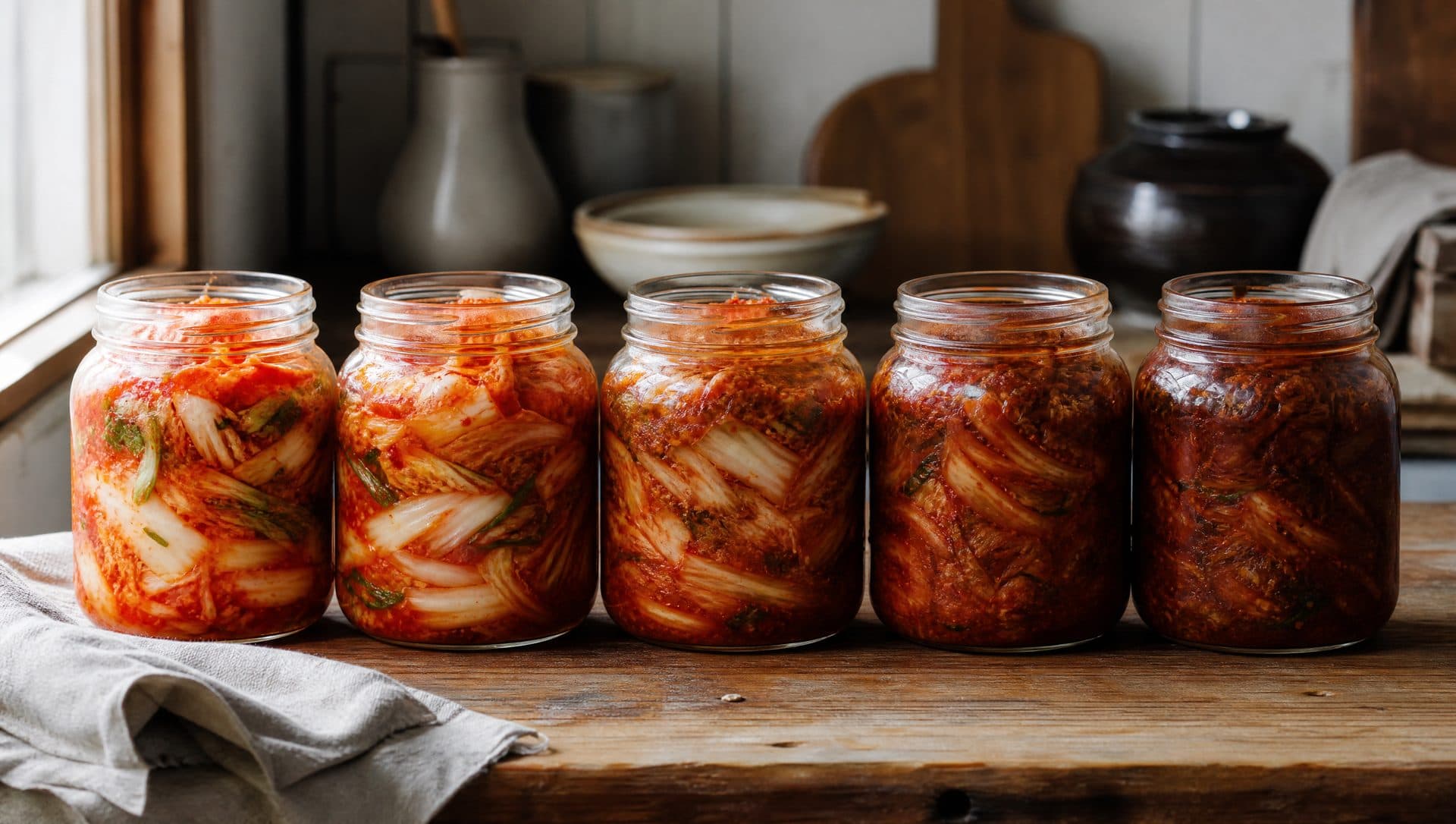
How long does kimchi last? Storage, spoilage signs and best-by myths
Kept cold and under its brine, kimchi lasts for months and is eaten a year on. It does not spoil on a schedule, it sours. What the date on the pack means, why the white film is yeast and not mould, and the few signs that actually mean the jar goes in the bin.
· 10 min read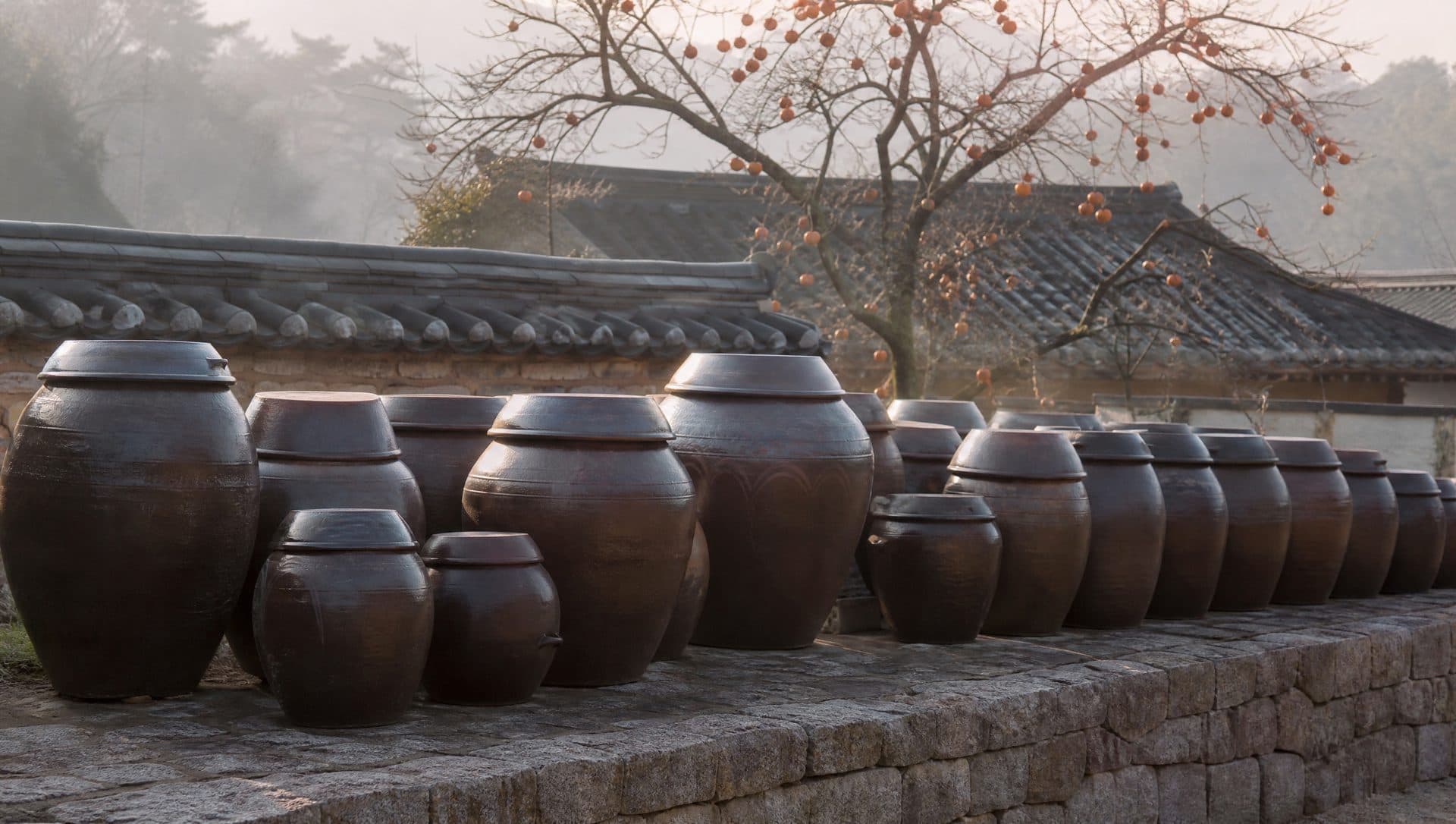 CultureEN
Kimchi culture and history: from salted vegetables to UNESCO
Koreans were salting vegetables by the third century, the word was first written in 1241, chilli did not enter a kimchi recipe until 1766, and the whole-cabbage kimchi is about 150 years old. The texts and the dates, and what kimjang is actually for.
· 16 min read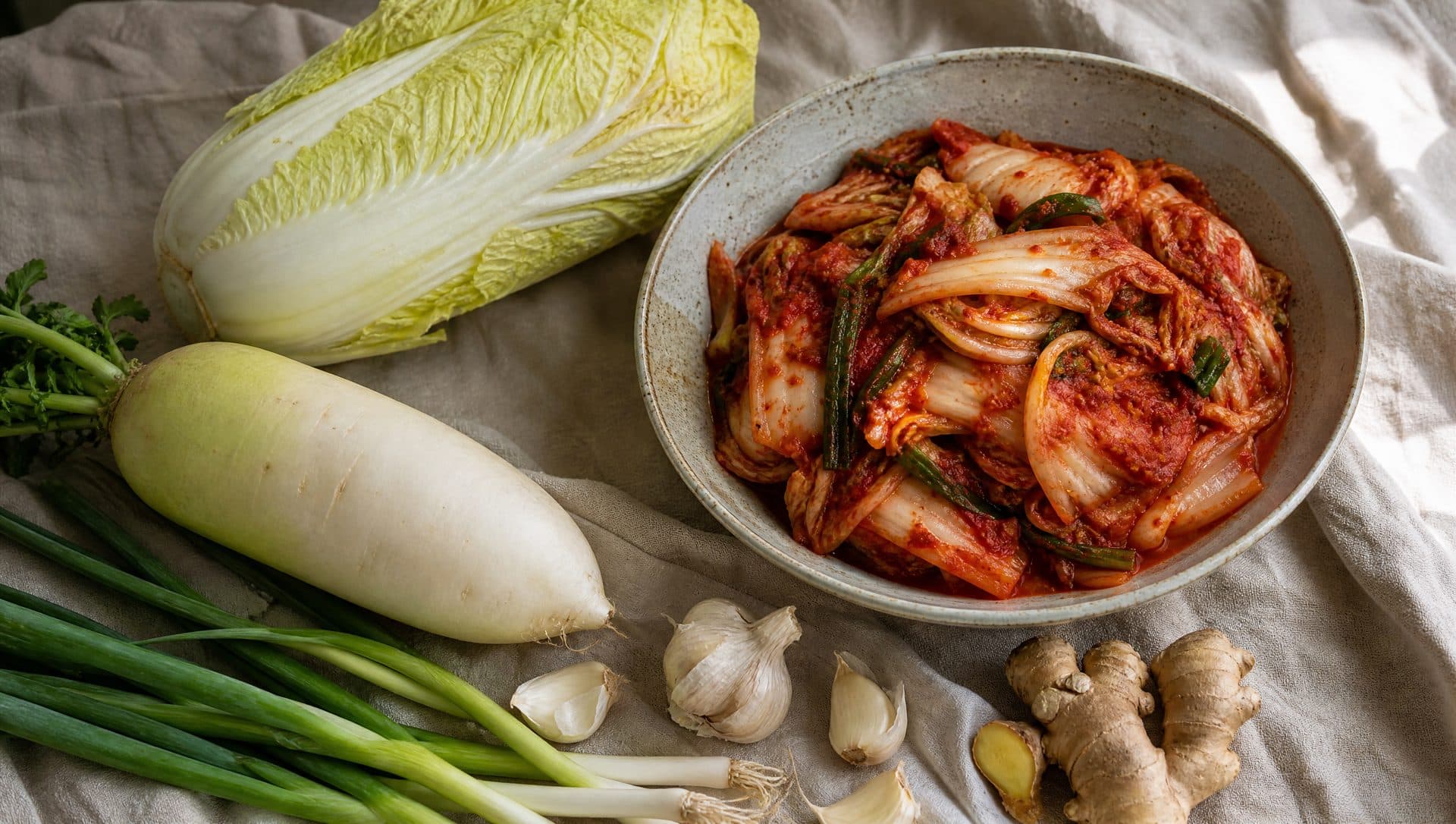 HealthEN
Kimchi health benefits: what the evidence actually says
One to three small servings a day is where the human evidence looks best: lower obesity odds in 115,726 adults, and stable body fat in a placebo-controlled trial. The salt is real too. What has been tested in people, how large the effects were, and where the claims run ahead of the data.
· 17 min read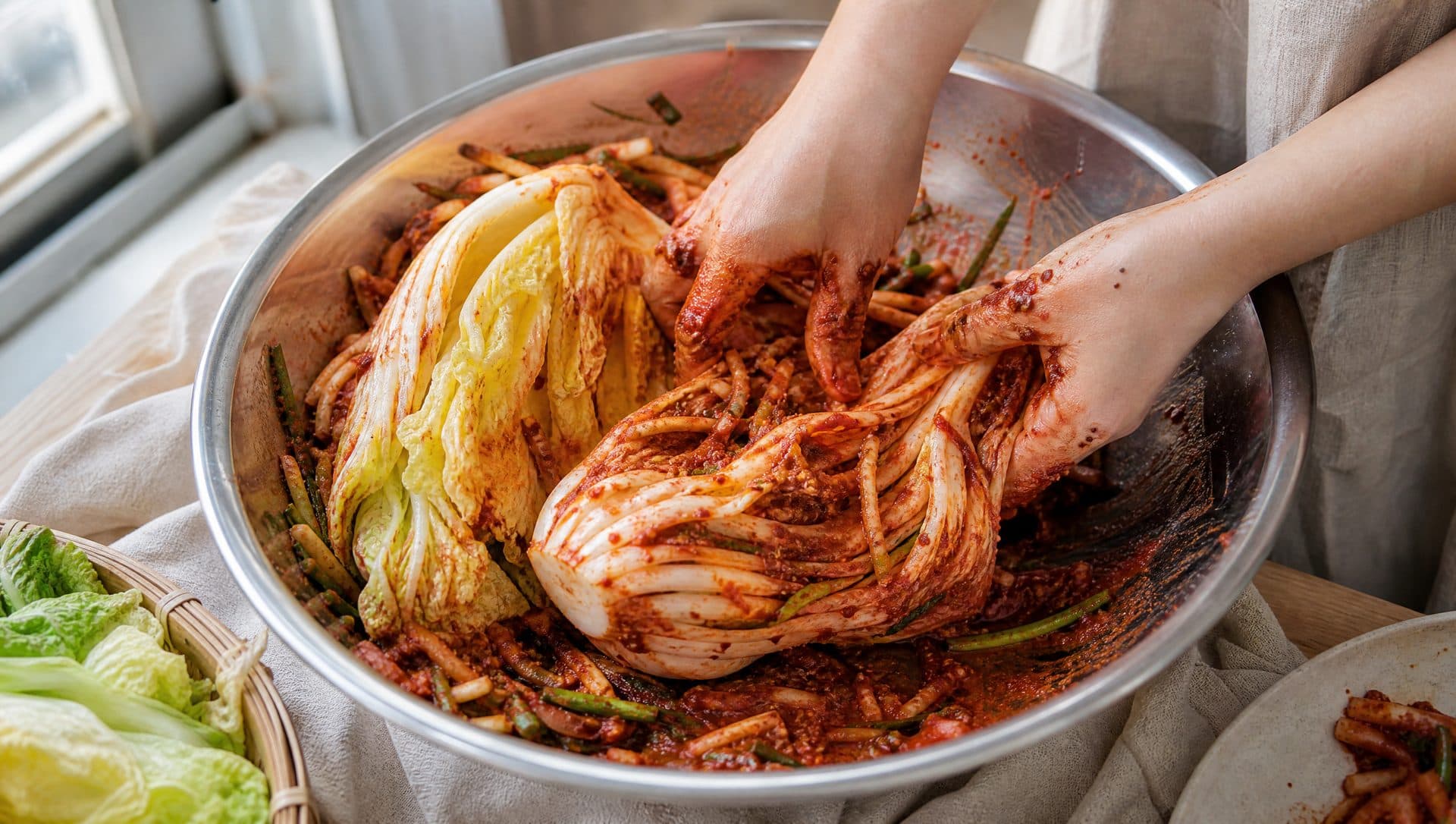 TechniqueEN
How to make classic napa cabbage kimchi at home
Salting the cabbage and fermenting it are two different processes, and the first one decides most of the result. The salt ratios, the standard seasoning proportions, and the temperatures that set how fast it sours.
· 16 min read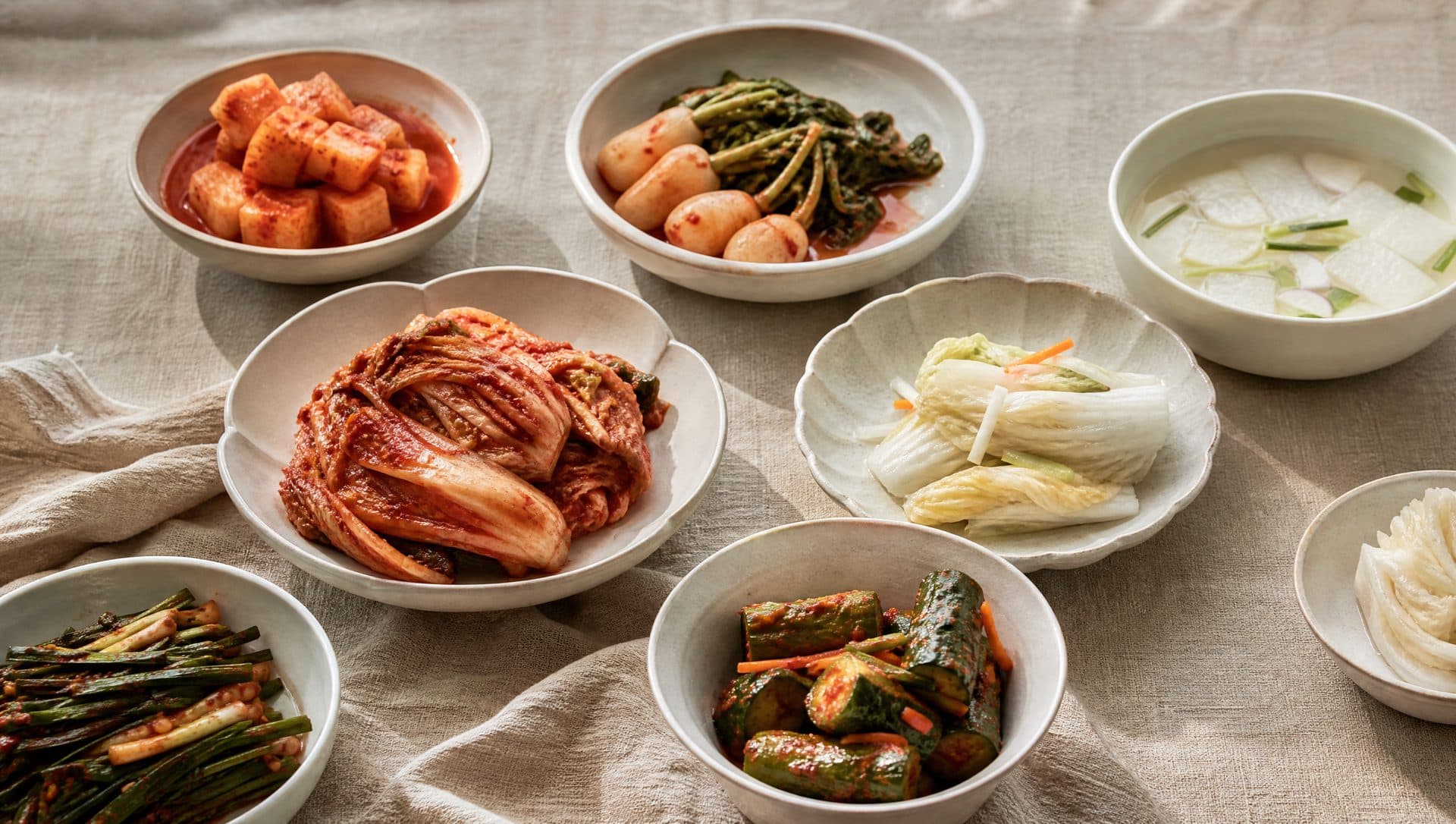 BasicsEN
What is kimchi? The complete guide
Kimchi is salted, seasoned, fermented vegetables — and almost every part of that description has been true for a different length of time. What it is, how it is made, and where it came from.
· 16 min read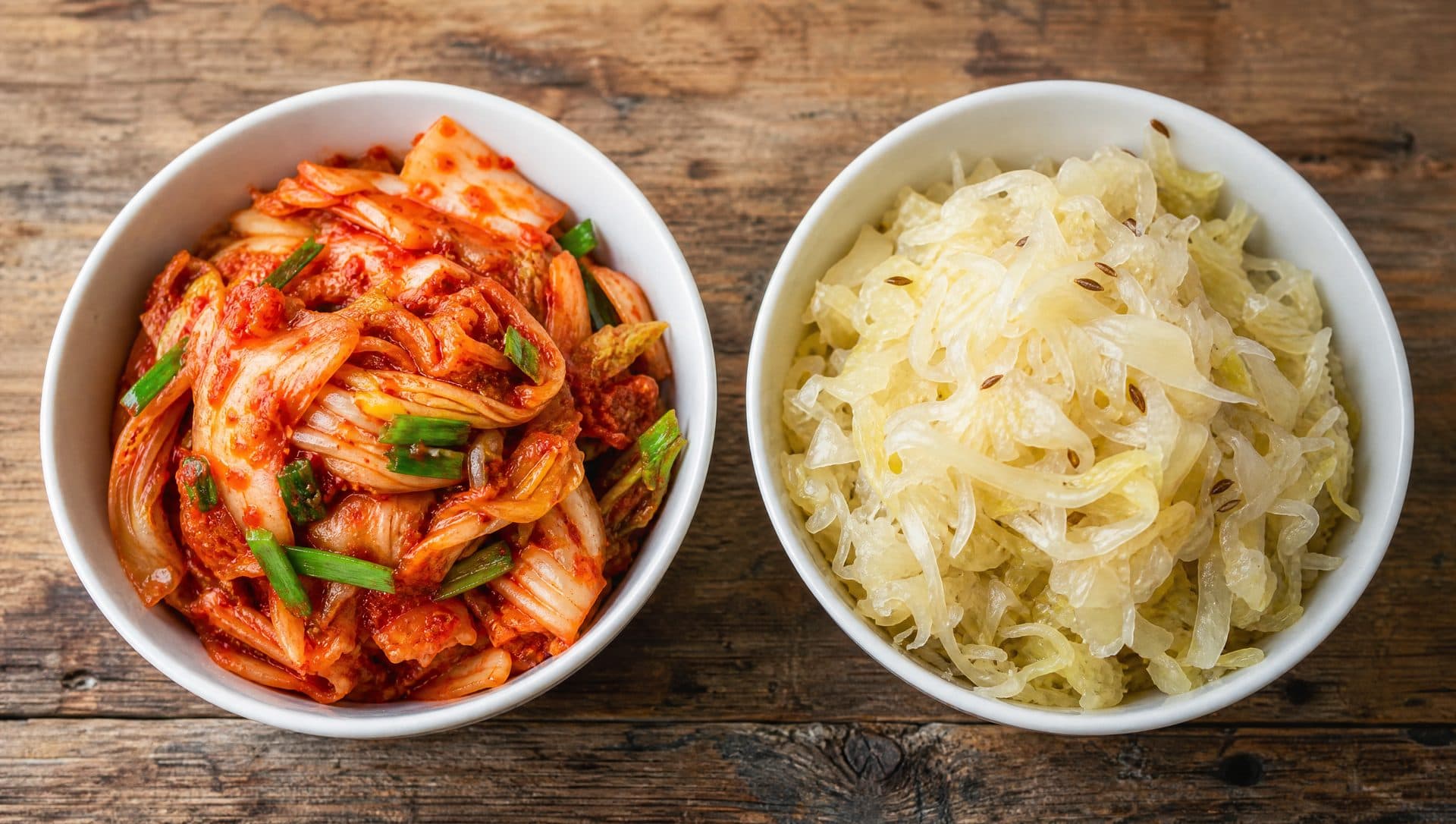 BasicsEN
Kimchi vs. sauerkraut: what's actually different?
Kimchi and sauerkraut are both fermented cabbage, but they differ in ingredients, bacteria, flavour and nutrition. Here's a clear side-by-side comparison.
· 7 min read