
Journal
Two pieces a week
Guides teach you how to make kimchi. We follow what happens after — how it changes week by week, which one belongs to which season, and why two jars four hours apart are not the same food.
 CookingEN
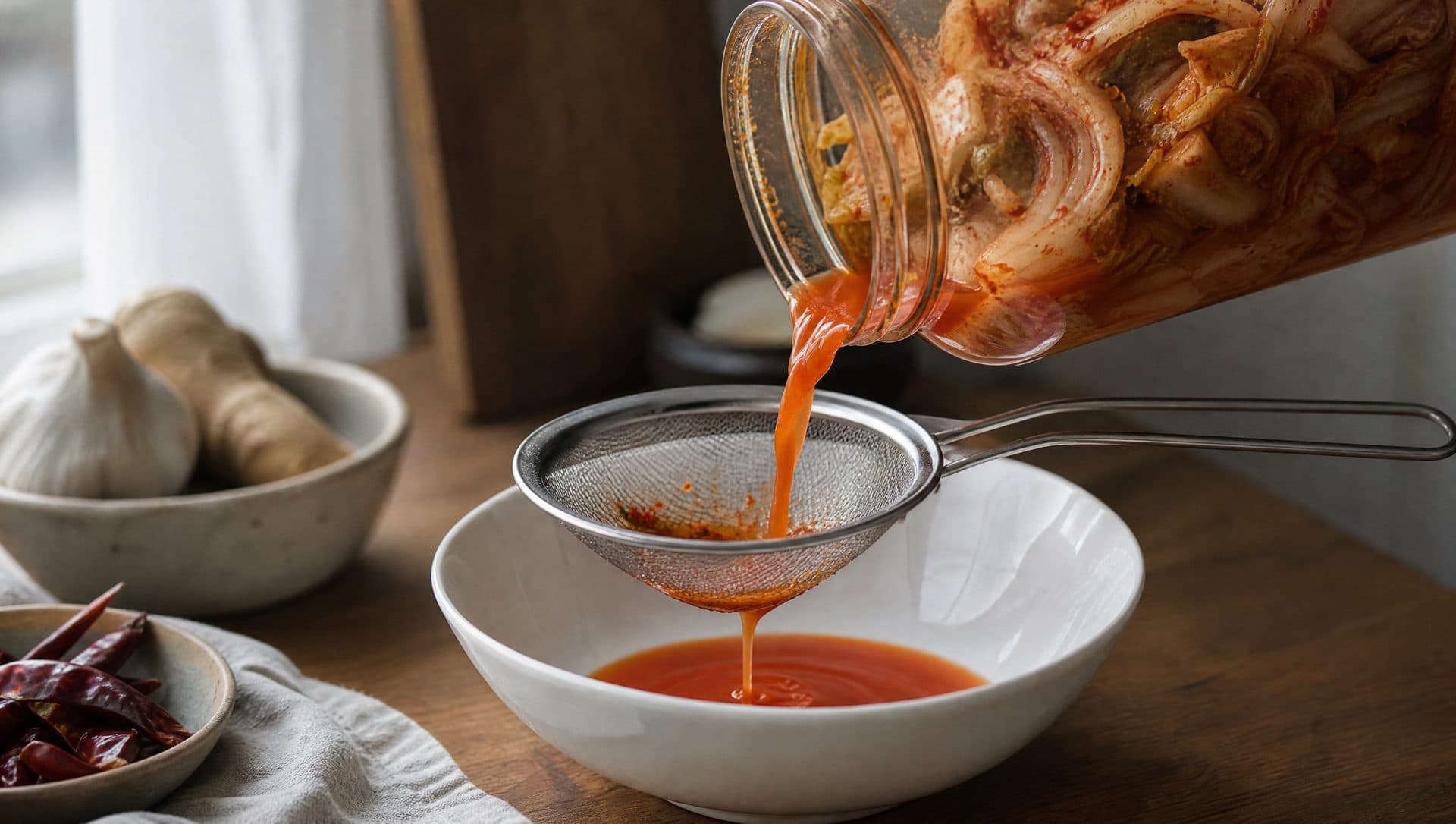
Kimchi juice: never pour it out
The liquid in the jar has been fermenting alongside the cabbage the whole time, so it carries the same salt, acid and garlic in a form you can pour. Where it goes in jjigae, fried rice and pancake batter, the cold noodle dish built on it, how to use it to start a new batch, and how to keep it once the jar is empty.
· 6 min read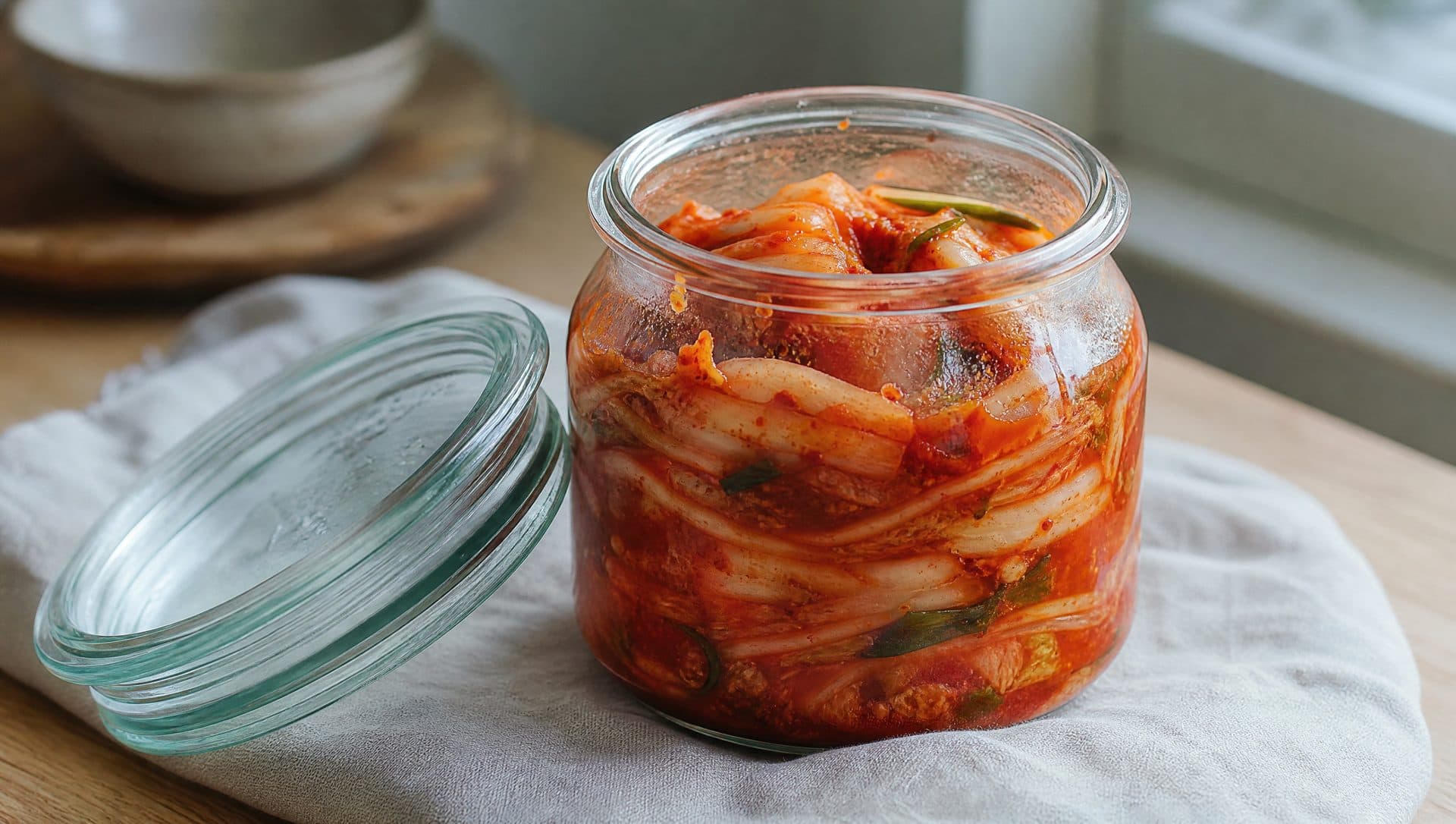 BasicsEN
Why does kimchi smell, and why that's a good thing
Almost all of it is garlic. Eight sulfur compounds carry the aroma, the harshest of them peaks during salting rather than fermentation, and the bacteria spend the following fortnight taking it apart. What each compound smells of, what the smell tells you about the stage the jar has reached, and how to keep it out of the rest of the fridge.
· 7 min read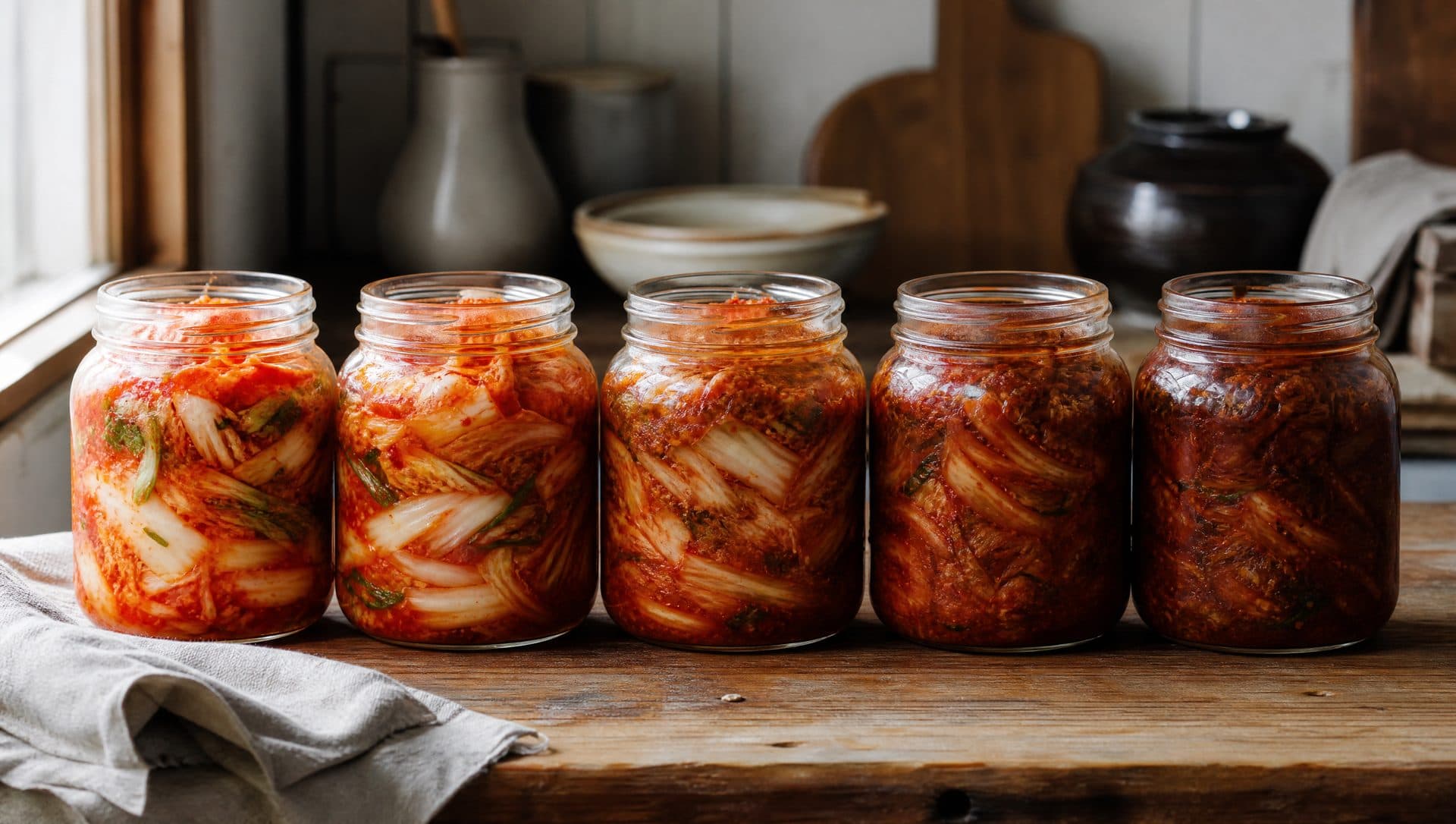 BasicsEN
How long does kimchi last? Storage, spoilage signs and best-by myths
Kept cold and under its brine, kimchi lasts for months and is eaten a year on. It does not spoil on a schedule, it sours. What the date on the pack means, why the white film is yeast and not mould, and the few signs that actually mean the jar goes in the bin.
· 10 min read CultureEN
Kimchi culture and history: from salted vegetables to UNESCO
Koreans were salting vegetables by the third century, the word was first written in 1241, chilli did not enter a kimchi recipe until 1766, and the whole-cabbage kimchi is about 150 years old. The texts and the dates, and what kimjang is actually for.
· 16 min read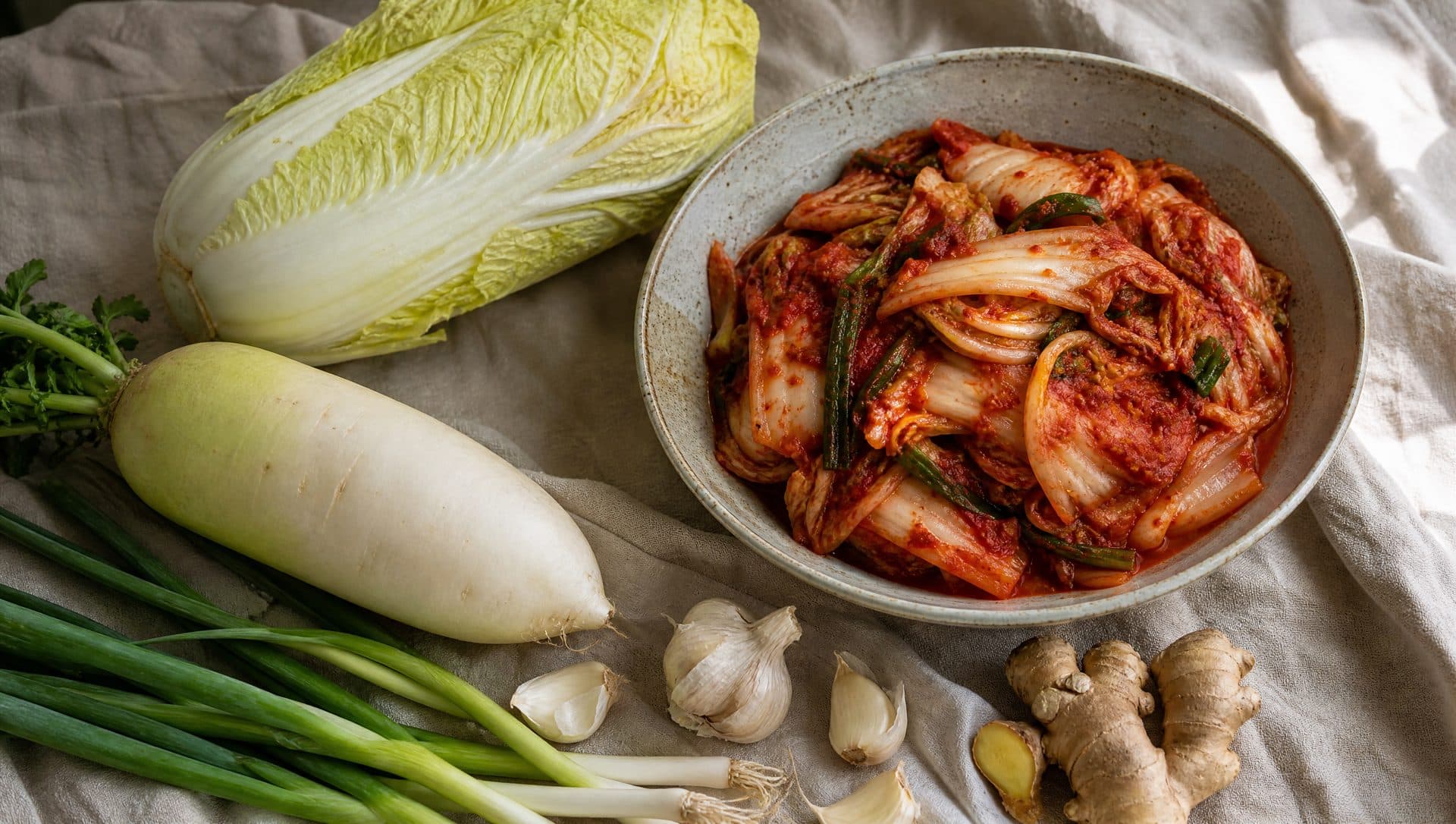 HealthEN
Kimchi health benefits: what the evidence actually says
One to three small servings a day is where the human evidence looks best: lower obesity odds in 115,726 adults, and stable body fat in a placebo-controlled trial. The salt is real too. What has been tested in people, how large the effects were, and where the claims run ahead of the data.
· 17 min read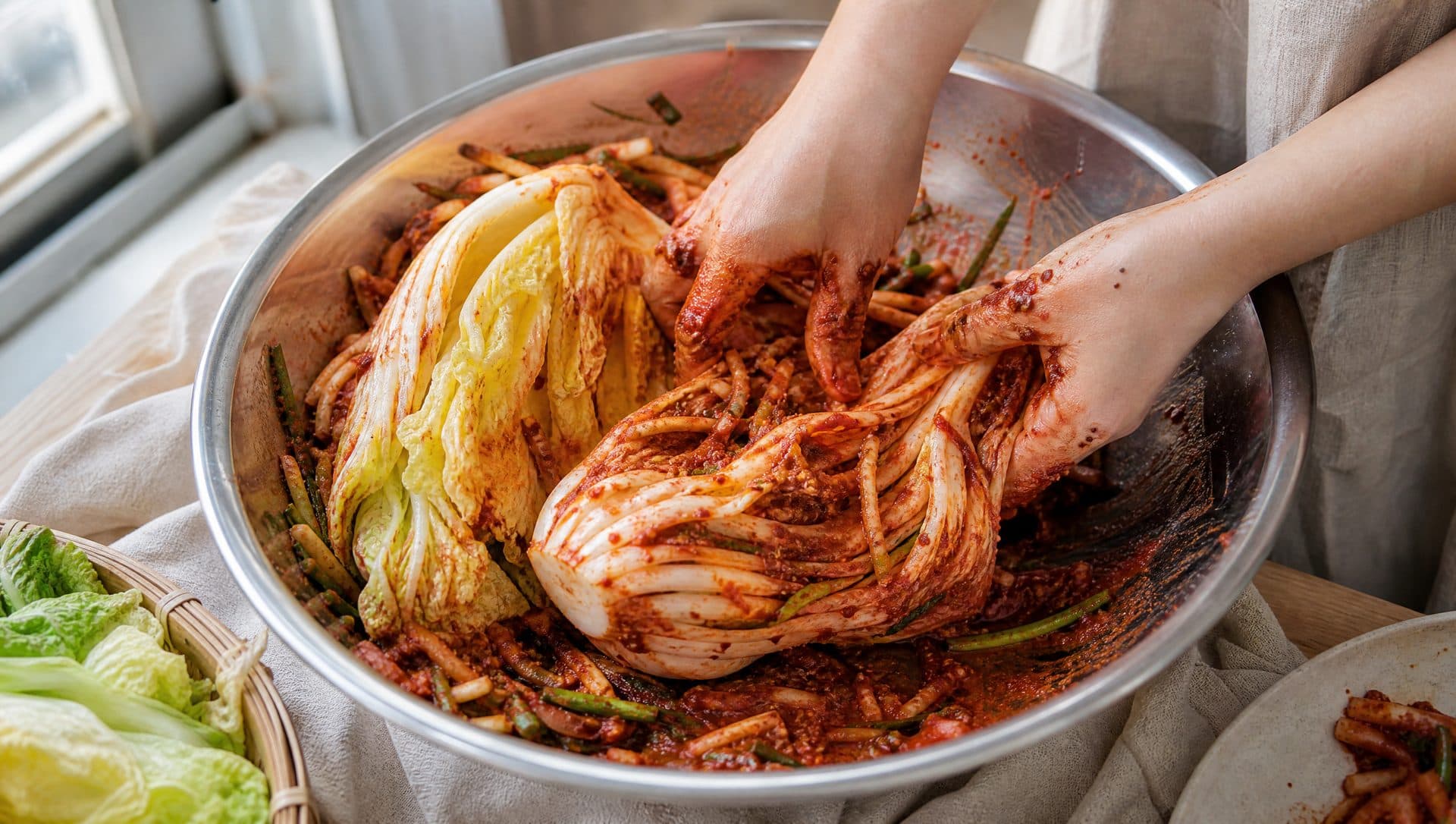 TechniqueEN
How to make classic napa cabbage kimchi at home
Salting the cabbage and fermenting it are two different processes, and the first one decides most of the result. The salt ratios, the standard seasoning proportions, and the temperatures that set how fast it sours.
· 16 min read