
Varieties
Not one thing
A survey in 2000 counted 336 kinds. Kimchi is a method applied to whatever the season is producing — cabbage in winter, cucumber in summer, radish greens when it is too hot to cook. These ten are the ones worth knowing first.
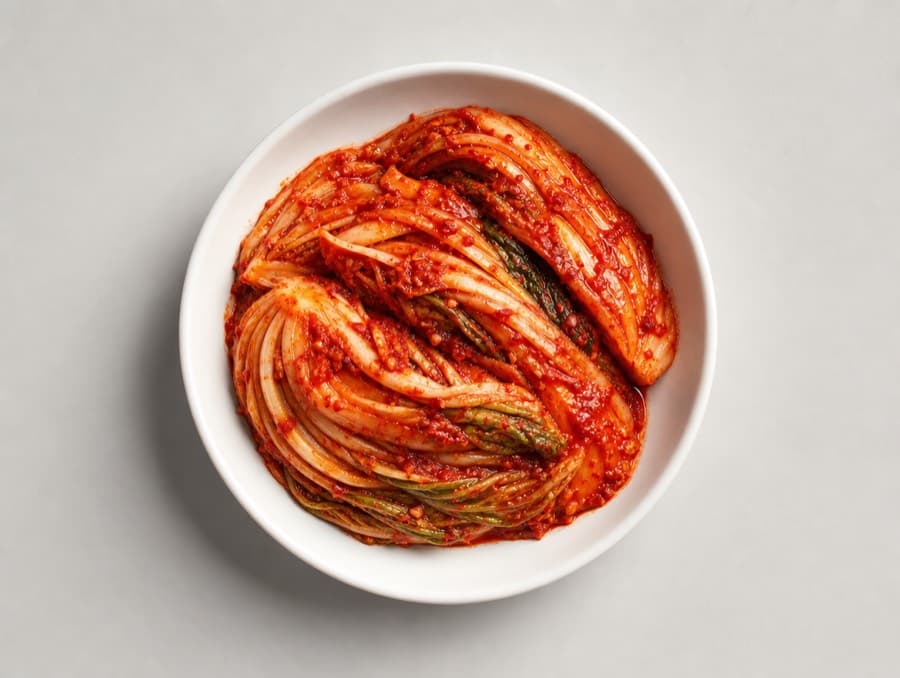 배추김치Baechu-kimchi
Napa cabbage, quartered and packed leaf by leaf. The one people mean.
Year round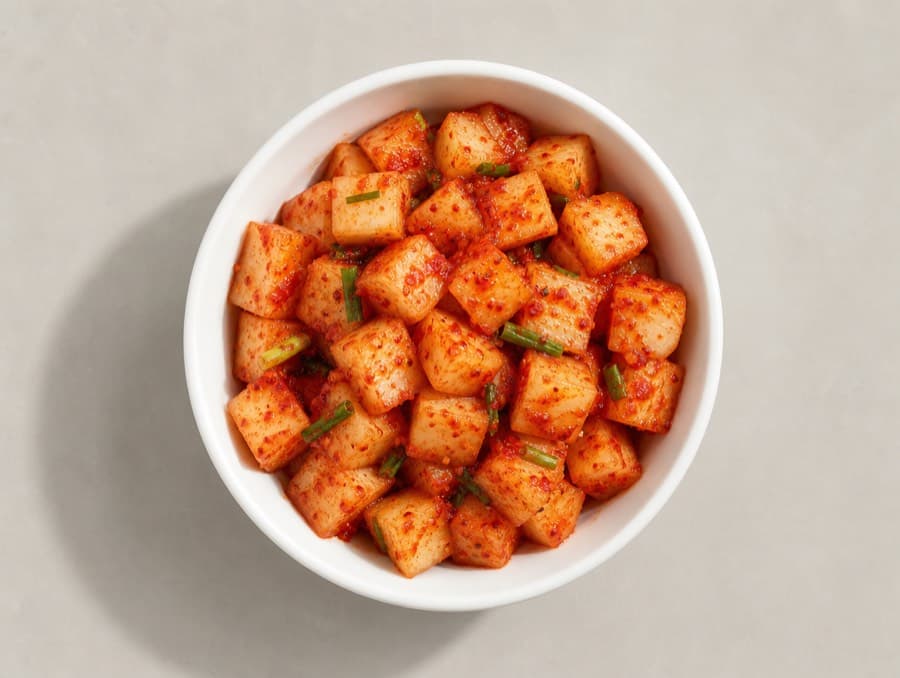 깍두기Kkakdugi
Radish in cubes. Holds its crunch far longer than cabbage, and sweetens as it goes.
Winter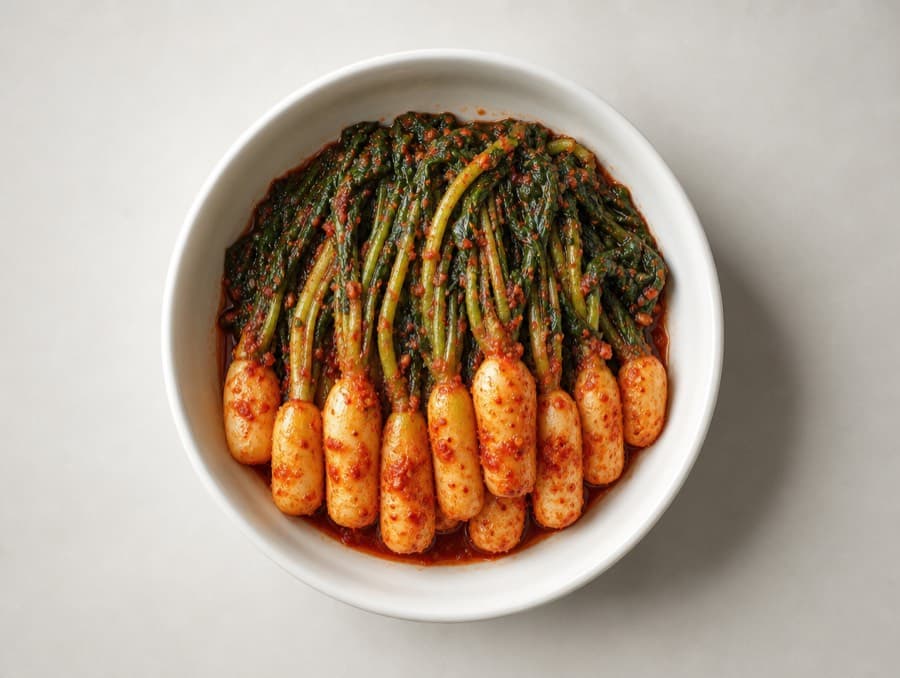 총각김치Chonggak-kimchi
Small ponytail radishes fermented whole, greens and all.
Autumn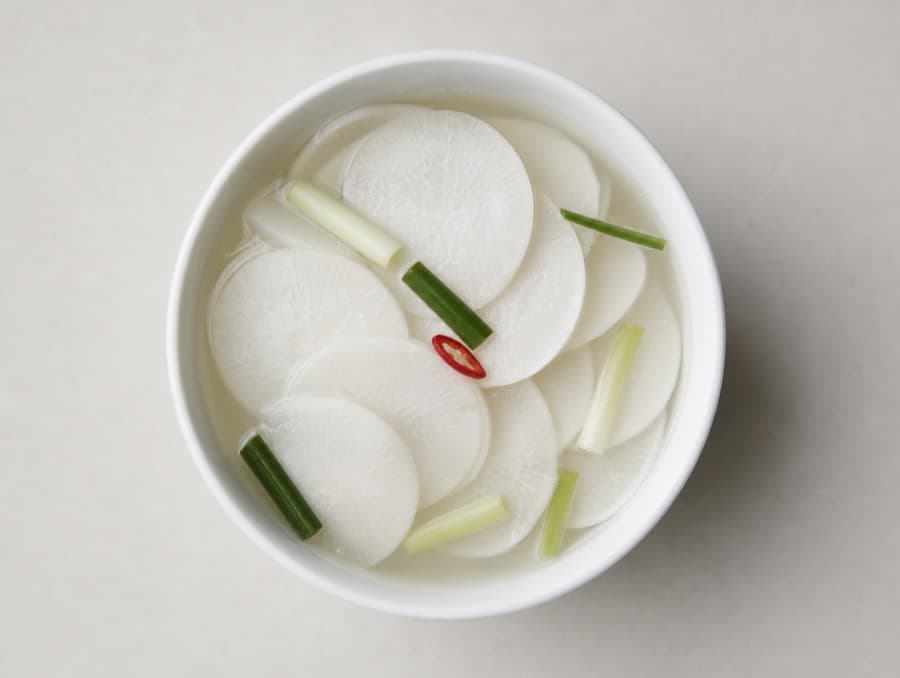 동치미Dongchimi
Radish in a clear cold brine, no chilli at all. The liquid is the point.
Winter · No chilli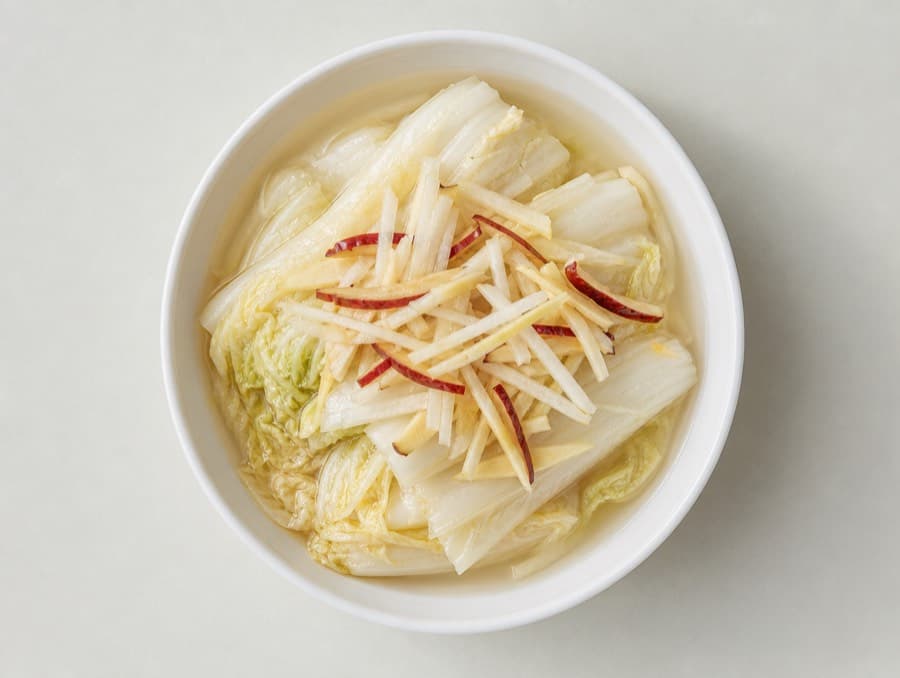 백김치Baek-kimchi
White kimchi made without chilli powder. The older form, and the gentlest way in.
Year round · No chilli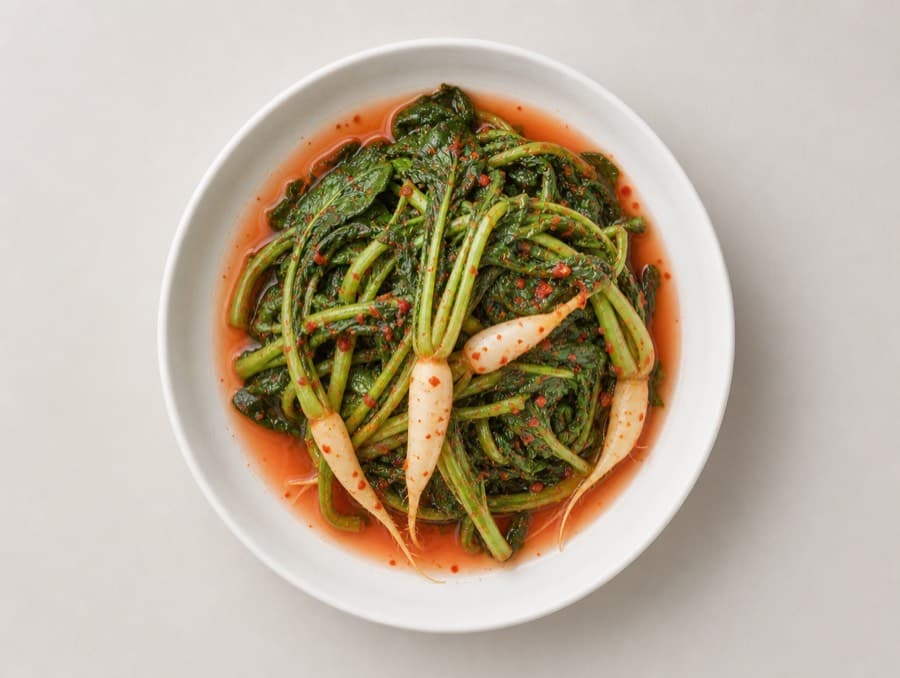 열무김치Yeolmu-kimchi
Young radish greens in a thin brine. Poured over cold noodles when it is too hot to cook.
Summer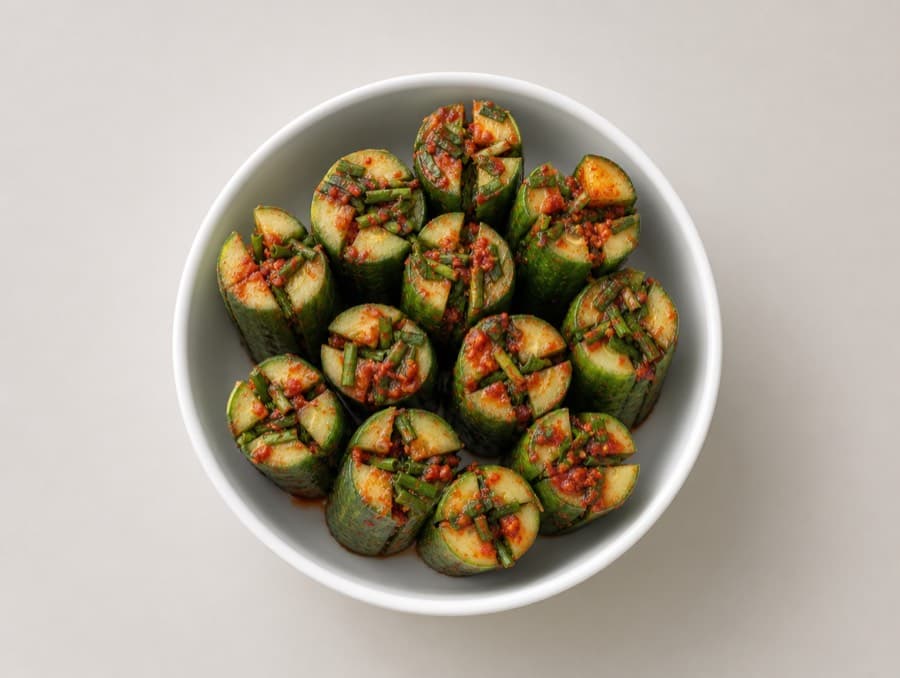 오이소박이Oi-sobagi
Cucumber split into a cross and stuffed with chive. Made to be eaten within days.
Summer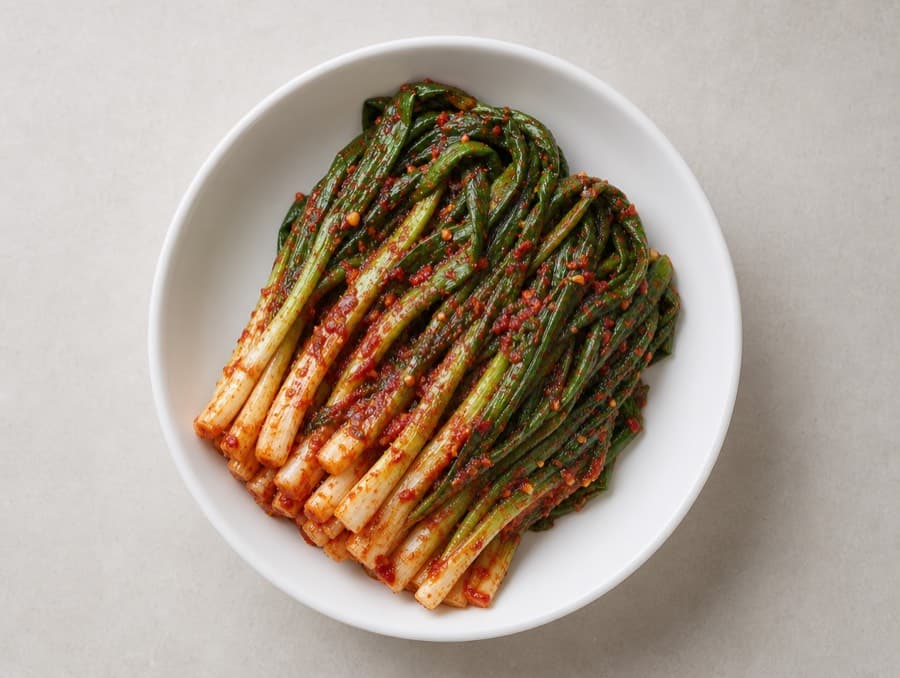 파김치Pa-kimchi
Whole scallions, laid flat and folded. Sharp at first, mellow and glossy after a month.
Spring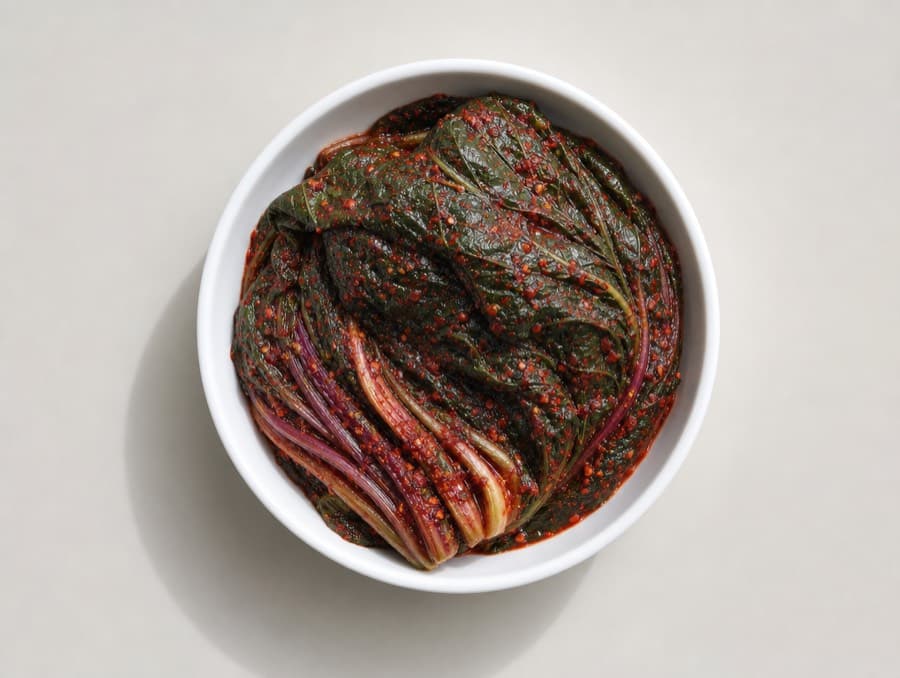 갓김치Gat-kimchi
Mustard leaf — peppery and sharp. A Jeolla speciality that only improves with age.
Winter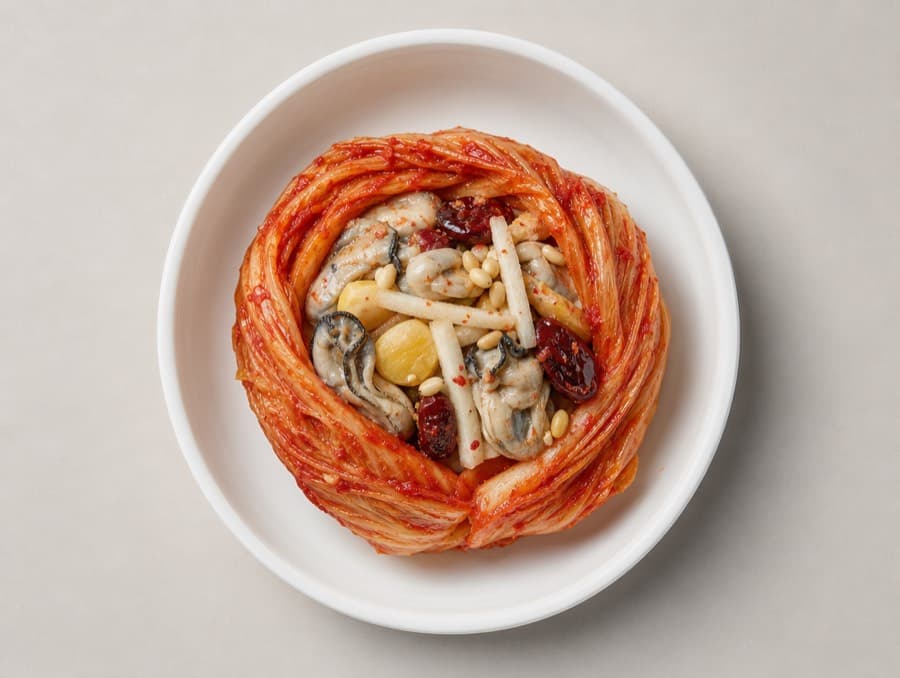 보쌈김치Bossam-kimchi
A cabbage-leaf parcel packed with oyster, pear, chestnut and jujube. Banquet kimchi.
Winter