
Cooking6 min read
Kimchi juice: never pour it out
The liquid in the jar has been fermenting alongside the cabbage the whole time, so it carries the same salt, acid and garlic in a form you can pour. Where it goes in jjigae, fried rice and pancake batter, the cold noodle dish built on it, how to use it to start a new batch, and how to keep it once the jar is empty.
This piece has not been translated into Español yet, so you are reading the English original. Translations are published after review, never automatically.
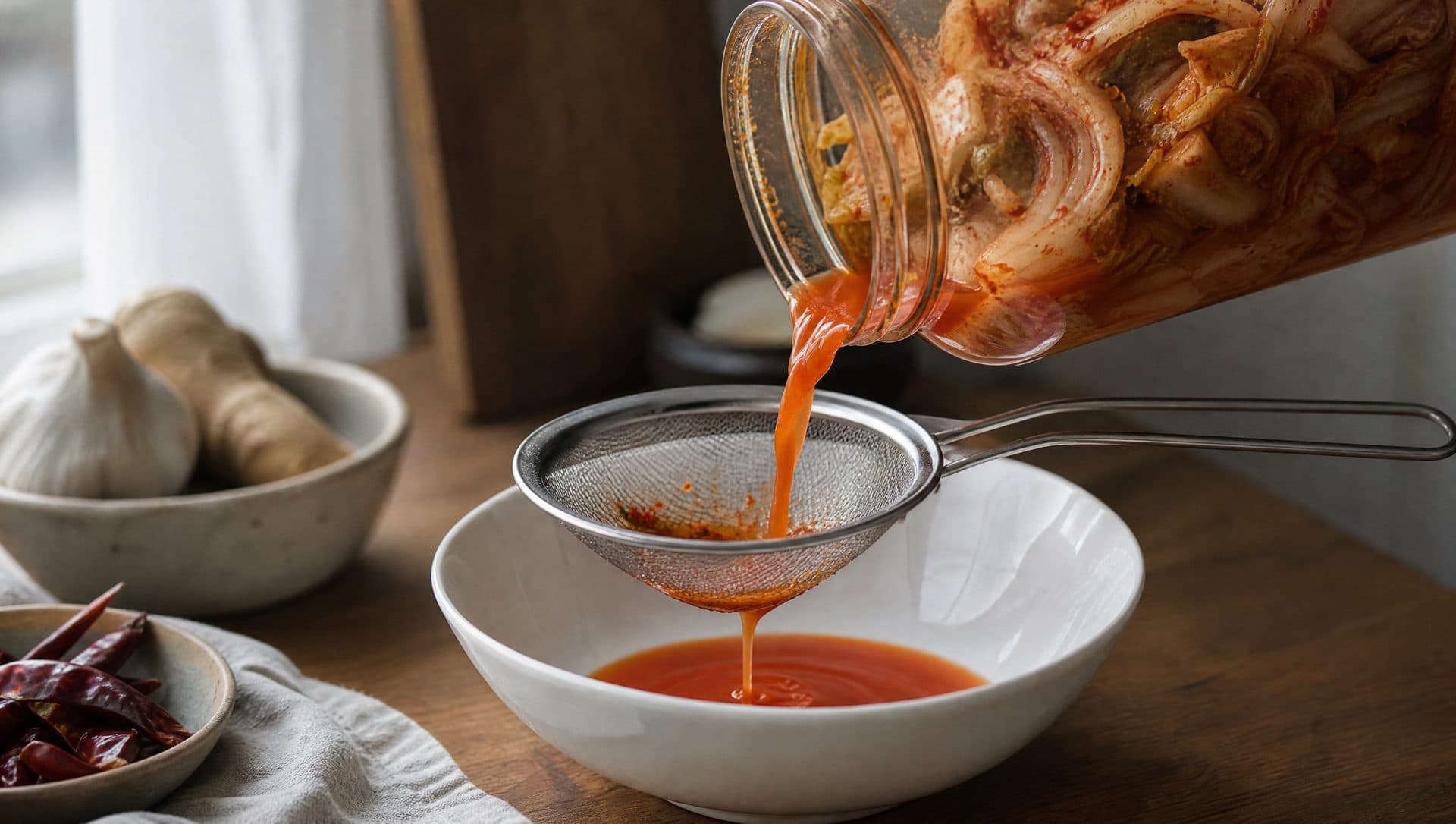
Keep kimchi juice and cook with it. The red liquid left in the jar is brine that has been fermenting alongside the cabbage the whole time, so it carries the same salt, acid, garlic and chilli in a form you can pour. Spoon it into kimchi jjigae and fried rice, use it in pancake batter and cold noodle broth, whisk it into dressings, or add a little to a new batch of kimchi to get it going.
What is kimchi juice, exactly?
It is not a separate ingredient anyone adds. When napa cabbage is salted and packed with its seasoning paste, the salt keeps drawing water out of the leaves, and that water dissolves the gochugaru, garlic, ginger and fish sauce around it. Over days and weeks the jar fills with its own liquid. Koreans call it 김칫국물, kimchi brine.
Everything happening to the cabbage is happening to the brine as well. Lactic acid bacteria are multiplying in it, the sugars are turning into lactic and acetic acid, and the garlic's sulfur compounds are dissolving into it. The World Institute of Kimchi puts the salt content of kimchi today at around 2 per cent, down from roughly 3.5 per cent in the past, and the brine sits at about the same salinity as the leaves it came from.
That makes it closer to a seasoning than a by-product. A tablespoon brings salt, sourness and a garlicky depth at once, which is a lot for one pour.
What can you cook with kimchi juice?
The rule is simple. Use it anywhere you would add both salt and acid, and cut back on the salt you would otherwise have used.
| Dish | How much | What it does |
|---|---|---|
| Kimchi jjigae (김치찌개) | A ladleful with the stock | Deepens the sourness that holds the stew together |
| Kimchi fried rice | 1 to 2 tablespoons per portion | Seasons the rice evenly and colours it red |
| Kimchi pancakes (김치전, kimchijeon) | Replace some of the water in the batter | Acid keeps a fried flour batter from tasting heavy |
| Cold noodles | Mixed with broth, see below | The whole flavour of the broth |
| Salad dressing | Equal parts with oil, plus a little sugar | Stands in for vinegar and salt together |
| Marinade for pork or chicken | Enough to coat, 30 minutes to a few hours | Salt and acid season the surface before it hits the pan |
| Tomato drinks | A splash in tomato juice or a Bloody Mary | Salt, heat and sourness in one pour |
Sour, well-aged kimchi gives the most useful brine for cooking, for the same reason it makes the better stew. We went through that in the four things to do with sour kimchi. Young kimchi gives a brighter, sweeter liquid that suits dressings better than pots.
The Korean dish built on the brine
The clearest Korean use is 김치말이국수, kimchi-mari guksu: thin wheat noodles in an iced broth made largely of kimchi brine. Home recipes typically strain the clear liquid, then mix it with anchovy stock or with 동치미, dongchimi (the mild radish water kimchi), and adjust with a little sugar and vinegar. Chopped sour kimchi, cucumber and half a boiled egg go on top.
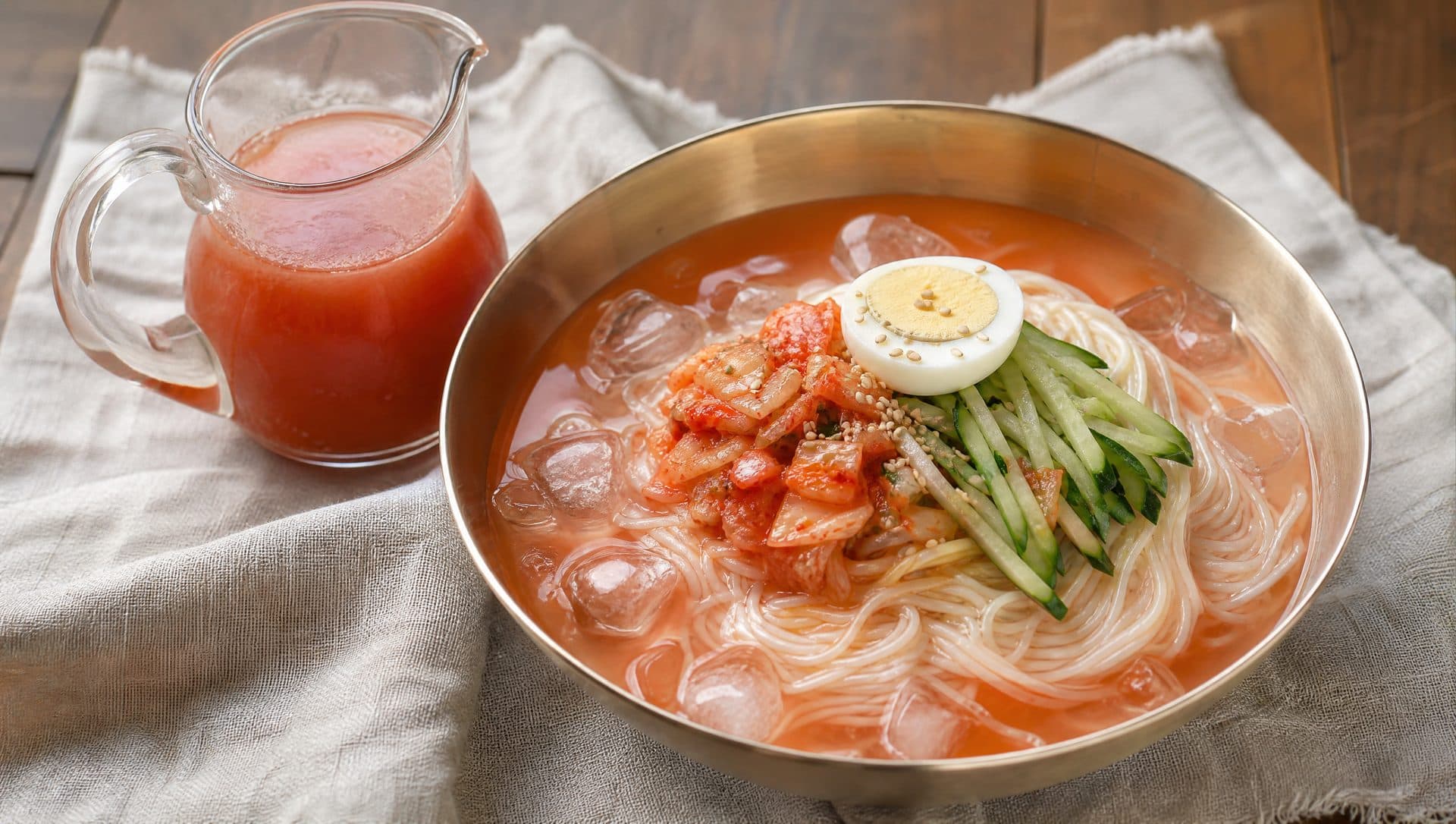
It is a summer dish and a thrifty one. It turns the end of a jar, liquid and over-ripe leaves both, into lunch, and it only works because the brine already tastes finished.
Can kimchi juice start a new batch?
Yes, and plenty of households do it. A few spoonfuls of brine from a ripe jar, stirred into the seasoning paste of a fresh batch, carries in lactic acid bacteria that are already adapted to salt, cold and garlic. Commercial producers do a controlled version of the same thing, adding selected starter strains so every batch ferments at a predictable pace.
Which jar you take it from matters. Lee and colleagues tracked unpasteurised kimchi at 4°C and saw lactic acid bacteria climb from about 5.1 to 9.1 log CFU per gram, then begin to fall again by the fourth week as acid built up (Food Science & Nutrition, 2019). Brine from a jar that is pleasantly sour is full of living bacteria. Brine from one that has sat for a year is mostly acid.
Keep the amount small. The brine brings acid along with the bacteria, and a generous pour pushes the new batch toward sour before it has had a fresh stage worth eating.
Can you drink kimchi juice?
You can. It is salty, though. The World Institute of Kimchi estimates that Koreans get about 408 mg of sodium a day from kimchi, roughly 12 per cent of their total intake, and that figure comes from eating kimchi at almost every meal. Drinking the brine on its own adds salt quickly, so treat it as a seasoning you occasionally sip rather than a health drink.
Raw brine does contain live bacteria. Once it goes into a pan or a pot, the heat kills them, which is worth knowing if the bacteria are the reason you kept it. For cooking, it makes no difference to the flavour.
How long does kimchi juice keep?
As long as the kimchi it came from, provided it stays cold. Left in the jar, it keeps covering the leaves and doing its job, which is one reason not to pour it off while there is still kimchi inside. Leaves that stick up above the brine dry out and pick up the white film faster. The signs that a jar has actually gone are in how long kimchi lasts, and they apply to the liquid as well.
Once the jar is empty, pour the brine into a small glass bottle and keep it in the fridge, or freeze it in an ice-cube tray. A frozen cube dropped into a stew or a pan of fried rice is the tidiest way to use it.
Tonight, before you rinse the next empty jar, strain what is left into a cup and use it in place of the salt in whatever you are cooking. One pan is enough to know whether it belongs in your fridge.
Frequently asked questions
Is kimchi juice the same as kimchi brine?
Yes. In English both names are used for the liquid in the jar. It is the water the salt drew out of the vegetables, plus everything from the seasoning paste that dissolved into it during fermentation.
Does kimchi juice go bad?
It sours rather than spoiling, the same as the kimchi. Throw it out if it grows fuzzy mould, turns slimy or stringy, or smells rotten rather than sour. A flat white film on the surface is usually harmless kahm yeast, but skim it off before using the brine.
Can I reuse kimchi juice to pickle other vegetables?
For a quick fridge pickle, yes. Cucumber, radish or blanched greens dropped into leftover brine will take on its flavour within a day or two. The brine has already been diluted by the first batch, so keep these in the fridge and eat them soon. They are not a substitute for making a new kimchi.
Is kimchi juice vegan?
Only if the kimchi was. Most napa cabbage kimchi uses fish sauce or salted shrimp, and those dissolve into the brine along with everything else. Check the label or the recipe.