
Health17 min read
Kimchi health benefits: what the evidence actually says
One to three small servings a day is where the human evidence looks best: lower obesity odds in 115,726 adults, and stable body fat in a placebo-controlled trial. The salt is real too. What has been tested in people, how large the effects were, and where the claims run ahead of the data.
This piece has not been translated into Français yet, so you are reading the English original. Translations are published after review, never automatically.
Kimchi (김치) is a low-calorie, high-fibre fermented vegetable that carries live lactic acid bacteria, and the best human evidence links one to three small servings a day with lower body fat and a calmer gut. It is also salty. Roughly 600 mg of sodium per 100 g means the dose matters more than the headline.
That is the short version. The long version is what this article is for: which claims have been tested in people, how large the effects were, where the studies are thin, and how much of the salt story is real.
What is actually in a serving of kimchi?
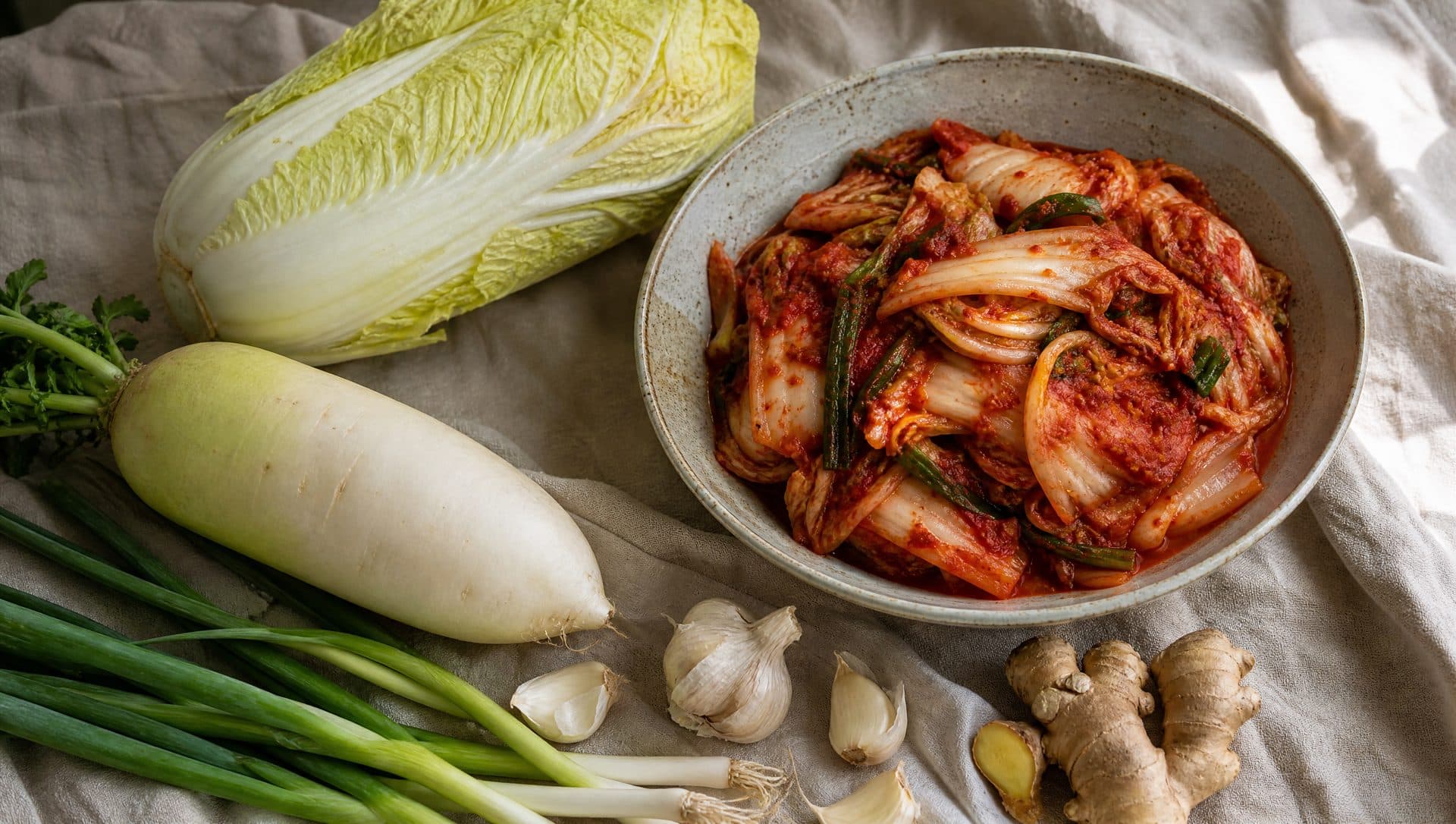
Start with the composition, because most of the health claims trace back to four things: very few calories, fibre, live bacteria, and the compounds in garlic, ginger and chilli.
The USDA FoodData Central entry for cabbage kimchi lists the following per 100 g. A Korean serving, for reference, is 40 g in the Dietary Reference Intakes for Koreans and 50 g in the largest cohort study discussed below, so a typical side-dish portion is about half of these numbers.
| Per 100 g (USDA, cabbage kimchi) | Amount |
|---|---|
| Energy | 15 kcal |
| Protein | 1.1 g |
| Fat | 0.5 g |
| Carbohydrate | 2.4 g |
| Dietary fibre | 1.6 g |
| Sodium | 498 mg |
| Potassium | 151 mg |
| Vitamin K | 43.6 µg |
| Folate | 52 µg |
| Iron | 2.5 mg |
| Calcium | 33 mg |
Two things stand out. The energy density is close to that of the raw cabbage, which is why the weight studies below can give people a lot of kimchi without adding calories. And the sodium figure is a national average that hides a wide spread. When the World Institute of Kimchi (세계김치연구소) measured commercial napa cabbage kimchi (배추김치, baechu kimchi) from eight Korean manufacturers across four seasons, the mean was 619 ± 87 mg of sodium per 100 g, with brand averages running from 534 to 783 mg. We come back to that.
The table does not show the bacteria, and those are the part most of the interest is about.
Does kimchi help with weight?
This is the claim with the most human data behind it, and the data come in two kinds: a very large observational study and a handful of small controlled trials.
The observational study is a 2024 cross-sectional analysis in BMJ Open of 115,726 Korean adults aged 40 to 69 from the Health Examinees cohort, led by researchers at the World Institute of Kimchi. Kimchi intake came from a 106-item food frequency questionnaire covering the previous year, with one serving of baechu kimchi or cubed radish kimchi (깍두기, kkakdugi) defined as 50 g. Men who ate one to two servings of kimchi a day had 12.5% lower odds of obesity than men who ate less than one serving (odds ratio 0.875), and men eating two to three servings had 10.7% lower odds (odds ratio 0.893). Men in the highest baechu kimchi group had about 10% lower odds of both obesity and abdominal obesity. Eating kkakdugi at or above the median level was associated with 8% lower odds of abdominal obesity in men and 11% in women.
The same study also found the ceiling. The relationship was J-shaped: participants eating five or more servings a day weighed more, had larger waists and were more likely to be obese than moderate eaters. The authors are explicit that a cross-sectional design cannot show cause, and that kimchi's salt content argues for moderate amounts rather than more.
The controlled trials are small but they point the same way, and they add something the cohort cannot: a comparison between fermented and unfermented kimchi.
| Trial | Participants | Design | What changed |
|---|---|---|---|
| Kim et al., Nutrition Research, 2011 | 22 overweight or obese adults (BMI over 25) | Crossover, two 4-week phases of fresh or fermented kimchi, 2-week washout | Weight, BMI and body fat fell in both phases; fermented kimchi additionally lowered waist-to-hip ratio and fasting glucose, with larger net improvements in blood pressure, body fat, fasting glucose and total cholesterol than fresh |
| An et al., Annals of Nutrition and Metabolism, 2013 | 21 adults with prediabetes | Crossover, two 8-week phases of fresh or fermented kimchi, 4-week washout | Weight, BMI and waist fell in both; fermented kimchi additionally lowered blood pressure and insulin resistance and raised insulin sensitivity; glucose tolerance improved in 33.3% of participants on fermented kimchi versus 9.5% on fresh |
| World Institute of Kimchi and Pusan National University Hospital, Journal of Functional Foods, 2024 | 90 overweight adults aged 20 to 65 (BMI 23 to 30), 83 completed | Randomised, double-blind, placebo-controlled; 3 g a day of freeze-dried kimchi powder in capsules for 12 weeks | Weight and BMI rose in the placebo group and stayed flat in both kimchi groups; body fat mass fell relative to placebo; Akkermansia muciniphila increased and Proteobacteria decreased in the gut |
Read the third row carefully. Three grams of freeze-dried powder a day is a fraction of a normal serving, and the result was not weight loss but the absence of the weight gain the placebo group experienced over three months. That is a real finding, and a modest one. The trial was also the first to test kimchi against a true placebo; the two crossover studies compared fermented kimchi with fresh kimchi, so every participant was eating cabbage, garlic and chilli either way.
The honest summary is that the large cohort and the small trials agree on direction, the effect sizes are in the range of 10% lower odds of obesity or a few hundred grams of body fat over three months, and none of it supports eating kimchi as a weight-loss intervention on its own.
What does kimchi do to the gut?
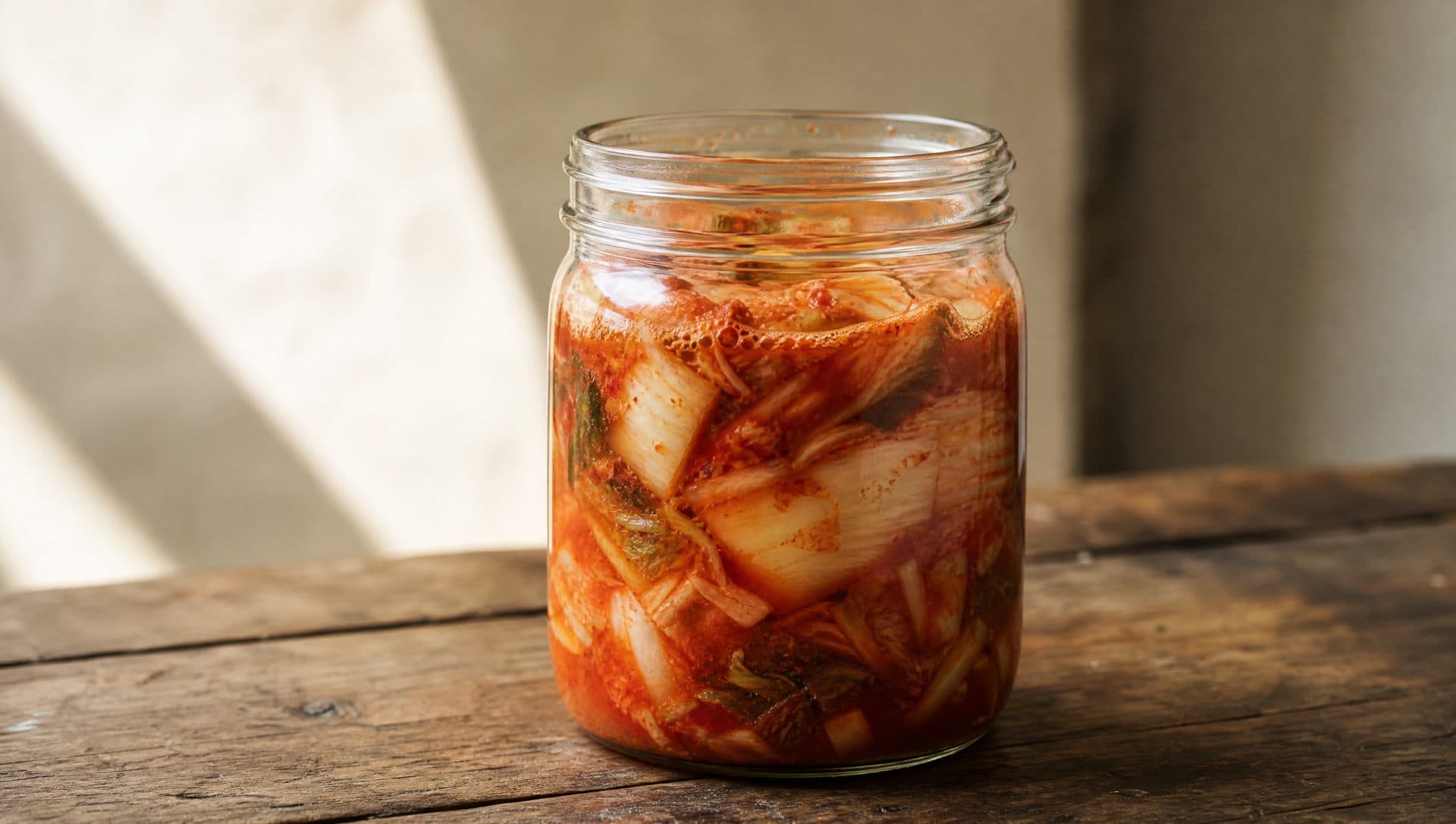
Kimchi ferments spontaneously. Nobody adds a culture; the lactic acid bacteria come in on the cabbage, radish, garlic and ginger, and the salt selects for them. By the time kimchi tastes ready, it carries a lot of them.
A 2016 survey in Food Science and Biotechnology of nine commercial Korean kimchi products counted total lactic acid bacteria between 1.3 × 10⁷ and 1.6 × 10⁹ colony-forming units per gram. Weissella made up 52% of the population, Lactobacillus 28% and Leuconostoc 20%, with Weissella koreensis the single most common species at 35%. A 2024 review in Critical Reviews in Food Science and Nutrition from the World Institute of Kimchi puts the general range at 9 to 10 log CFU per gram, which is to say one to ten billion bacteria in a 10 g mouthful.
The community changes as the jar ages. Leuconostoc mesenteroides dominates the early, fizzy stage and is responsible for much of the carbonation and the gentle sourness of young kimchi. As acidity rises, Lactobacillus plantarum takes over and drives the sharper sourness of older kimchi. Weissella species are present throughout. This is why the flavour of kimchi is a rough readout of which bacteria are currently in charge.
Whether that makes kimchi a probiotic food is a fair question, and the same 2024 review asks it directly. The formal definition of a probiotic requires identified strains, at a defined dose, with a demonstrated benefit. Kimchi meets the dose. What it lacks is consistency: the strains in one jar are not the strains in the next, and a species count is not a strain-level claim. It is more accurate to call kimchi a live fermented food with probiotic potential than a probiotic.
Two human trials speak to the gut directly.
The 2024 placebo-controlled trial above found that both kimchi groups gained Akkermansia muciniphila, a mucus-associated bacterium that has attracted interest for its association with leaner metabolic profiles, and lost Proteobacteria, a phylum that is often elevated in obesity and inflammation. Overall diversity of the microbiome did not change.
A 2022 randomised, double-blind trial in Food & Nutrition Research gave 90 people with irritable bowel syndrome 210 g of kimchi a day, 70 g with each meal, for 12 weeks. Abdominal pain, urgency, incomplete evacuation and bloating all improved significantly, the inflammatory marker TNF-α fell, and stool consistency on the Bristol scale moved toward normal. The important caveat is in the design: the three arms were three kinds of kimchi. The researchers wrote that they could not recruit a no-kimchi control group in Korea, so the trial shows that IBS symptoms improved on a kimchi-heavy diet, not that kimchi caused the improvement.
Does kimchi affect blood sugar, blood pressure or cholesterol?
The two crossover trials are the evidence here, and both were small.
In the 2011 trial, fermented kimchi lowered fasting glucose in overweight adults where fresh kimchi did not, and the net improvements in systolic and diastolic blood pressure, body fat, fasting glucose and total cholesterol were all significantly larger on fermented kimchi. In the 2013 trial in people with prediabetes, fermented kimchi lowered blood pressure and insulin resistance (p = 0.004) and raised insulin sensitivity (p = 0.028), and a third of participants improved their glucose tolerance compared with fewer than one in ten on fresh kimchi.
The blood pressure result deserves a moment, because kimchi is salty and the intuition runs the other way. The trials do not explain the mechanism, and 21 or 22 people over a few weeks is not a basis for anyone with hypertension to change their diet. What the two studies do show, consistently, is that fermentation itself is doing something the raw ingredients are not. That is the strongest argument in the literature for eating kimchi that has actually soured rather than fresh-made kimchi (겉절이, geotjeori).
Does kimchi support the immune system?
This is where the evidence gets thinnest, and it is worth being precise about why.
The World Institute of Kimchi lists immune and anti-inflammatory effects among kimchi's functions, and the mechanism it proposes is plausible: sulforaphane from the cabbage, allicin from the garlic, capsaicin from the chilli and gingerol from the ginger all act on antioxidant and inflammation pathways in cell and animal models. But cell and animal models are what most of that work is.
The one human study so far is a November 2025 paper in npj Science of Food that sequenced individual immune cells from 13 participants in the 2024 placebo-controlled trial, before and after 12 weeks of kimchi powder. It found that antigen-presenting cells ramped up MHC class II signalling and that CD4⁺ T cells shifted toward effector and regulatory types, while CD8⁺ T cells, B cells and natural killer cells were unchanged. The authors describe this as selective remodelling rather than broad activation, and they note that 13 demographically similar people is a small sample and that the findings rest on gene expression rather than functional immune tests.
So: a sensible hypothesis, one small mechanistic study in humans, and no trial that has measured infections, vaccine responses or any clinical immune outcome. "Kimchi boosts immunity" is a claim ahead of its evidence.
The salt question: how much sodium is in kimchi, and does it matter?
Kimchi is salted twice. The cabbage is brined first, then rinsed, then coated in a seasoning paste that carries more salt through fish sauce (액젓, aekjeot) or salted shrimp (새우젓, saeujeot). Some of that salt is there for flavour; most of it is there to select for lactic acid bacteria and suppress everything else. It cannot simply be left out.
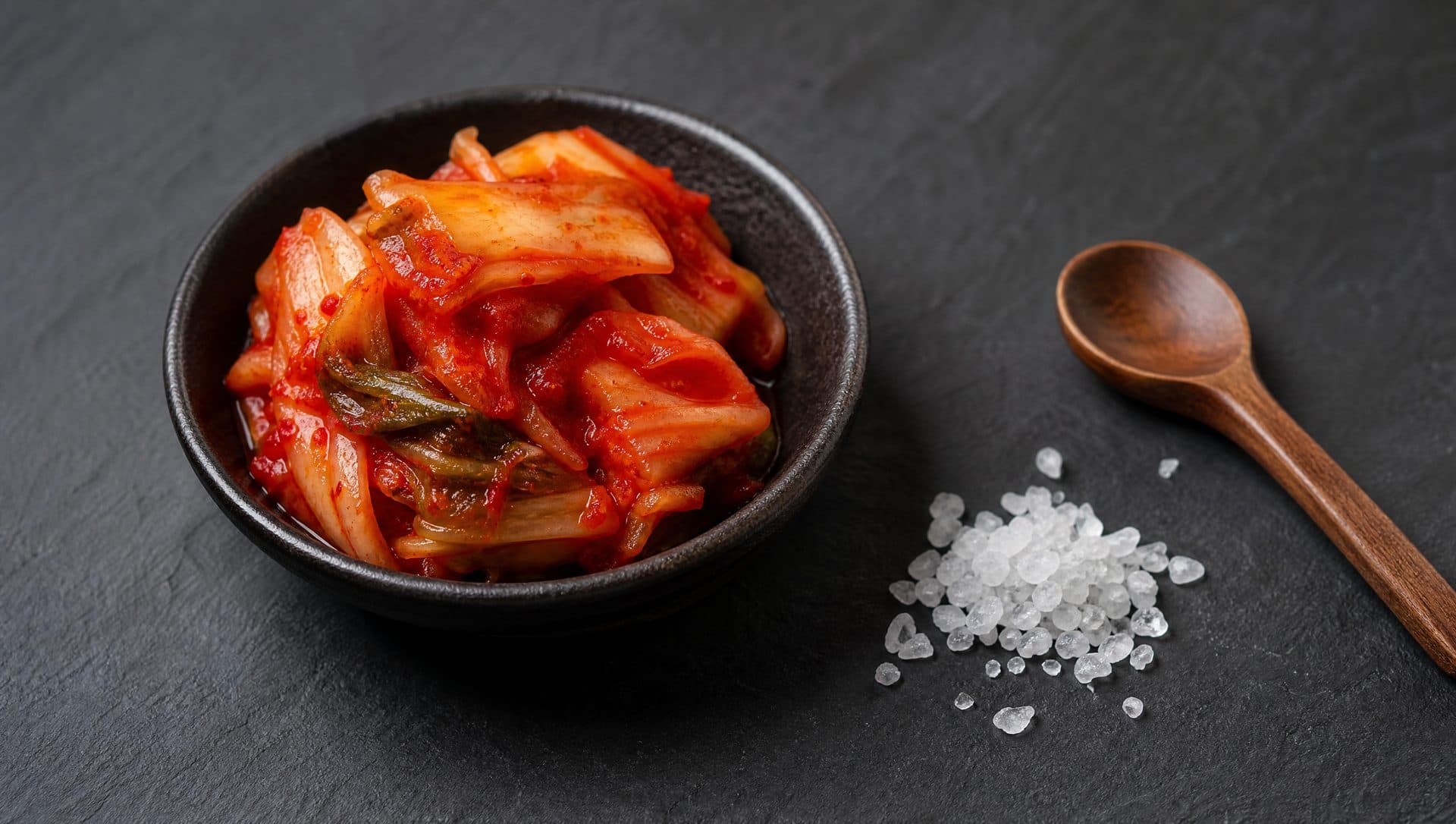
The numbers, then. The World Institute of Kimchi's 2022 survey of commercial baechu kimchi found a mean of 619 mg of sodium per 100 g, with individual brands averaging from 534 to 783 mg, and with spring and summer batches running lower than autumn and winter ones. At 619 mg, a 50 g serving contributes about 310 mg of sodium. The World Health Organization's recommended ceiling is 2,000 mg a day. Three servings a day, the top of the range the cohort study associated with lower obesity, is roughly 930 mg, or close to half of that ceiling from one side dish.
The harder question is stomach cancer, and here the research is not about kimchi specifically but about the category it belongs to. A 2020 analysis in Cancers pooled two Korean cohorts, 195,624 people from the Korean Genome and Epidemiology Study and 4,513 from the Korean Multi-center Cancer Cohort, with the existing literature in a meta-analysis. Each additional 40 g a day of pickled vegetables was associated with a 15% higher risk of gastric cancer (relative risk 1.15, 95% confidence interval 1.07 to 1.23). Comparing the highest with the lowest intake, the relative risk was 1.24, with a confidence interval of 0.99 to 1.55 that just crosses no effect. The authors note that in the Korean cohorts the pickled vegetable intake was essentially kimchi, but the analysis did not separate kimchi from other salted vegetables, and it cannot separate the salt from the vegetable.
Put plainly: the same fermented food that shows a modest metabolic benefit at one to three servings a day is part of a food category associated with higher stomach cancer risk at high intakes, and salt is the most likely common thread. Neither finding cancels the other. They describe two ends of the same dose curve.
If you are on a sodium-restricted diet for blood pressure, kidney or heart reasons, kimchi is not off the table, but it is a portion to count rather than a garnish to ignore. Briefly rinsing kimchi before eating removes some of the surface salt at the cost of some of the seasoning. Choosing spring or summer batches, or brands that publish sodium figures, does the rest. And anyone managing a diagnosed condition should be talking to their clinician about total sodium rather than about any single food.
How much kimchi a day is reasonable?
The evidence gives a fairly narrow answer.
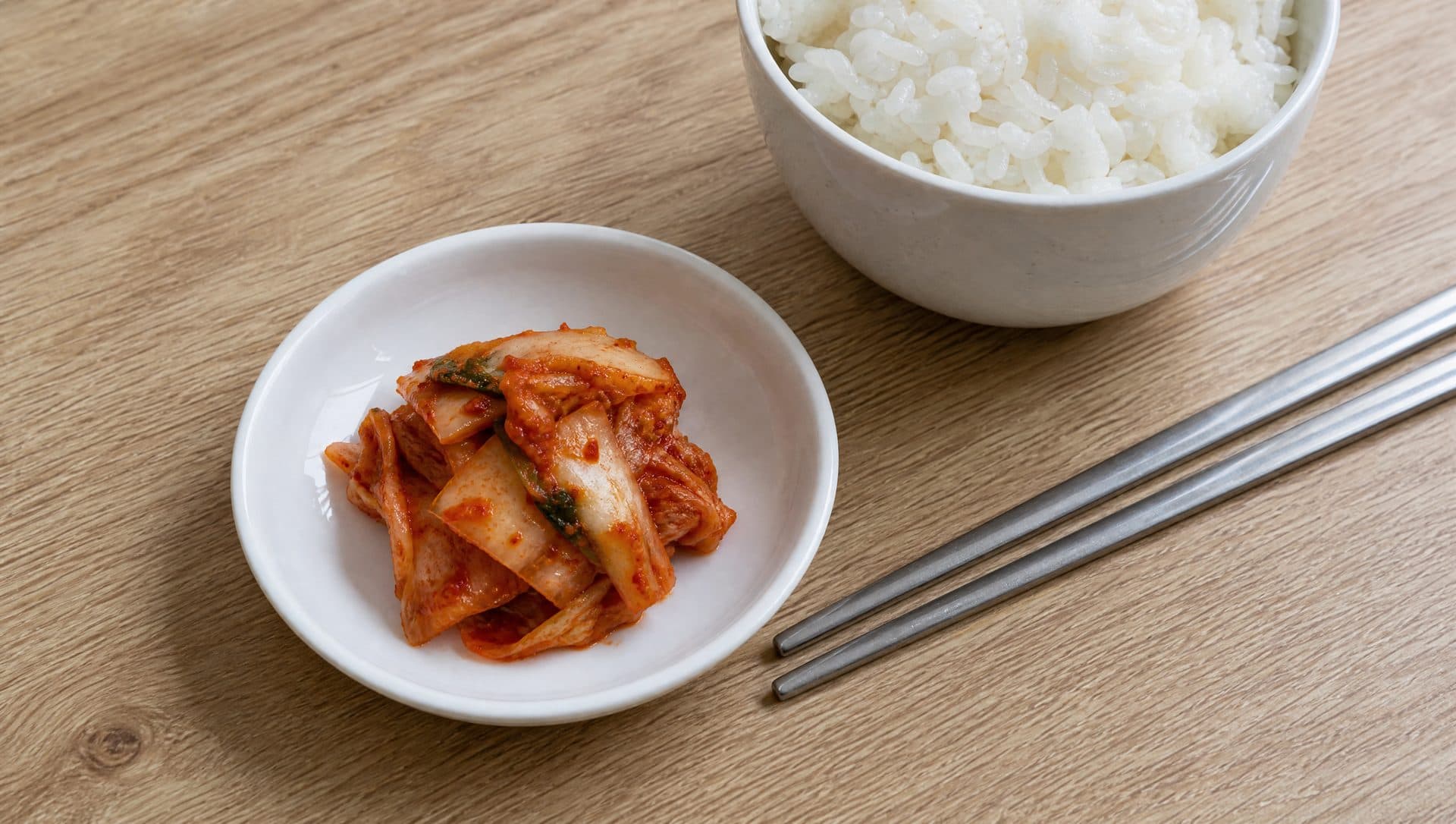
One serving is 40 g in the Dietary Reference Intakes for Koreans and 50 g in the 2024 cohort study. The cohort associated one to three of those servings a day with the lowest obesity odds and five or more with the highest. The controlled trials used amounts from 3 g of freeze-dried powder to 210 g of whole kimchi a day, and all reported benefits, so there is no single dose to defend. Between 50 and 150 g a day, eaten as a side dish across meals, is what the literature supports.
For context, that is more than most Koreans now eat. A 2026 analysis of the Korea National Health and Nutrition Examination Survey found that the share of Korean adults reporting no kimchi at all on the survey day rose from 11.7% in 2010 to 22.7% in 2024. Kimchi is becoming an occasional food in the country that invented it, which is one reason the World Institute of Kimchi has been funding the clinical trials that Western readers are now citing.
Fresh, fermented, cooked or pasteurised: does it matter?
It does, and in a specific way.
Two of the three controlled trials compared fresh kimchi with fermented kimchi, and in both the fermented version did more: lower fasting glucose, lower blood pressure, better insulin sensitivity. Fresh kimchi still contains the cabbage, garlic, ginger and chilli, so the difference has to come from fermentation, either the bacteria themselves or what they produce.
That has three practical consequences.
Pasteurised kimchi is a different product. Jarred kimchi sold at room temperature has usually been heat-treated and carries no live bacteria. It keeps the fibre, the vitamins and the flavour, and loses the part most of the studies were about. Kimchi in the refrigerated section that lists no vinegar and is still bubbling is the one that matches the research.
Cooking kills the bacteria. Kimchi stew (김치찌개, kimchi jjigae) and kimchi fried rice are made with kimchi that has been simmered or fried, and sustained heat well below boiling is enough to kill lactic acid bacteria. The dish is still a vegetable dish. If you want the live cultures, a spoonful of raw kimchi on top of the cooked one is the usual Korean answer.
Older kimchi is not worse kimchi. Sour kimchi that has been in the fridge for months has more Lactobacillus plantarum and less Leuconostoc than young kimchi, and both are lactic acid bacteria. Nothing in the trials suggests a point where fermentation has gone too far for health purposes. It goes too far for taste long before that.
Frequently asked questions
Is kimchi good for you?
In moderate amounts, the evidence says yes: it is very low in calories, contains fibre and live lactic acid bacteria, and one to three small servings a day is associated with lower obesity odds in a study of 115,726 Korean adults. The limit is sodium, at roughly 600 mg per 100 g, so the benefit is tied to portion size.
Is kimchi a probiotic?
Kimchi contains lactic acid bacteria at probiotic-level counts, around one to ten billion per gram, but the strains vary from jar to jar and have not been characterised the way a probiotic supplement's strains are. Researchers at the World Institute of Kimchi describe it as a food with probiotic potential rather than a probiotic, and that is the accurate label.
How much kimchi should I eat a day?
A serving is 40 to 50 g. One to three servings a day is the range the largest study associated with the lowest obesity risk, and five or more servings was associated with higher weight and waist size. Somewhere between 50 and 150 g a day, spread across meals, matches the research.
Does kimchi raise blood pressure because of the salt?
The two small trials that measured it found blood pressure fell on fermented kimchi, not rose, over four to eight weeks. But they involved 21 and 22 people, and kimchi does add meaningful sodium. If you are managing hypertension, count kimchi toward your daily sodium and choose lower-salt batches rather than relying on the trial result.
Does kimchi cause stomach cancer?
Kimchi has not been tested on its own. Pickled and salted vegetables as a category are associated with higher gastric cancer risk in Korean and Japanese cohorts, about 15% higher for each additional 40 g a day, and in Korea that category is mostly kimchi. Salt is the most likely reason. The finding applies to high daily intakes, not to a side dish.
Is fresh kimchi as healthy as fermented kimchi?
Fresh kimchi has the vegetables and seasonings but not the bacteria or fermentation products, and in two head-to-head trials it did less for fasting glucose, blood pressure and insulin sensitivity than fermented kimchi did. Let it sour.