
Buying7 min read
Onggi, glass or plastic: the right container for fermenting kimchi
A glass jar or food-grade plastic tub is enough for a first batch. What four Korean studies found across onggi, polypropylene, stainless steel and glass, what the Georgia Tech 26 per cent figure actually measured, why a handmade pot needs a lead check, and how full to fill any container.
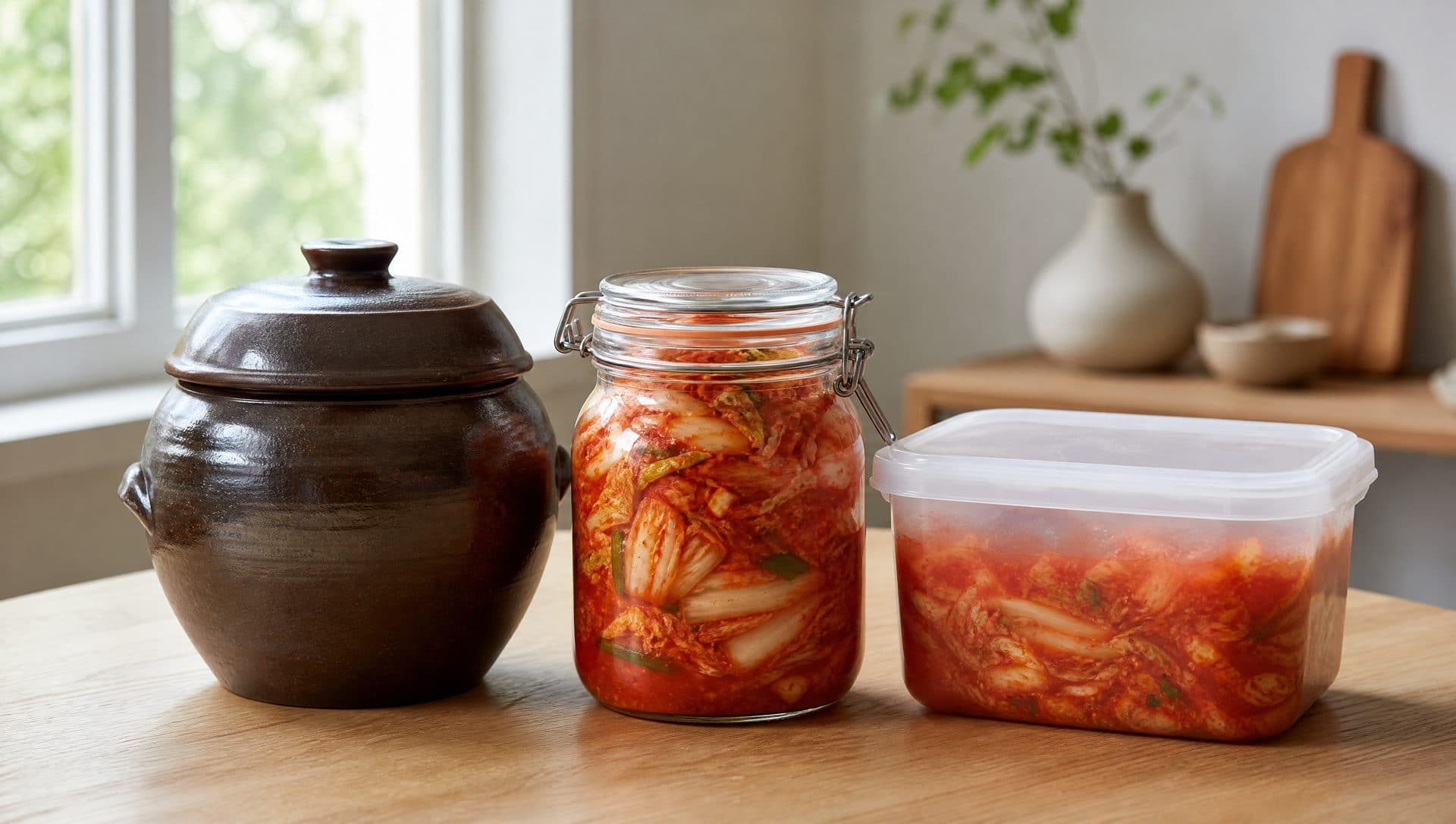
For your first kimchi, use a glass jar or a food-grade plastic tub with a lid that closes, and fill it no more than 80 per cent. Onggi (옹기), Korea's porous earthenware, does change the ferment, and the research behind that is real. The pots are heavy and a handmade one needs a lead check, so treat it as a second purchase.
What is the best container for fermenting kimchi?
All of these make good kimchi. They differ in weight, in smell, and in how much gas gets through the wall.
| Container | Gas through the wall | Good at | Watch out for |
|---|---|---|---|
| Unglazed onggi | Yes, through pores of 1 to 100 micrometres | Came top in a 2011 comparison study | Heavy, opaque, and a handmade pot needs a lead check |
| Glazed onggi | Less than unglazed | Good results, though behind unglazed in a 2011 study | The same, plus knowing what the glaze is |
| Glass | None | Holds no smell, and you can see the brine level | Breakable, and an overfilled jar pushes brine out |
| Food-grade plastic | Less than onggi | Light, and the usual kimchi refrigerator tub | Absorbs smell |
| Stainless steel | None | Holds no smell | Opaque, so you open it to check the brine |
Does onggi really make better kimchi?
On most of what researchers measure, yes, but the gap is narrower than the stories about it. Four Korean studies, at four temperatures:
| Study | Conditions | Containers | Result |
|---|---|---|---|
| Lee et al., 2010 | 5°C, 8 weeks | Gas-permeable polyethylene, glazed onggi, glass | Polyethylene had the steadiest pH and acidity over the first 4 weeks |
| Jeong et al., 2011 | 4°C, 4 weeks | Glazed and unglazed onggi, polyethylene, polypropylene, stainless steel, glass | Onggi had steadier acidity, more lactic acid bacteria and better texture. Unglazed beat glazed |
| Han et al., 2013 | 15°C, 10 days | Onggi and plastic, each with an ordinary and an airtight lid | Onggi had the most lactic acid bacteria and the lowest pH, 3.75 against 3.99 for sealed plastic |
| Kim et al., 2020 | 0°C, 32 days | Polypropylene, stainless steel, ceramic | Ceramic ripened slowest. Plastic and steel were nearly identical |
The 2013 counts put this in proportion. Lactic acid bacteria started at about 109 million per millilitre, and after 10 days stood at 14.2 billion in the onggi and 4.9 billion in the container that came last. Every vessel multiplied the count at least 45 times. First and last place were about a factor of three apart.
The 2020 study is the closest to a modern kitchen: 2.3 kg of fresh kimchi in 3.5-litre containers at 0°C. On day 16 the pH was 4.59 in polypropylene, 4.53 in steel and 4.92 in ceramic. Taking 0.75 per cent acidity as the end of kimchi's quality life, plastic and steel got there in 12 to 16 days and ceramic in 16 to 20, so about four extra days. The authors say the cause is hard to pin down, and the study was funded by ZEN HANKOOK, a ceramic tableware company.
Temperature does far more than any of this. In a 2025 study, kimchi reached pH 4.36 on day 3 at 15°C and pH 4.32 on day 47 at 4°C. Kimchi fermentation explained, day by day has that table in full.
Why does a clay pot change the ferment?
Onggi lets gas out and keeps most of the liquid in. Soohwan Kim and David Hu at Georgia Tech scanned an unglazed pot from Jeju and found pores of 1 to 100 micrometres, averaging 5. Do not reach for a terracotta plant pot instead. They note that it quickly leaks any water poured into it.
Their 2023 paper in the Journal of the Royal Society Interface compared the pot with a sealed glass jar, using 200 g of salted cabbage at 25°C for two days. Carbon dioxide stayed lower in the onggi. Their model put production at 0.695 mmol an hour in the pot and 0.552 in the glass, which is 26 per cent more.
You may have seen that figure reported as 26 per cent more bacteria. The paper reads the gas as a sign of bacterial growth, but the bacteria themselves were not counted, the cabbage had no seasoning, and each container got three trials. The authors also say their glass jar leaked and held half the volume of the pot, and that the size difference could be an alternative explanation.
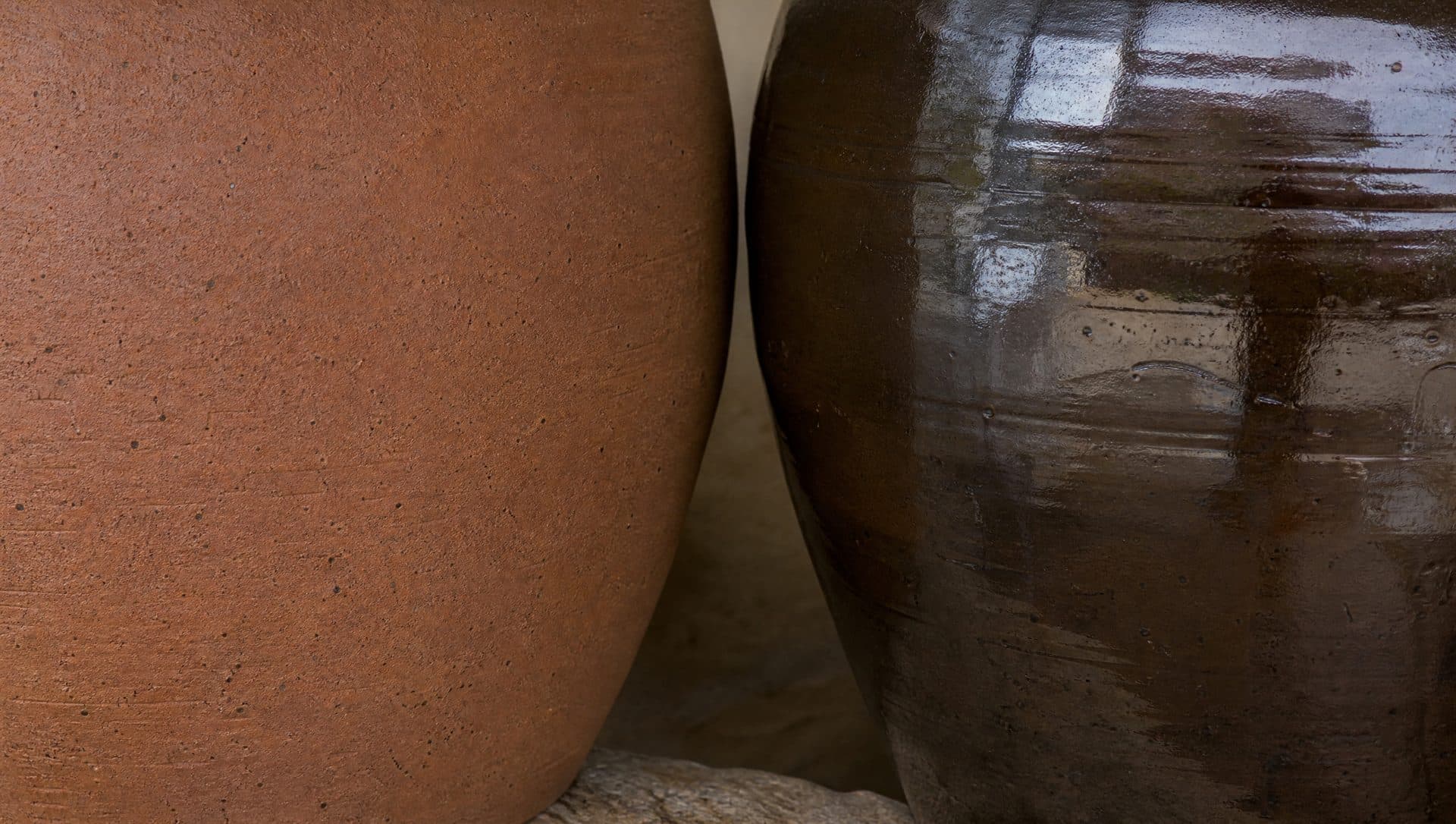
The gas may matter more than the clay. The 2010 study used a polyethylene container built for controlled permeability, which passed 357 units of carbon dioxide against 13.7 for glazed onggi and none for glass (mmol per hour, per square metre, per atmosphere). That was a purpose-built container, so the result says nothing about the tub in your cupboard.
Is onggi safe, and what about lead glaze?
Onggi has a real lead history. Some makers took up a red-lead glaze, gwangmyeongdan (광명단), to save fuel. The Encyclopedia of Korean Culture records that a 1977 health ministry rule on lead brought arrests of makers and closed many kilns.
Acid is why this matters for kimchi. A 1981 Korean study found lead release rose as pH fell below 4 and was not detected above pH 6 over six weeks. Red glazes gave up more than black ones at the same pH. Kimchi kept more than three weeks in glazed pots built up a significant amount of lead, even in pots that appeared lead-free on the Korean Industrial Standard test.
That study is 45 years old and says nothing about any particular new pot. The FDA still warns about pottery that is handmade with a crude appearance or irregular shape, antique, or bought from flea markets and street vendors, and it says no washing or boiling removes lead. So buy new, from a seller who can tell you what the glaze is, and keep antique jars for decoration. If you are unsure of a pot, use a home lead test kit, and keep it away from food if the test shows leachable lead.
How full should a kimchi container be?
This applies to every container on the list. Samsung's service guide for its kimchi refrigerators says to fill the tub 70 to 80 per cent and keep the kimchi under the brine. LG's says to stop at the tub's limit line so the brine does not overflow. Carbon dioxide lifts the brine in the first days, and a jar filled to the rim pushes it out around the seal.
Air on the surface is the other problem. Press the kimchi down, then lay a sheet of film or an outer cabbage leaf on top, which is the World Institute of Kimchi's advice against white film. How long kimchi lasts covers what happens if you skip it.
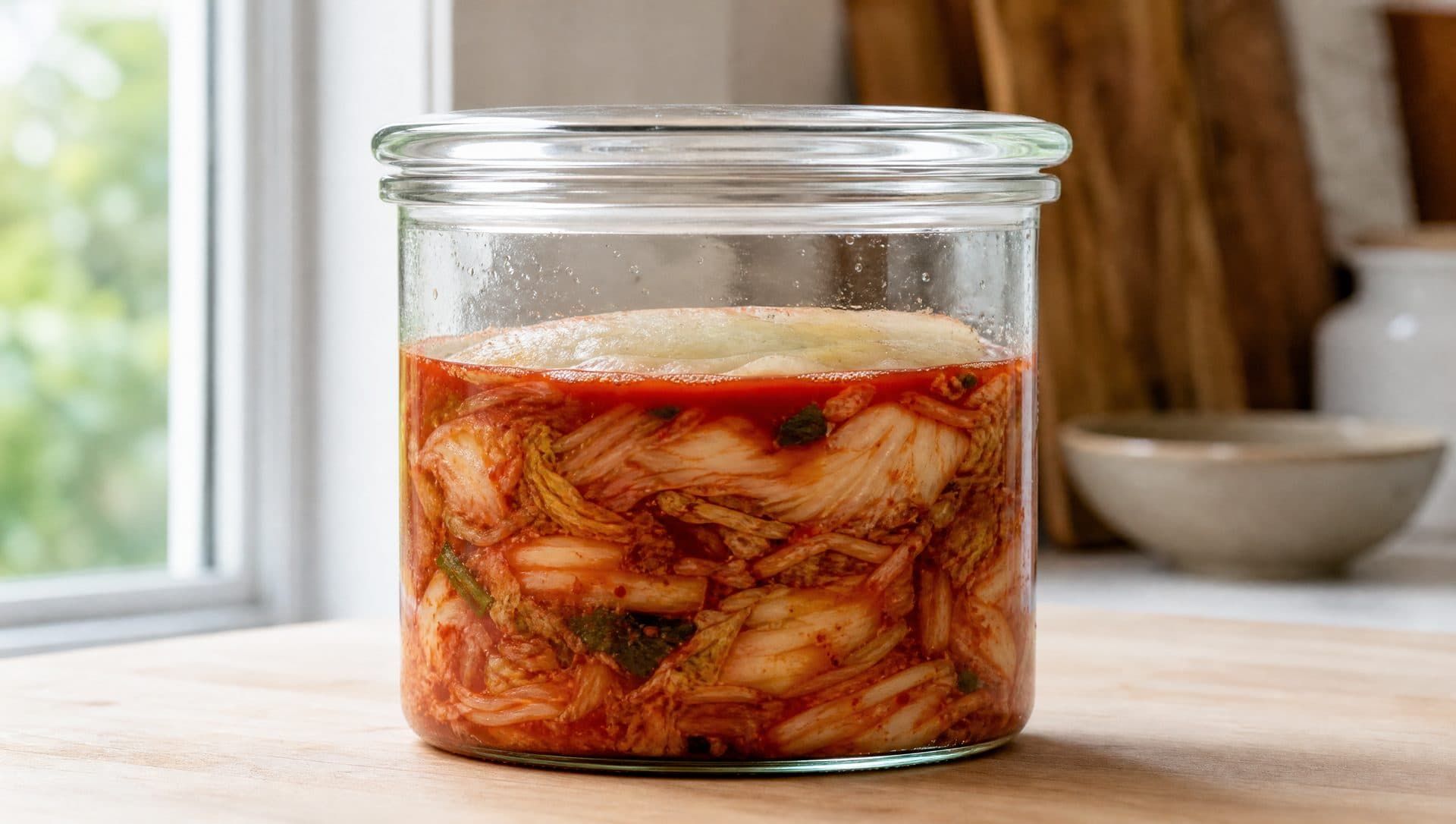
For size, the USDA's Complete Guide to Home Canning allows a gallon of container for every five pounds of fresh vegetables. The 2020 Korean study put 2.3 kg of kimchi in 3.5 litres, which is close to the same ratio.
So before you buy anything, weigh the vegetables you plan to use and allow about 1.7 litres per kilo. Then look in the cupboard. A clean jar or tub of that size can take your next batch.
Frequently asked questions
Can you ferment kimchi in a Mason jar?
Yes. The USDA calls quart and half-gallon Mason jars acceptable for sauerkraut, with a warning that they may lose more to spoilage. Leave headroom and keep the kimchi pressed under the brine.
Is a fermentation crock better than glass?
None of the studies above tested a Western stoneware crock, so do not assume one behaves like onggi. The USDA guide starts from stone crocks and calls food-grade plastic and glass "excellent substitutes".
Is plastic safe for kimchi?
Use plastic made for food. The USDA says food should touch only food-grade plastic and rules out garbage bags and trash liners. The everyday drawback is smell, and why kimchi smells explains how to get it out of a tub.
Does onggi keep kimchi colder?
Not on its own. A 2006 study in the Korean Journal of Packaging Science & Technology found its thermal barrier generally similar to glass. The cold came from the winter soil around a buried jar, and the history of kimchi follows how that job passed to the kimchi refrigerator.