
Technique9 min read
Why is my kimchi too salty, too sour, or not fermenting?
Most kimchi faults come down to salt and temperature. A diagnosis table for seven symptoms, the 1984 Korean experiment that timed ripening at four salt levels and four temperatures, how raw radish rescues a salty batch, why a sour jar can only be cooked, and what to do when nothing seems to be happening.
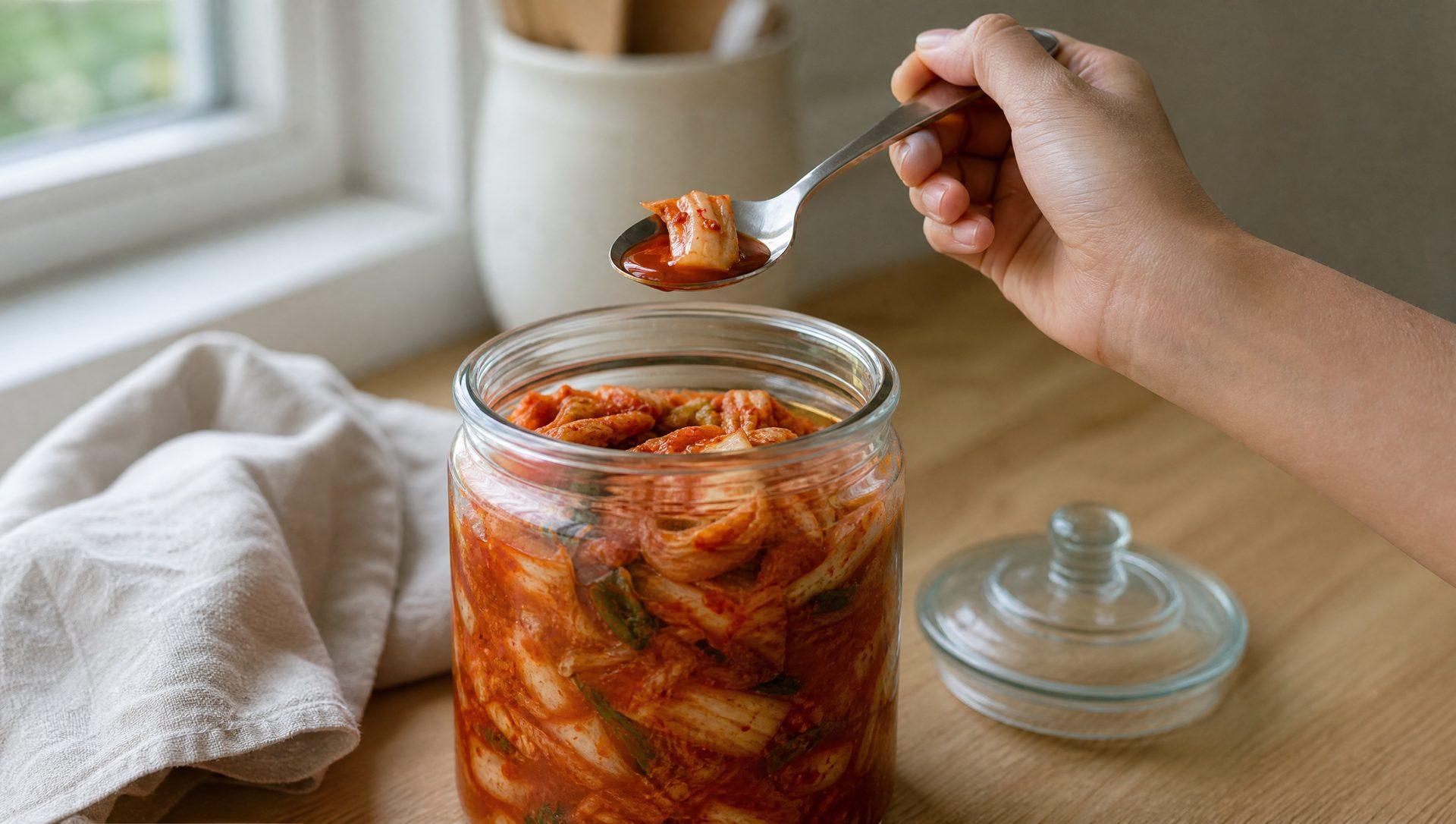
Kimchi that is too salty, too sour or slow to ferment nearly always traces back to two things: how much salt went in, and how warm the jar has been. Salty kimchi can be diluted with raw radish. Sour kimchi cannot be made less sour, so it gets cooked. A jar that will not ferment is usually too cold, too salty, or both.
Some of these faults have a fix and others only have a use. Find your jar in the table first.
What is wrong with my kimchi?
| Symptom | Most likely cause | What to do with this jar | Next batch |
|---|---|---|---|
| Too salty | Brined too long or too strong, or rinsed too little | Tuck slices of raw radish between the layers | Weigh the salt and rinse three times |
| Sour within days | Too long on the counter, or a warm fridge | Move it to the coldest shelf and cook with it | Refrigerate when the brine first tastes sour |
| Not souring | Too cold, too salty, or both | Give it a day at room temperature and taste the brine daily | One to two days out before the fridge |
| Bland, with a thin brine | Under-salted cabbage, or cabbage packed wet | Pour off the brine, season it with fish sauce and pour it back | Salt longer and drain for half an hour |
| Bitter | Not ripe yet, or young sea salt | Wait | Use sea salt that has been aged |
| Soft and mushy | Too little salt, warmth, air, or a lot of fruit and sugar | Cook it | Keep it cold and under the brine |
| White film on top | Air reaching the surface | Skim it, then rinse and cook the top layer | Press everything under the brine |
Why do salt and temperature explain most kimchi problems?
Between them they set the speed of the ferment. In 1984 Tae-Ick Mheen and Tai-Wan Kwon at the Korea Advanced Institute of Science and Technology made kimchi at four salt levels, kept each one at four temperatures, and had a panel taste it as it aged. Their paper in the Korean Journal of Food Science and Technology lists the days on which each batch was ripe and good to eat:
| 2.25% salt | 3.5% salt | 5% salt | 7% salt | |
|---|---|---|---|---|
| 30°C (86°F) | 1 to 2 | 1 to 2 | 2 | 2 |
| 20°C (68°F) | 2 to 3 | 2 to 3 | 3 to 5 | 10 to 16 |
| 14°C (57°F) | 5 to 10 | 5 to 12 | 10 to 18 | 13 to 22 |
| 5°C (41°F) | 35 to 180 | 55 to 180 | 90 to 180 | Never ripened |
Read across a row to see what salt does. At 20°C the kimchi at 3.5 per cent was ripe on day 2, and the kimchi at 7 per cent on day 10. Read down a column for temperature. The 2.25 per cent kimchi was ripe in a day at 30°C and took 35 days at 5°C. The saltiest batch in the coldest room had still not ripened after 180 days.
This was plain kimchi, with no fish sauce and no rice porridge, sealed in 200 g bags. Your days will be different, but salt and cold will push them the same way. Home kimchi is now made at about 2 per cent salt, as the full method sets out, so most jars belong in the left-hand column, where everything moves fastest.
Why is my kimchi too salty, and can I fix it?
The salt went in at the brining stage and it has stayed. Cabbage left in the brine too long will do it. So will a brine measured by the cup instead of by weight, or a single quick rinse. The salting step is where to look before the next batch.
Waiting will not help. A 2014 study in the Korean Journal of Food and Nutrition followed low-salt kimchi through fermentation at 0°C and 5°C and found no significant rise or fall in its salinity. The salt needs somewhere to go.
Korean kitchens give it radish. A kimjang rescue column in the Asia Economy newspaper in 2009 set out the method: cut Korean radish, 무 (mu), into flat half-moons and push them between the layers of kimchi, or tie spring onions, 쪽파 (jjokpa), into small bundles and do the same. The kimchi tastes less salty, and the radish becomes a second kimchi.
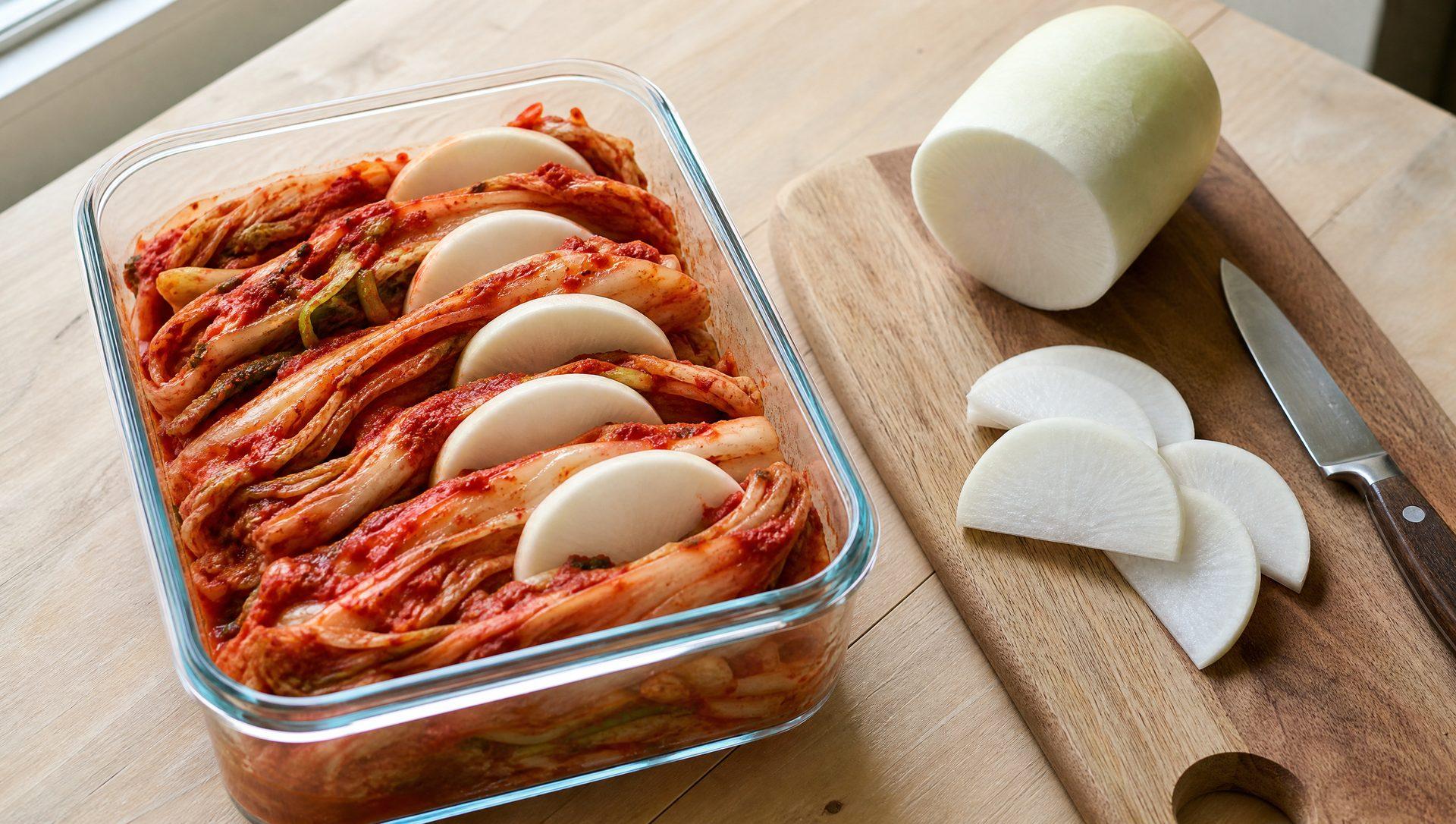
The arithmetic is plain dilution. Two kilos of kimchi at 3 per cent salt holds 60 g of salt. Add 500 g of raw radish and, once the salt has spread through it, the whole container stands at 2.4 per cent. Taste a slice of the radish after a few days. When it is seasoned to the middle, the salt has moved.
If the kimchi is going into a pot anyway, rinse it first and hold back the salt or soy sauce in the dish.
Why did my kimchi turn sour so fast?
The sourness is lactic acid, and warmth produces it faster than anything else does. In the 1984 table, kimchi at 2.25 and 3.5 per cent salt was past its best after day 3 at 20°C. The tasting panel put the best eating point at pH 4.2 and about 0.6 per cent acidity. Those same batches reached 1.6 per cent in 16 days, and the Codex Alimentarius standard for kimchi stops at 1.0.
LG's service guide for its kimchi refrigerators gives three reasons for kimchi souring early: a storage temperature set too high, a lot of fermented seafood, onion or oyster in the seasoning, and exposure to air. The kimchi settings on its stand-up models run from −1.0°C to −2.0°C. An ordinary kitchen fridge sits several degrees above that.
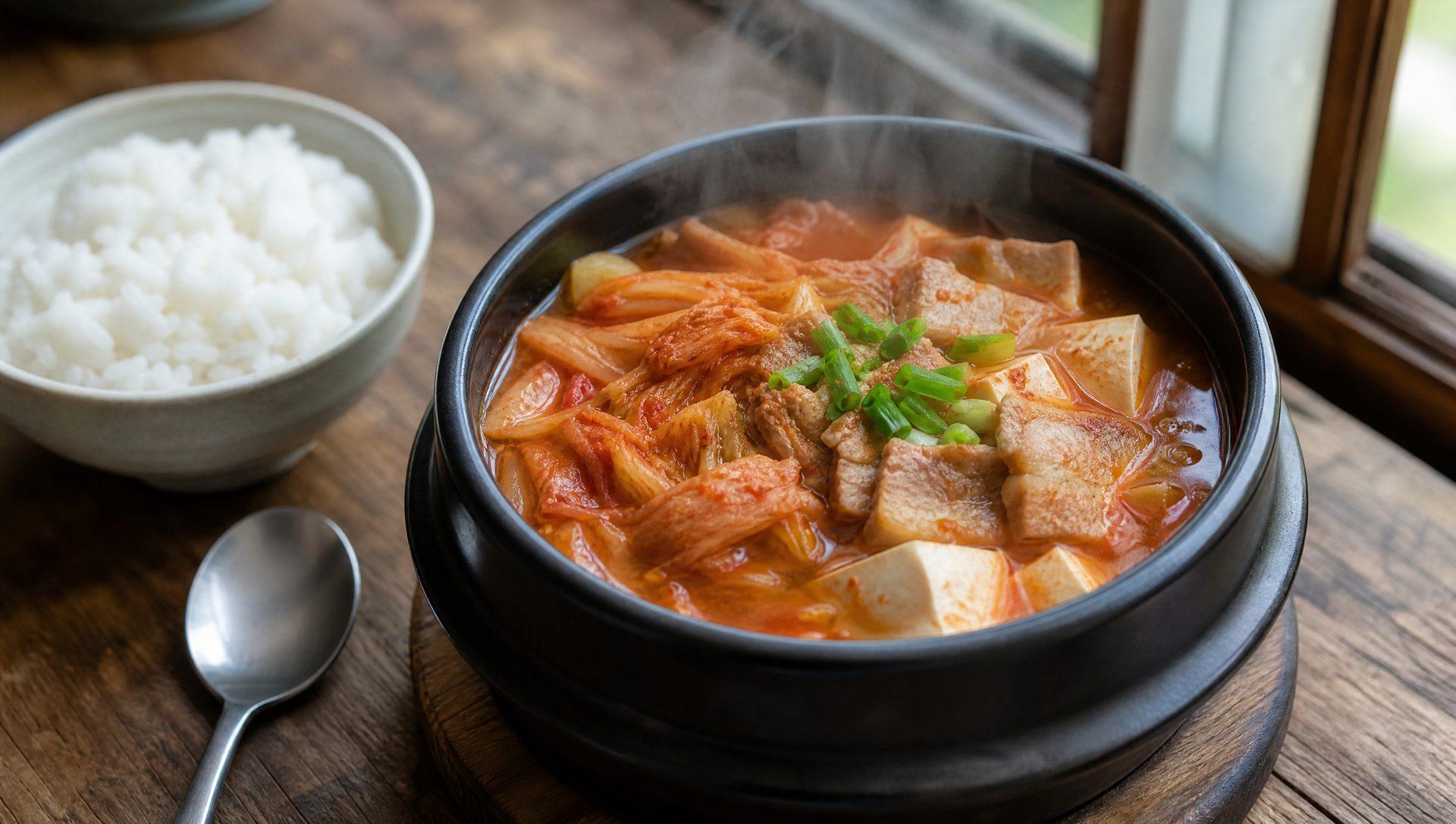
Nothing takes the acid back out. You can slow what is left: move the jar to the back of the lowest shelf, press the kimchi under its brine and keep the lid shut. Then use it for what it has become. Sour kimchi, 신김치 (sin-kimchi), is what stew, fried rice and pancakes are made from, and we wrote up four things to do with it.
Why is my kimchi not fermenting?
Most of the time it is fermenting and has not shown it yet. In the Korea University data we used for the day-by-day timeline, kimchi at 20°C went from pH 5.44 to 5.12 over its first day, then fell to 4.11 on the second. In a 4°C fridge the same change takes four to seven weeks. A jar that went straight into the cold and still tastes of salt and raw garlic after a week is on schedule.
Salt stretches the wait. At 5°C in the 1984 study, the 2.25 per cent kimchi was ripe on day 35 and the 5 per cent kimchi on day 90, and the 7 per cent kimchi never got there. A 1991 study by Park Woo-Po and Kim Ze-Uk, at 25°C with 1 to 5 per cent salt, found the same from the carbon dioxide the kimchi gave off: more salt meant a lower peak rate of fermentation.
The fix is warmth. Take the jar out, leave it at room temperature for a day, and taste the brine each morning. When it is faintly sour under the salt, put it back in the cold. If the kimchi is also too salty, add the radish first, because less salt speeds the ferment as well.
Why is my kimchi bitter, bland or mushy?
Bitter kimchi is usually young kimchi. LG's guide puts the taste down to bitter compounds in the cabbage itself, which you notice alongside a raw, green smell before the kimchi has ripened, and says it goes once the kimchi has. Salt is the other suspect. Korean sea salt, 천일염 (cheonilyeom), is aged so that its bittern, 간수 (gansu), drains away. A 2014 study in the Korean Journal of Food Science and Technology measured more magnesium in salt aged for one year than in salt aged for four.
Bland kimchi in a thin brine means the cabbage was under-salted, or went into the seasoning wet. Do not stir in plain salt, which the Asia Economy column says makes it bitter. Pour off the brine, season that with anchovy fish sauce or soup soy sauce, and pour it back over.
Mushy kimchi has no fix. Samsung's service guide lists what causes it: cabbage that was salted too little or had not fermented properly before air reached it, which lets yeast grow; storage that ran warm, or that froze and thawed; and a seasoning heavy with fruit, glutinous rice or sugar. The kind of salt shows up here too. In the 2014 study, after five months at −1°C, kimchi made with four-year-aged sea salt was the firmest and kimchi made with refined salt was the softest. Squeeze the mushy kimchi out and cook it.
Before you change anything, taste a spoonful of the brine and put a thermometer in the fridge. With those two readings you can find your jar in the first table.
Frequently asked questions
Does kimchi get less salty as it ferments?
No. In the 2014 low-salt study, salinity did not change significantly at any point in the fermentation. If the jar is too salty now it will be too salty in a month, so add the radish.
Does an eggshell fix sour kimchi?
Burying a clean eggshell in the jar is a tip that goes round Korean kitchens. Eggshell is mostly calcium carbonate, which neutralises acid, so the idea is reasonable. The nearest test we found changed the container instead: a 2017 study in the Journal of the Korean Society of Food Science and Nutrition kept mustard-leaf water kimchi for five months in tubs moulded with 3 per cent cockle shell, and it held a higher pH than the same kimchi in plain tubs. We found no study of a shell dropped into a jar at home.
Does iodised salt stop kimchi fermenting?
The one direct test we know of was on sauerkraut, and the answer was no. A 2018 study in Food Microbiology fermented cabbage with iodised table salt and found no statistically significant effect on the microbial populations. The authors did note a near-significant effect on yeasts and moulds in batches made without a starter culture. We could not find the same test on kimchi.
How long should I wait before deciding my kimchi is not fermenting?
Two days at room temperature, or about seven weeks in a 4°C fridge. Before then, press the surface with a clean spoon to look for bubbles and taste the brine. Why your kimchi stopped bubbling covers the jar that fizzed and then went quiet.