
Types8 min read
10 types of kimchi every beginner should know
Napa cabbage kimchi made up 72 per cent of the kimchi eaten in Korea in 2019, but the word covers dozens of dishes. Ten to know by name, from white kimchi and dongchimi, made without chilli flakes, to cubed kkakdugi, whole ponytail radishes, stuffed cucumber, scallion and Yeosu mustard leaf, and which one to try first.
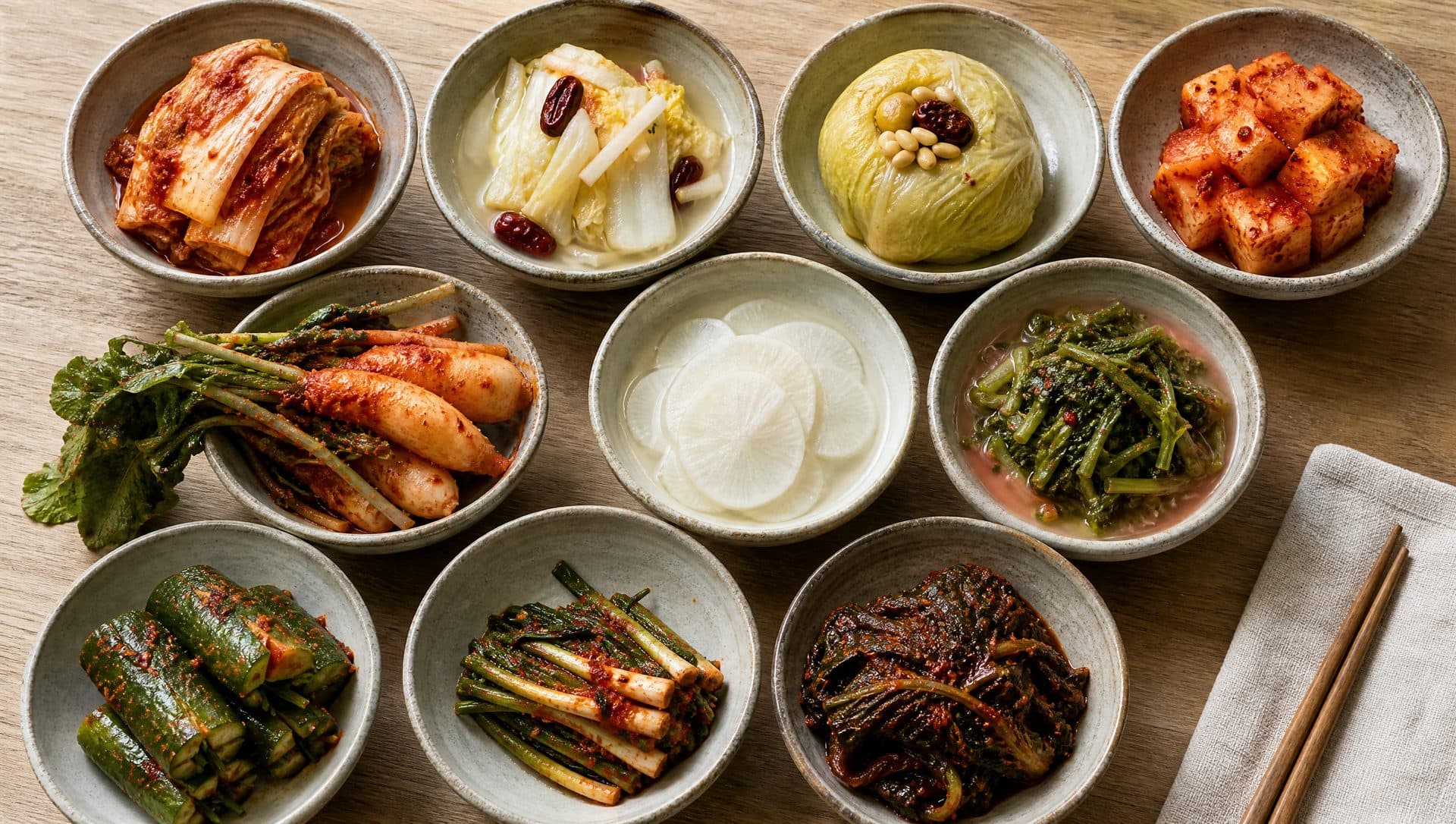
Most of the kimchi eaten in Korea is napa cabbage kimchi, but the word covers dozens of dishes, and ten of them are worth knowing by name. Four are made from radish, three from napa cabbage, and the other three from cucumber, scallion and mustard leaf. Two are made without chilli flakes, and one is eaten mostly for its brine.
The 10 types of kimchi at a glance
| Kimchi | Korean | Made from | Chilli flakes | Season | At its best |
|---|---|---|---|---|---|
| Baechu kimchi | 배추김치 | Napa cabbage, halved or quartered | Yes | Year round | Ripe |
| Baek kimchi | 백김치 | Napa cabbage with pear and chestnut | No | Year round | Ripe |
| Bossam kimchi | 보쌈김치 | Cabbage leaves wrapped around a filling | In some recipes | Winter | Ripe |
| Kkakdugi | 깍두기 | Korean radish, cubed | Yes | Winter | Ripe |
| Chonggak kimchi | 총각김치 | Small whole radishes with their greens | Yes | Autumn | Sour |
| Dongchimi | 동치미 | Whole radish in clear brine | No | Winter | Ripe, served very cold |
| Yeolmu kimchi | 열무김치 | Young radish greens | Yes | Summer | Turning |
| Oi-sobagi | 오이소박이 | Cucumber, slit and stuffed | Yes | Summer | Fresh |
| Pa kimchi | 파김치 | Whole thin scallions | Yes | Spring, and again at kimjang | Sour |
| Gat kimchi | 갓김치 | Mustard leaf | Yes | Winter | Aged |
The last column uses the five stages on our fermentation page, from fresh to aged. Each name in the table opens that kimchi's own page in the varieties guide.
Which kimchi do Koreans eat most?
Baechu kimchi, by a wide margin. In a 2019 survey for South Korea's agriculture ministry, napa cabbage kimchi made up 72 per cent of all the kimchi eaten in the country. Radish kimchi of every kind came to 14.4 per cent, and everything else, from cucumber to mustard leaf, shared what was left.
It is the one people mean when they say kimchi and nothing more. Whole cabbages are split, salted until the thick white ribs bend without snapping, rinsed, and packed leaf by leaf with a paste of gochugaru, garlic, ginger, radish and salted seafood. The full method, with salt weights, is in how to make classic napa cabbage kimchi at home.
It is also younger than it looks. The Encyclopedia of Korean Culture dates the dense, tightly headed cabbage used today to only about a century ago, and looser-leaved types were still in use into the 1960s. Before chilli reached Korea, the main kimchi vegetable was radish.
Which kimchi is not spicy?
Two of the ten are made without chilli flakes, and they are the gentlest way in.
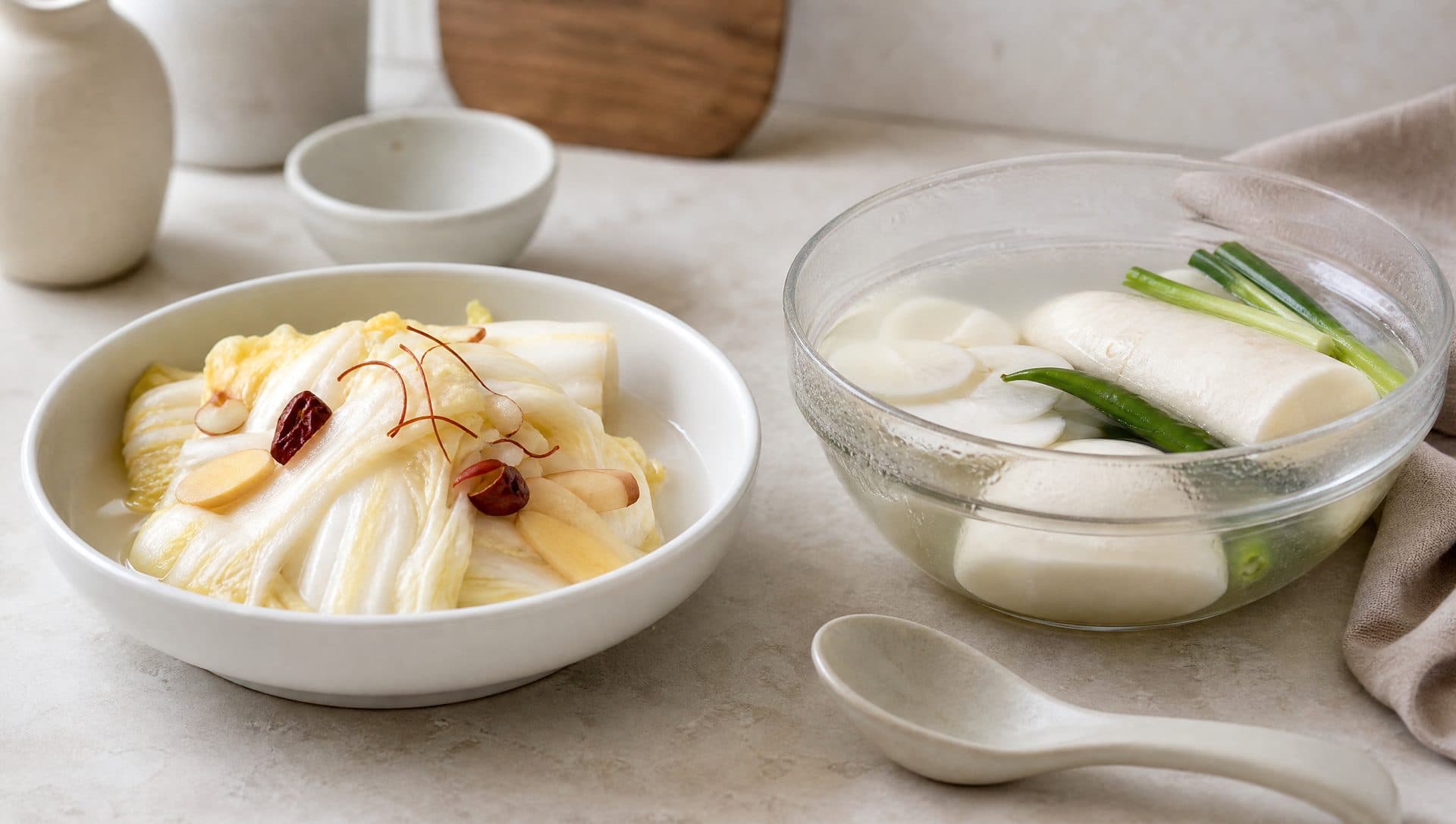
Baek kimchi (백김치, white kimchi) is salted napa cabbage filled with shredded pear, chestnut, garlic, spring onion, ginger and mushroom, with a few fine threads of dried chilli for colour instead of flakes, then covered in brine. The Encyclopedia of Korean Culture places it mainly in Pyongan, in the north, and notes that households with small children who cannot yet eat spicy food make it often.
Dongchimi (동치미) is whole radish left in salted water with ginger, spring onion and sometimes a single green chilli, there for aroma rather than heat. Old cookbooks record it as dongchim, written with the characters for winter and for steeping, and a recipe for it already appears in Yorok, a cookbook thought to date from the late 1600s. Because it needs no chilli at all, the encyclopedia treats it as one of the oldest forms of kimchi still made.
The brine is the reason to make it. It is drunk cold, and in the northern provinces it was the broth for cold noodles eaten in the middle of winter.
What other kimchi is made from radish?
Three more of the ten, and they differ mostly in the cut and in how old the plant is when it is pulled.
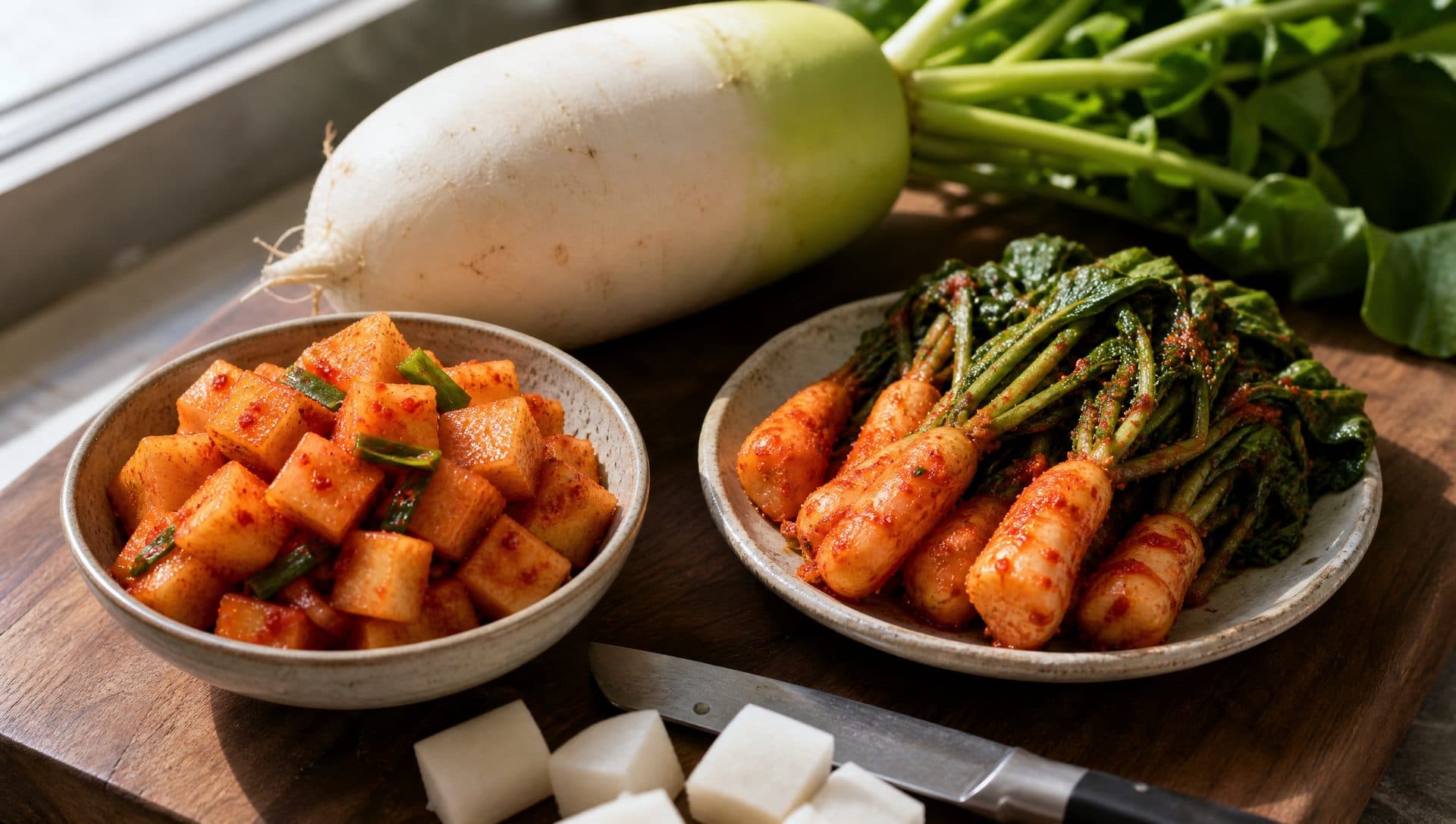
Kkakdugi (깍두기) is Korean radish cut into cubes, about 2.5 cm across in the encyclopedia's description, salted, coloured with chilli and mixed with spring onion, garlic, ginger and salted shrimp. A 1940 book, Hong Seon-pyo's Joseon yorihak, credits it to a daughter of King Jeongjo, who reigned from 1776 to 1800. By that account a minister spread it beyond the palace and it became known as Gongju kkakdugi. Radish keeps its crunch far longer than cabbage, and kkakdugi is the usual partner for seolleongtang, a milky ox-bone soup.
Chonggak kimchi (총각김치) uses small radishes roughly the length of a finger, fermented whole with their leafy tops. The name comes from chonggak, the braided and tied hair of unmarried young men in the Joseon period, which the radish and its greens were said to resemble. You pick one up and bite through root and leaf together. The root snaps, and the greens carry more of the seasoning.
Yeolmu kimchi (열무김치) is the summer one. Yeolmu are young radishes pulled before the root swells, so the kimchi is almost all leaf and stem, cut into short lengths and dressed in a thin brine. It is made quickly and eaten through the hot months, over noodles or mixed into rice. There is more on what Koreans ferment when cabbage is out of season in what to make in July.
Which kimchi uses cucumber, scallion or mustard leaf?
Oi-sobagi (오이소박이) is cucumber cut lengthwise into a cross, not quite through to the end, and stuffed with a filling of chilli, garlic and chives or spring onion. The earliest record the encyclopedia cites is in Jeungbo sallim gyeongje, from 1766, the same book that first records chilli in kimchi at all. Cucumber goes soft quickly, so oi-sobagi is made in small batches in summer and eaten within days.
Pa kimchi (파김치) is whole thin scallions coated in chilli and folded into loose bundles. It belongs mainly to the southern provinces of Chungcheong, Jeolla and Gyeongsang, and it is tossed in salted fish liquid, jeotguk, rather than a full seasoning paste. Raw scallion is harsh for the first week. Given a few weeks it turns soft and savoury, and a batch made at kimjang keeps through the winter.
Gat kimchi (갓김치) is made from mustard leaf, which is peppery before any seasoning goes on, and it is a Jeolla speciality. The best known comes from Dolsan, an island district of Yeosu, where both the mustard and the kimchi made from it have been registered geographical indications since 2010. The mustard heat rises into the nose rather than sitting on the tongue, and it keeps improving with age, so this is the one to leave longest in the fridge. The province's cooking more generally is in why Jeolla baechu tastes nothing like Seoul's.
What is bossam kimchi?
The tenth is a special-occasion kimchi from Kaesong, now in North Korea. Salted cabbage leaves line a bowl, the salted stems stand upright inside, and a filling of radish, pear, apple, chestnut, jujube, pine nut, water dropwort, spring onion and salted shrimp goes in between before the leaves are folded over like a cloth bundle. In Kaesong itself it was called ssam kimchi, because the word bossam had darker associations there.
It is banquet food, made to be opened at the table. Nobody makes it as a first kimchi, but it is worth recognising when it turns up.
Which kind should a beginner try first?
Eat before you make. Buy baechu kimchi from a chilled shelf, along with a small tub of kkakdugi, and taste both again a week later. Neither stays the same in the fridge, and the radish changes more slowly than the cabbage. If chilli is what has kept you away, start with baek kimchi or dongchimi instead.
For a first batch at home, kkakdugi is the easiest of the ten. It needs one radish, a knife and a bowl, and there is no packing paste between leaves. In summer, oi-sobagi gives the quickest reward, since it is meant to be eaten within days anyway.
On your next trip to a Korean grocery, pick one kimchi from the table above that you have never eaten and buy the smallest container they sell.
Frequently asked questions
How many types of kimchi are there?
It depends on where you draw the line between a variety and a household variation. Published counts run from under 200 to more than 300, and the reasons they differ are in what is kimchi. The ten here cover most of what is eaten day to day: napa cabbage and radish kimchi together made up more than 86 per cent of the kimchi eaten in Korea in 2019.
What is water kimchi?
Kimchi served in plenty of brine, where the liquid is part of the dish and gets eaten with a spoon or drunk. Dongchimi is the best known. Yeolmu kimchi is often made in a thin, watery brine too.
What is the difference between kkakdugi and chonggak kimchi?
Both are radish kimchi with similar seasoning. Kkakdugi is a large Korean radish cut into cubes. Chonggak kimchi is made from small radishes left whole with their leafy tops, so each piece gives you root and greens in one bite.
Which kimchi is the least spicy?
Baek kimchi and dongchimi, the two made without chilli flakes. Some recipes add a few threads of dried chilli or one whole green chilli for colour and aroma, but neither kimchi is hot.