
Cooking7 min read
Kimchi pairings: meats, cheeses, beer and wine
Kimchi brings salt, acid and chilli, so it pairs with food that is fatty, mild or a little sweet. Pork in four Korean forms from bossam to hongeo samhap, why fresh cheese beats aged, which beers and wines calm the chilli and which turn it up, and what Koreans drink with it: makgeolli, usually around 6 per cent.
This piece has not been translated into Français yet, so you are reading the English original. Translations are published after review, never automatically.
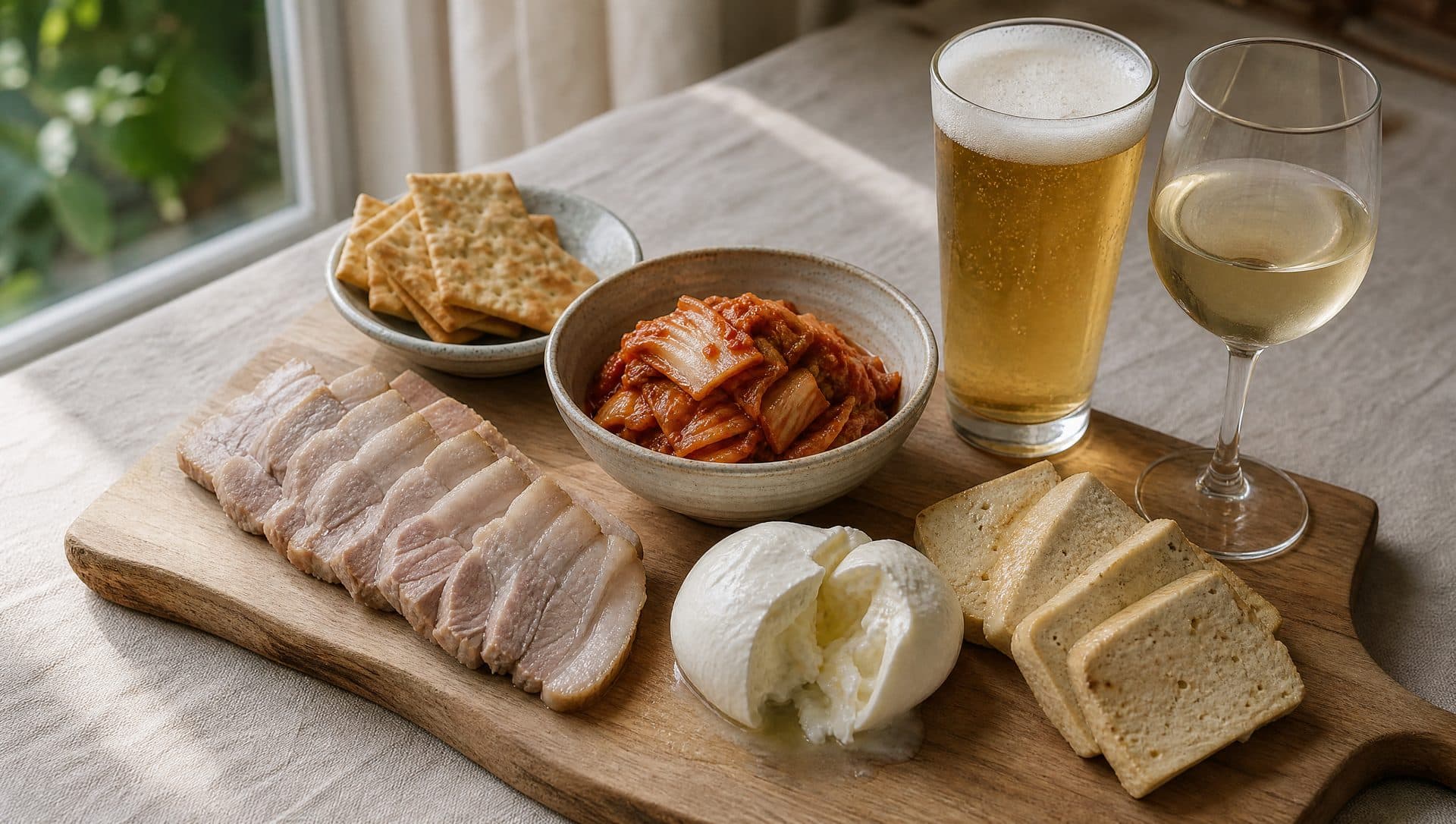
Kimchi goes best with food that is fatty, mild or a little sweet. It arrives with its own salt, acid and chilli, so it needs something soft to land on. In Korea that means boiled or grilled pork, plain tofu and rice. On a cheese board it means fresh, milky cheese. To drink, pick a cold lager, an off-dry white wine or makgeolli.
Why does kimchi suit rich, plain food?
Kimchi is a finished seasoning in its own right: salt, lactic acid, garlic, chilli and, in most recipes, fermented seafood. Next to something equally loud, the two compete. Next to something fatty and plain, it does what a pickle or a squeeze of lemon does. It cuts the fat and makes the next bite taste fresh.
That is the logic of the Korean table, where kimchi sits beside plain rice, plain tofu and boiled pork. It carries over to a Western board without changes.
| With | Choose | Why it works |
|---|---|---|
| Meat | Boiled or grilled pork belly, pork shoulder | Fat softens the acid and the chilli |
| Tofu | Warm, plain tofu | Mild and soft, it carries stir-fried kimchi |
| Cheese | Mozzarella, burrata, ricotta, young goat's cheese | Milky and low in salt |
| Beer | Pale lager or pilsner | Cold, light, little bitterness |
| Wine | Off-dry Riesling, Gewürztraminer | A little sugar, plenty of acid, low tannin |
| Korean drinks | Makgeolli | Low in alcohol, slightly sweet and sour |
| Go easy on | Double IPAs, strong tannic reds, spirits | Bitterness and alcohol make the burn louder |
What meat goes best with kimchi?
Pork. Korean cooking pairs the two in at least four standard ways.
Bossam. 보쌈, bossam, is pork belly or shoulder boiled until tender, sliced, and wrapped in a salted cabbage leaf with fresh kimchi. The name first belonged to the kimchi. The Encyclopedia of Korean Culture describes bossam kimchi as a speciality of Gaeseong: radish, pear, chestnut, jujube and salted shrimp folded inside cabbage leaves like a cloth parcel. Over time the word moved to the pork served with it.
Kimjang pork. On 김장, kimjang, the day a family makes its winter kimchi together, the custom is to boil a pot of pork for everyone who helped and eat it hot with the kimchi just made. Raw oysters often join them, because they are in season at the same time.
On the grill. At a Korean barbecue, kimchi goes onto the hot plate beside the pork belly (삼겹살, samgyeopsal) and fries in the rendered fat until its edges brown. Use sour kimchi here. Heat rounds off its acid.
Dubu kimchi. 두부김치, dubu kimchi, is kimchi stir-fried with pork and served with slices of warm tofu. It is one of the most common 안주, anju, the dishes Koreans order to eat with a drink.
South Jeolla goes furthest. 홍어삼합, hongeo samhap, stacks fermented skate, boiled pork and aged kimchi into one mouthful. In the Ministry of Culture's account of the dish, the kimchi is what keeps the heavy pork and the pungent skate tasting fresh.
In Western food the same rule leads to sausages, ham, roast pork and salami, anywhere a pickle would usually sit.
Which cheese goes with kimchi?
Fresh, milky cheese, ahead of aged and salty.
A 2019 study at Penn State offers part of the reason. Seventy-two people drank tomato juice spiked with capsaicin, the compound that makes chilli hot, and then rated seven drinks on how well they put the fire out. Whole milk and skim milk did best, and they did equally well, so the researchers pointed to milk protein rather than fat. The study only tested drinks. Still, it matches what happens on a board: mozzarella, burrata, ricotta and young goat's cheese soften the chilli, and their mildness leaves the kimchi room.
Aged cheese is harder work. The World Institute of Kimchi puts kimchi at around 2 per cent salt, and aged cheddar, Parmesan and feta add more salt and a sharpness of their own. Maangchi found the same thing in a grilled cheese and switched from cheddar to mozzarella, as we covered in 12 unexpected ways to use kimchi.
If you want an aged cheese on the board anyway, keep the kimchi portion small and add slices of pear. Pear already goes into bossam kimchi.
For serving, drain the kimchi and chop it into bite-sized pieces, then put it in its own small bowl with a fork. Loose, wet kimchi stains everything it touches on a wooden board.
What beer goes with kimchi?
A cold pale lager or pilsner. Both are low in bitterness and modest in alcohol, so they rinse away salt and chilli without adding heat of their own.
Hoppy beer works against you. A tasting panel run by Samuel Adams with chefs from the Culinary Institute of America tried three IPAs with Buffalo wings, and the one with the most bitterness and alcohol made the wings taste hottest. That was five tasters, not a controlled trial. The alcohol half of it has firmer evidence behind it, which matters for wine too.
What wine goes with kimchi?
An off-dry white with good acidity. Riesling with some sweetness and Gewürztraminer are the usual choices for chilli-heavy food. A Korean chef interviewed by Harper's Bazaar Korea chose Gewürztraminer for kimchi in particular, because its sweetness and floral perfume soften the garlic and ginger, and the chef found it held up with well-aged kimchi too.
The sugar has some support from the same Penn State study. Cherry Kool-Aid, which is mostly sugar, was one of the three drinks that cut the burn most, alongside the two milks.
The alcohol is the part to watch. In laboratory work published in Nature Neuroscience in 2002, Trevisani and colleagues found that ethanol makes the chilli receptor, TRPV1, more sensitive. It lowered the temperature at which the receptor fires from about 42°C to about 34°C, below body temperature. That is the lab basis for the usual advice to keep strong wine away from chilli. Big reds bring tannin as well, which tastes harsher beside it. If you want red, choose a light one with modest alcohol and serve it cool.
What do Koreans drink with kimchi?
막걸리, makgeolli, the milky rice wine, is the traditional match. It usually sits around 6 per cent alcohol, with a little sweetness, a sourness of its own and often a light fizz. The Michelin Guide's makgeolli pairings in Korea set it beside kimchijeon, the kimchi pancake, and beside dubu kimchi.
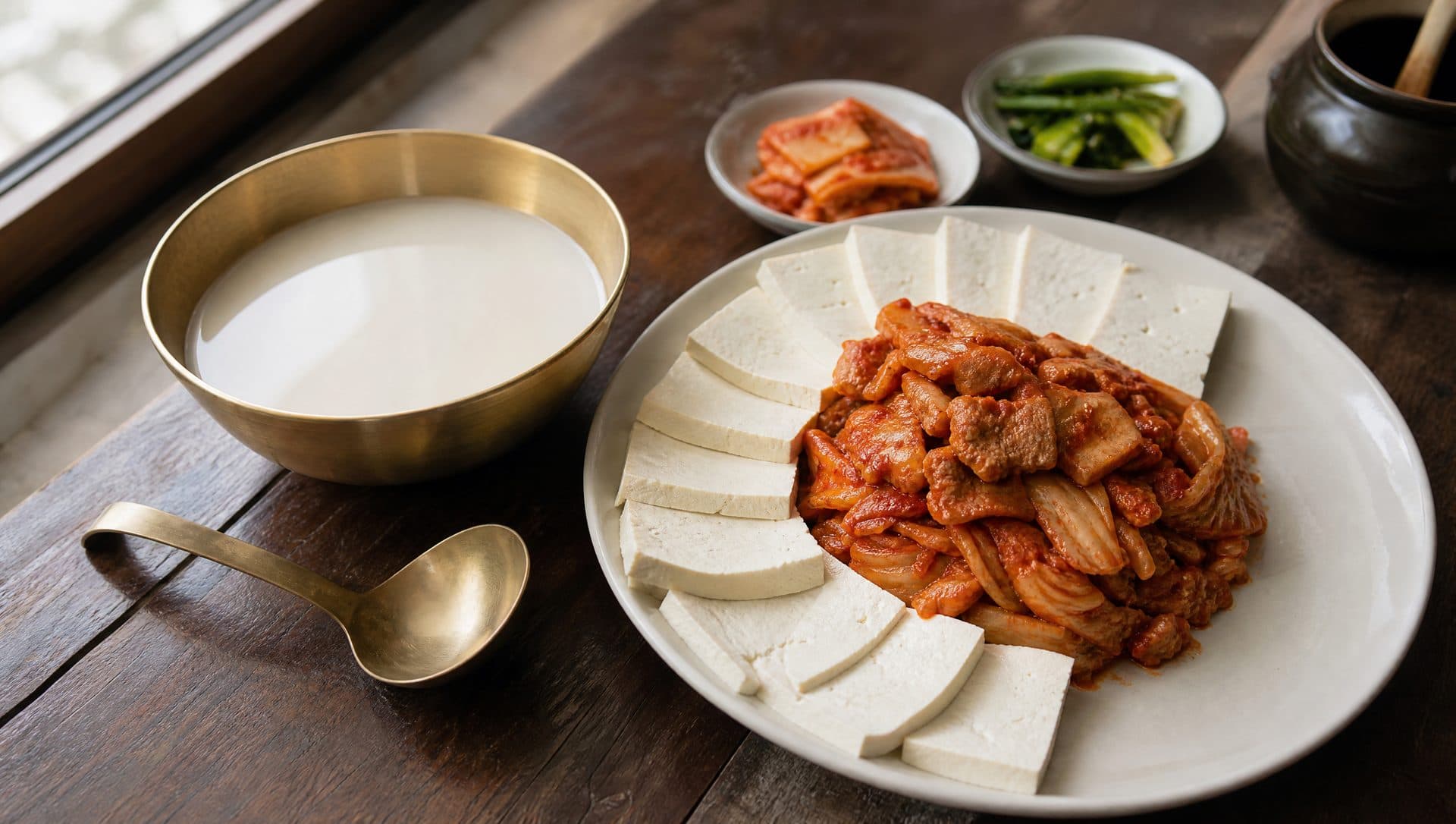
Rain is reason enough in Korea to fry pancakes and open a bottle. The usual explanation is that the sound of rain is like batter hitting hot oil. Hongeo samhap gets makgeolli too, and the combination has its own name: 홍탁, hongtak.
Soju is the other everyday partner, especially with dubu kimchi. It is a spirit, so by the lab result above it will not cool the chilli down.
For a first try at home, keep it small. Put out a bowl of drained kimchi, a ball of fresh mozzarella, a few slices of roast or boiled pork and a cold lager, and taste the kimchi with each one in turn.
Frequently asked questions
What should you not pair with kimchi?
Nothing is unsafe. The clashes are of flavour: very salty partners such as aged cheese, and drinks that are bitter or strong, such as double IPAs, high-alcohol reds and spirits. All of them make the salt or the chilli louder.
Does kimchi go with fish and seafood?
Yes. Raw oysters are part of the kimjang meal, and fermented skate is the centre of hongeo samhap.
Can kimchi go on a cheese or charcuterie board?
Yes. Drain it, chop it and give it its own bowl. Put it where cornichons would go, beside cured pork and fresh cheese.
What is the best kimchi for a pairing board?
Young kimchi, which is still crisp and fresh. Keep the sour jar for cooking, or for frying on the grill beside pork. For a milder board with no chilli at all, baek kimchi (백김치) works the same way.